Finance summary
A Beginner's Guide to the Stock Market Summary: Key Ideas and Takeaways
Read a practical summary of A Beginner's Guide to the Stock Market by Matthew R. Kratter, including key takeaways, lessons, and useful ideas.
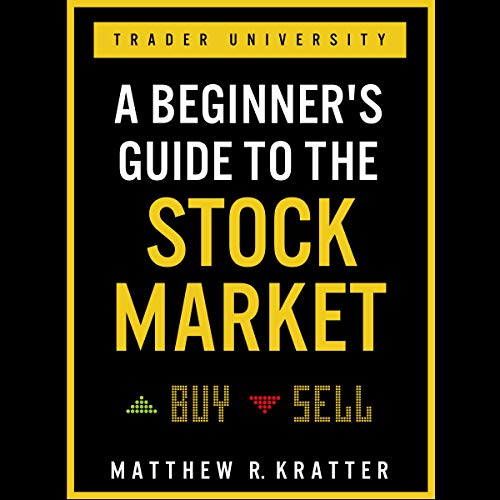
Author: Matthew R. Kratter
Category: Finance
Published: 2019
Pages: 160
Key Takeaways
- **Stock Market ≠ Casino**: Stocks represent ownership in real businesses. Treat them as such, not as lottery tickets.
- **The 200-Day Rule**: Use the 200-day moving average as a safety filter. Only buy stocks trading above this line to ensure you're with the trend.
- **Avoid Penny Stocks**: Never buy stocks trading under $5. They are usually traps, prone to fraud and bankruptcy.
- **The Power of Compounding**: Time is your biggest asset. Small, consistent investments grow into massive wealth over decades.
- **Index Funds (ETFs)**: For most people, buying the whole market (S&P 500) via ETFs like VOO is the best, simplest strategy.
- **Limit Orders Only**: Never use market orders. Use limit orders to control the exact price you pay.
- **P/E Ratio**: Use Price-to-Earnings ratio to value companies. High P/E implies high growth expectations; low P/E might be a bargain.
- **Dividends = Rent**: Dividend stocks pay you to hold them. Reinvesting these (DRIP) accelerates the compounding snowball.
- **Defense First**: Prioritize not losing money over making quick profits. Protect your downside, and the upside takes care of itself.
- **Owner's Mindset**: Don't just trade; own. Ask 'Is this a business I want to own for 10 years?' before buying.
About This Summary
A Beginner’s Guide to the Stock Market: Everything You Need to Start Making Money Today
Opening Overview: Demystifying Wall Street
In a financial landscape often obscured by complex jargon and intimidating barriers to entry, "A Beginner’s Guide to the Stock Market" serves as a beacon of clarity for the absolute novice. Authored by Matthew R. Kratter, a former hedge fund manager, the book was written to democratize financial literacy.
The central premise is that the stock market is the greatest machine for wealth creation in history, but only if one understands how to operate the controls. Kratter promises to strip away the mystery of Wall Street, replacing fear with actionable knowledge.
Why This Matters: The barrier to entry for investing has collapsed (apps, zero fees), but the "barrier to education" remains high. Without foundational knowledge, new investors fall victim to gambling behaviors. This book inoculates against common pitfalls like high fees and penny stock scams.
Chapter-by-Chapter Breakdown
Chapter 1: The Goal of Financial Freedom
Kratter establishes the distinction between labor income (trading time for money) and investment income (money generating money). The goal is to shift mindset from "spending" to "accumulating assets" using the power of compound interest.
Chapter 2: What is a Stock?
A stock is not a lottery ticket; it is a fractional ownership stake in a real business. Understanding this distinction prevents gambling. If you buy a share of Apple, you become a part-owner.
Chapter 3: The Setup – Brokerage Accounts
Kratter guides readers on opening accounts, championing zero-commission brokers. The cost of entry is now near zero, removing administrative hurdles.
Chapter 4: Common Mistakes: The Penny Stock Trap
Crucial Warning: Avoid stocks trading under $5. They are cheap for a reason (bankruptcy risk, fraud). Beginners are often lured by "pump and dump" schemes. Rule: Don't buy penny stocks.
Chapter 5: Dividend Investing
Dividends are a share of profits—"rent" paid to you for holding the stock.
- Dividend Aristocrats: Companies increasing payouts for 25+ years.
- Strategy: Reinvest dividends (DRIP) to accelerate compounding. Great for passive income.
Chapter 6: Growth Investing
Companies that reinvest profits to expand (e.g., Amazon) rather than paying dividends.
- Trade-off: Sacrifice immediate income for potential capital appreciation.
- Goal: Identify companies with a "moat" or competitive advantage.
Chapter 7: Market Capitalization
Valuation metric: Share Price × Total Shares.
- Lesson: Share price alone is meaningless. A $1000 stock can be "cheaper" (better value) than a $5 stock. Large caps offer stability; small caps offer volatility and potential growth.
Chapter 8: The P/E Ratio
Price-to-Earnings Ratio: The most fundamental valuation tool.
- Formula: Price per share / Earnings per share.
- Use: Determine if a stock is overvalued or undervalued relative to peers.
Chapter 9: ETFs and Index Funds
For those who don't want to pick stocks.
- Strategy: Buy a "basket" like the S&P 500 (SPY, VOO) to own the 500 largest US companies.
- Benefit: Instant diversification. The best strategy for most people.
Chapter 10: The Warren Buffett Way
- Circle of Competence: Invest in businesses you understand.
- Patience: Time in the market beats timing the market.
- Integrity: Look for honest management.
Chapter 11: Technical Analysis Basics
Kratter introduces one key technical tool: the 200-Day Moving Average.
- The Rule: Only buy stocks trading above their 200-day moving average. This ensures you trade with the trend and avoid "catching a falling knife."
Chapter 12-15: Logistics & Psychology
- Watchlists: Track stocks before buying to understand volatility.
- Order Types: Always use Limit Orders (control price), never Market Orders.
- Psychology: "Red days" are normal. Panic selling destroys wealth.
- Taxes: Use tax-advantaged accounts (IRAs) first. Hold 1 year+ for lower long-term capital gains rates.
Major Themes and Principles
1. Simplicity Superiority (KISS)
Complex strategies (options, shorting) are unnecessary and dangerous for beginners. Buy good companies/indexes and hold.
2. The Owner’s Mindset
Shift from "gambler" to "owner." Ask: "Is this a business I want to own?" This inoculates against FOMO.
3. Defense First
Prioritize capital preservation. Avoiding big losses (penny stocks, downtrends) is more important than chasing quick wins.
4. Compounding Power
Time is your greatest asset. Getting rich slowly is reliable; getting rich quickly is a gamble.
Practical Takeaways
- The 200-Day SMA Filter: Check the chart. Price above the 200-day line? Safe to buy. Below? Stay away.
- Automate Wealth: Dollar-cost average into an S&P 500 ETF (like VOO) automatically.
- Coffee Can Portfolio: Buy quality and leave it alone for 10 years. Don't over-trade.
- No "Lottery" Stocks: Ignore penny stocks. Low price ≠ value.
- Use Limit Orders: Control your entry price and avoid slippage.
Conclusion
"A Beginner’s Guide to the Stock Market" cuts through the fluff. It is an essential roadmap for turning the stock market from a scary casino into a logical, accessible tool for building generational wealth. Read this book to stop gambling and start investing.