Self-Help summary
Signs Summary: Key Ideas and Takeaways
Read a practical summary of Signs by Laura Lynne Jackson, including key takeaways, lessons, and useful ideas.
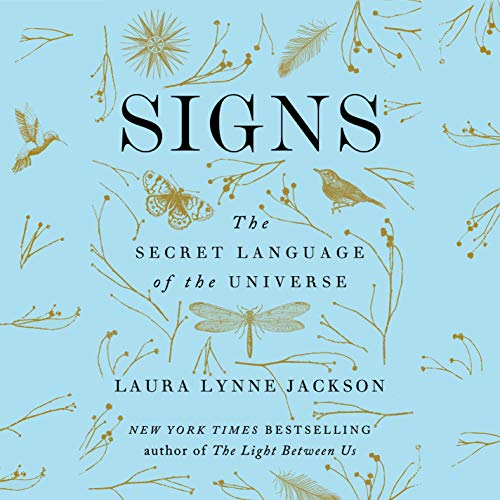
Author: Laura Lynne Jackson
Category: Self-Help
Published: 2019
Pages: 336
Key Takeaways
- **The Universe is Conscious**: We are constantly receiving messages from the Other Side; we are just often too distracted or skeptical to notice them.
- **Default vs. Assigned Signs**: Default signs are generic (coins, birds), while Assigned Signs are specific requests you make (e.g., asking for a giraffe) to validate connection.
- **Love is a Physical Bond**: Death ends a life, not a relationship. The energy of love creates an indestructible cord that allows for communication across the veil.
- **The Principle of Specificity**: To get clear answers, you must ask clear questions. Specific requests yield specific signs that are harder to dismiss as coincidence.
- **Raise Your Vibration**: Grief is dense energy. To receive signs, you must raise your frequency through joy, gratitude, and openness to meet the spirits halfway.
- **Surrender the Outcome**: After asking for a sign, you must detach and stop hunting for it. Desperation blocks the signal; surrender clears the channel.
- **Electrical Manipulation**: Spirits are energy, so they often manipulate electricity (lights, radios, phones) to grab our attention.
- **Synchronicities**: Meaningful coincidences are the primary vocabulary of the universe. Pay attention to repetitive numbers, songs, or events.
- **We Have a Team**: Everyone has a 'Team of Light'—guides, angels, and deceased loved ones—working behind the scenes to help us.
- **You Are Not Crazy**: Believing in signs is not a rejection of logic but an expansion of it. It validates the human experience of eternal connection.
About This Summary
The Deep Dive Companion: Signs by Laura Lynne Jackson
I. Executive Abstract
The Thesis: The Universe is Alive, Conscious, and Calling You
In Signs: The Secret Language of the Universe, renowned psychic medium Laura Lynne Jackson dismantles the wall between the living and the dead, arguing that this barrier is not a solid fortress but a permeable veil. Her central thesis is radically hopeful: We do not need to be psychics to communicate with the Other Side. While Jackson possesses a unique gift verified by science (she is a certified research medium with the Windbridge Institute), she posits that communication with the afterlife is a universal birthright, not a specialized talent.
The book serves as both a memoir of her most profound readings and a technical manual for the layperson. Jackson argues that our loved ones, spirit guides, and a "Team of Light" are constantly sending us messages to guide us toward our highest path. These messages—"signs"—are often dismissed as coincidences. By reframing these events as deliberate communications, Jackson provides a framework for healing grief, finding purpose, and understanding that love is an energy that cannot be destroyed, only transformed.
Why This Book Matters:
For the believer, Signs validates the intuition that a lost loved one is still "there," offering a vocabulary to codify those feelings. For the skeptic, Jackson approaches the subject with a grounded, almost empirical methodology. She encourages testing, validation, and specificity. She does not ask for blind faith; she asks for "openness to possibility."
In a culture that often pathologizes grief or urges us to "move on," Signs offers a different prescription: Don't move on; move forward with them. It is a vital text because it replaces the finality of death with the continuity of connection.
II. Chapter-by-Chapter Breakdown (Part 1: The Basics of the Language)
Chapter 1: The Power of Asking
The Narrative:
Jackson opens with a vulnerable personal anecdote that sets the tone for the book. Despite being a professional medium who connects others with their deceased relatives, she admits to suffering from "imposter syndrome" and deep anxiety about her life's path. While attending a conference, feeling overwhelmed and fraudulent, she decides to test her own "Team of Light."
She privately demands a specific sign: an orange. Not a picture of an orange or the color orange, but an actual fruit. It is a test of specificity. Hours later, at a cocktail reception, she feels a pull toward a table in the back. There, in a sea of standard conference food, sits a bowl overflowing with bright, fresh oranges.
The Lesson:
This chapter introduces the fundamental mechanic of the book: The Universe is responsive. You do not have to wait passively for a sign; you can actively solicit one.
- The Principle of Specificity: Jackson teaches that vague requests yield vague results. Asking for "a sign" is less effective than asking for "an orange."
- Surrender: After asking, you must let go. You cannot hunt for the sign; you must allow it to find you.
Key Terminology:
- The Team of Light: Jackson’s term for the collective group of spirits (relatives, friends, guides, and "God force") that supports every living human.
Chapter 2: The Language of Energy
The Narrative:
Jackson details the science—and pseudoscience—behind her work. She discusses her testing at the Windbridge Institute, where she was subjected to octuple-blind studies to prove she wasn't "cold reading" (guessing based on visual cues). She explains that mediumship isn't about seeing ghosts like in movies; it's about interpreting energy.
She uses the analogy of a radio frequency. Most of us are tuned to the "AM/FM" stations of daily life (groceries, work, stress). The Other Side broadcasts on a high-frequency satellite channel. To hear them, we don't need to change who we are; we just need to learn how to tune the dial.
The Lesson:
- Energy Never Dies: Drawing on the First Law of Thermodynamics, Jackson argues that the electrical impulses that make up a human consciousness cannot be destroyed. When the body fails, that energy must go somewhere.
- Vibrational Match: To receive signs, we must raise our own energy (through joy, love, and gratitude) to meet the Other Side halfway. Grief is a heavy, low energy that can block signs—not because the spirits aren't there, but because the "static" is too thick.
Chapter 3: Default Signs vs. Assigned Signs
The Narrative:
This is a technical chapter where Jackson distinguishes between the two main types of communication. She shares stories of clients who see things like butterflies or pennies and wonder, "Is this my dad?"
The Lesson:
- Default Signs: These are the universal symbols spirits use when we haven't given them specific instructions. Common default signs include:
- Coins (pennies from heaven).
- Birds (cardinals, hawks).
- Butterflies and dragonflies.
- Electrical interference (lights flickering).
- Assigned Signs: This is the advanced technique Jackson advocates. This is when you tell the Other Side, "If you are with me, please send me a Giraffe." If you then see a giraffe on a billboard, a toy, or a TV show within a designated timeframe, that is an Assigned Sign. It removes the ambiguity of "was that just a coincidence?"
Chapter 4: The Story of Carla and the Dragonflies
The Narrative:
This is one of the emotional anchors of the book. Jackson introduces Carla, a mother whose young son, Calder, died tragically (electrocuted in a swimming pool accident). Carla is drowning in grief, desperate for validation that her son still exists.
Initially, Carla is bombarded by dragonflies. They land on her in the car; they appear in swarms. These are "Default Signs." They are Calder trying to get her attention. But Carla doubts. She thinks, It’s summer; there are bugs everywhere.
The Lesson:
The skeptical mind is the enemy of connection. We naturally rationalize signs away (the "Confirmation Bias" argument). Jackson works with Carla to move from Default Signs to specific validations, teaching the reader that while Default Signs are comforting, they are often easy for our logical brains to dismiss.
Chapter 5: The "1379" Sequence (Numerical Signs)
The Narrative:
Jackson introduces the story of Angela and Bert, who lost their son/friend Brandon. They decided to "assign" a sign to Brandon to prove he was still around. They chose a random string of numbers: 1379.
The narrative follows the absurdity of how this number began to appear. It wasn't just on a clock (1:37). It appeared on receipts totaling $13.79, on license plates, and in serial numbers. The statistical probability of encountering this specific four-digit string repeatedly becomes the proof of life.
The Lesson:
- Numbers are a Universal Language: Spirits love using numbers because they are definite.
- Synchronicities: Jackson defines synchronicity (a term coined by Jung) as "two or more events that are physically unrelated but meaningfully connected." When you see your assigned number, it is a "wink" from the universe.
Chapter 6: Electricity and the "Wedding Song"
The Narrative:
Jackson explores the story of Jennifer, who wanted her deceased grandfather to be at her wedding. She was heartbroken that he wouldn't be there to walk her down the aisle. She asked for a sign.
On the morning of the wedding, amidst the chaos, a radio in the bridal suite—which had been unplugged or silent—suddenly blasted her grandfather’s favorite song. It wasn't just a song on a playlist; it was a manipulation of the device itself.
The Lesson:
- Electrical Manipulation: Spirits find it easiest to manipulate electricity because they are energy. They can drain batteries, flicker lightbulbs, or turn on radios.
- Timing is Everything: A sign is defined by its timing. Hearing a popular song is common; hearing your dead grandfather’s favorite obscure song at the exact moment you are crying about him is a Sign.
Chapter 7: Animals as Messengers (The Deer)
The Narrative:
Returning to the story of Carla (from Chapter 4), Jackson describes a breakthrough moment. Carla needs an undeniable sign. She asks Calder to show her a deer. But not just a deer in the woods (which is common). She asks for a specific, unusual interaction.
Later, while stopped at a highway rest area (a place devoid of nature), a deer walks out of the concrete surroundings, approaches Carla, and stares her directly in the eyes for a prolonged period. It defies the natural "flight" instinct of the animal.
The Lesson:
- Totems: Animals often act as vessels for spirit energy.
- Behavioral Anomalies: The key to identifying an animal sign is behavior. If a wild bird lands on your shoulder, or a deer refuses to run away, the animal is overriding its biological programming to deliver a message.
Chapter 8: The Crossing Over
The Narrative:
Jackson shares the story of her own father’s death. This is the most personal chapter, detailing the "waiting room" period of hospice. She describes the phenomenon of "Terminal Lucidity," where dying patients suddenly regain clarity and speak to people who are already deceased.
When her father finally passes, Jackson experiences a profound sense of peace rather than horror. She realizes that the moment of death is actually a "birth" into the next phase.
The Lesson:
- The Transition is Safe: Jackson uses this chapter to de-stigmatize the moment of death. She argues that we are "met" by our Team of Light the moment we cross. No one dies alone.
- Immediate Communication: The dead often try to signal us immediately after passing to say, "I made it. I am okay."
II. Chapter-by-Chapter Breakdown (Part 2: The Advanced Connection)
Chapter 9: The Double-Blind Test (Science & Skepticism)
The Narrative:
Jackson returns to the subject of scientific validation, detailing her work with Dr. Julie Beischel at the Windbridge Institute. She describes a specific experiment involving "proxy sitters." In these experiments, Jackson reads for a person she cannot see, hear, or speak to, often over the phone with a scientist acting as an intermediary. She recounts a session where she accurately described a deceased individual’s specific physical ailments, hobbies, and a shared memory involving a specific type of car, despite having zero sensory input.
The Lesson:
- Non-Local Consciousness: This chapter is crucial for the skeptical reader. It argues that consciousness is "non-local"—it does not reside solely within the brain, just as a radio signal does not live inside the radio. When the radio (brain) breaks, the signal (consciousness) remains intact.
- Blind Faith vs. Validated Faith: Jackson emphasizes that true spiritual connection stands up to scrutiny. You don't have to abandon logic to believe in signs; the data often supports the impossible.
Chapter 10: The Ripple Effect (The Web of Light)
The Narrative:
Jackson expands the scope from individual grief to collective healing. She shares the story of a woman named Sarah who lost her family in a fire. The tragedy was so immense it seemed unsurvivable. However, Jackson illustrates how Sarah’s decision to survive and eventually find joy again sent "ripples" of light through her community. The narrative shifts to the concept that our energy affects people we don't even know.
The Lesson:
- The Light Web: Jackson introduces the visual metaphor of a giant, glowing web connecting all souls (living and dead). When we act with love or ask for signs, we light up our section of the web.
- Shared Grief: We are not isolated in our suffering. When we heal our own grief, we unconsciously grant permission for those around us to heal theirs.
Chapter 11: Children and the Veil
The Narrative:
This chapter focuses on the unique openness of children. Jackson recounts stories of toddlers who speak matter-of-factly about "the man in the corner" (a deceased grandfather they never met) or share memories from "before they got here." She argues that children have not yet been conditioned by society to close off their intuitive channels.
The Lesson:
- Unlearning Filters: The goal of the adult reader is to "re-learn" the openness of a child. We block signs with our adult cynicism ("That's just a bird"). Children accept the magic, and therefore, they receive more of it.
- The Veil is Thin: For the very young and the very old (those near birth and death), the veil between worlds is naturally thinner.
Chapter 12: The Art of Surrender
The Narrative:
Jackson discusses the paradox of "trying too hard." She shares the story of a client who was desperate for a sign, checking every license plate and scrutinizing every cloud, but receiving nothing. It was only when the client gave up, exhausted, and focused on her own self-care, that the sign appeared.
The Lesson:
- The "Watching Pot" Phenomenon: Desperation creates a chaotic, dense energy (like static noise) that blocks clear communication.
- Detachment: You must ask for the sign and then detach from the outcome. Trust that the Team of Light has heard you. The sign will come when you are relaxed, often when you are doing something mundane like washing dishes or driving.
Chapter 13: The Big Picture (Karma and Soul Contracts)
The Narrative:
In the final narrative chapters, Jackson tackles the hardest question: Why do bad things happen? She explains the concept of "Soul Contracts." She posits that before we are born, we agree to certain challenges to help our souls grow. She uses the analogy of actors in a play—the villain and the hero might be best friends off-stage.
The Lesson:
- Earth is a School: We are here to learn lessons about love, forgiveness, and resilience that can only be learned in a physical dimension where "loss" exists.
- No "Accidents": From the perspective of the Other Side, tragedies are understood differently—as exit points or crucial turning points in a soul's journey. This is not meant to minimize pain, but to give it purpose.
III. Thematic Analysis
1. The Vocabulary of the Universe
The central theme of Signs is that the Universe is not silent; it is multilingual. It speaks in the language of:
- Nature: (Deer, cardinals, rainbows).
- Technology: (Songs on shuffle, flickering lights).
- Numbers: (11:11, birthdates).
- Coins: (Finding pennies in impossible places).
Jackson argues that we are illiterate in this language simply because we haven't been taught the grammar. The book is that grammar lesson.
2. Skepticism as a Tool, Not a Block
Unlike many spiritual books that demand blind allegiance, Signs respects the skeptic. Jackson thematically links science and spirituality, suggesting they are two languages describing the same mystery. She encourages readers to be "open-minded skeptics"—to test the data, but not to ignore the data when it defies probability.
3. Love as an Energy Force
The book redefines love not as an emotion, but as a physical force—like gravity or electricity. Jackson posits that the bond of love creates a permanent "cord" between two beings. Death cuts the physical cord, but the energetic cord remains indestructible. This is why signs find us: they travel along the conduit of love we established while the person was alive.
4. Agency and Empowerment
A profound theme is that we are not victims of the universe. By teaching us to ask for "Assigned Signs," Jackson empowers the reader to co-create their reality. We move from being passive grievers to active communicators.
IV. Practical Application: How to Use This Book
This section distills Jackson’s methodology into a step-by-step guide you can use immediately.
Step 1: Define Your Sign (The Assignment)
Do not wait for a sign; order one.
- Choose an Object: Pick something specific but not impossible.
- Bad Example: A pink elephant flying (Too impossible).
- Bad Example: A red car (Too common, you’ll doubt it).
- Good Example: A cartoon giraffe, a purple balloon, or an old-fashioned lantern.
- Connect it to a Person: Address your loved one or guide mentally. "Dad, if you are with me and you are okay, please send me a [Your Object]."
Step 2: Set the Parameters
- Be Clear: You can set a timeframe, but be generous. "Please show me this within the next two weeks."
- The "Three-Strike" Rule: Jackson suggests that if you are a heavy skeptic, ask for the sign to appear three times in different ways to prove it isn't a coincidence.
Step 3: Surrender (The Hardest Part)
- Stop Looking: Do not go to the zoo to find the giraffe. Do not Google images of lanterns.
- Raise Your Vibration: Engage in activities that bring you joy. Dance, run, paint, or help someone else. High energy clears the channel for the sign to land.
Step 4: Validate and Acknowledge
- The "Knock" Effect: When you see the sign, you will feel a physical sensation—a "knowing," a gasp, or a sudden emotional release (chills/goosebumps). This creates the "Validation."
- Say Thank You: Close the loop. When you get the sign, say (out loud or in your head), "I see you. Thank you." This encourages the Team of Light to send more.
Exercise: The "Default Sign" Journal
Start a notebook. For one week, write down every "coincidence" that happens.
- Did a book fall off the shelf?
- Did you think of someone and they called 30 seconds later?
- Did you see the same number sequence twice?
By tracking these, you prove to your logical brain that the pattern exists.
Conclusion
Signs is more than a collection of ghost stories; it is a manifesto for a connected life. Laura Lynne Jackson challenges us to lift our eyes from our phones and our grief to notice the "Secret Language" spoken constantly around us. Her ultimate message is one of profound comfort: We are never truly alone, we are never truly lost, and the people we love are only a thought away.