Finance summary
The Alchemy of Finance Summary: Key Ideas and Takeaways
Read a practical summary of The Alchemy of Finance by George Soros, including key takeaways, lessons, and useful ideas.
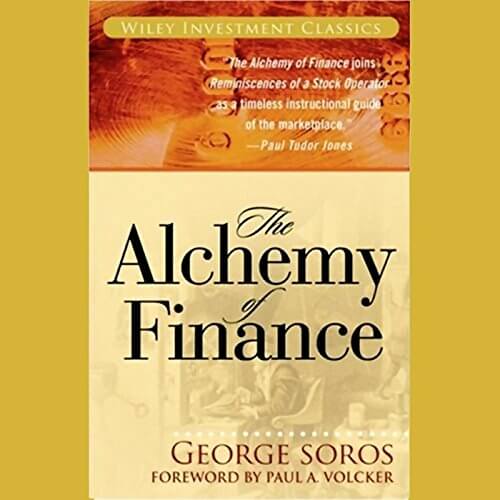
Author: George Soros
Category: Finance
Published: 1987
Pages: 378
Key Takeaways
- **Markets are Flawed**: Equilibrium is a myth. Markets are inherently unstable and characterized by disequilibrium.
- **Principle of Fallibility**: Participants' understanding of the market is always partial and distorted.
- **Principle of Reflexivity**: There is a two-way feedback loop between market perception and market reality.
- **Bias Creates Reality**: Market bias can influence the fundamentals (e.g., stock price affecting borrowing power).
- **Boom-Bust Cycles**: These are caused by positive feedback loops where misconceptions reinforce themselves until they become unsustainable.
- **Fertile Fallacies**: Flawed reasoning that initially validates itself through market action.
- **Regime Change**: Financial success comes from identifying when a stable regime is about to become unstable.
- **Asymmetric Strategy**: Test hypotheses with small risk; bet heavily when the market confirms a reflexive reversal.
- **The Observer Effect**: In finance, the observer is a participant, and their actions change the outcome.
- **Reject Certainty**: Embrace uncertainty and look for the flaw in the prevailing narrative.
About This Summary
THE ALCHEMY OF FINANCE: Reflexivity and the Hidden Mechanics of Markets
Based on The Alchemy of Finance by George Soros
INTRODUCTION: The Rejection of Equilibrium
The Efficient Market Hypothesis (EMH) is a delusion. Markets are not rational and do not tend toward equilibrium. They are characterized by Disequilibrium and inherent instability. This is the radical premise that George Soros, one of the most successful investors in history, puts forth in The Alchemy of Finance.
While most economists and financial theorists cling to the idea that markets are efficient information processors that naturally gravitate toward fair value, Soros argues the opposite. Markets are messy, biased, and fundamentally unstable. They don't reflect reality—they actively shape it.
- The Participant's Dilemma: In the natural sciences, the observer is separate from the phenomenon being observed. A physicist studying atoms doesn't change how atoms behave. But in social sciences—and especially in finance—the observer is part of the system. Their observation, interpretation, and subsequent actions change the reality they're trying to understand. This is a crucial distinction that most economic models ignore.
- The Problem with Prediction: Because participants influence outcomes, perfect prediction is impossible. The very act of making a prediction and acting on it alters the future. If everyone predicts a stock will rise, they buy it, causing it to rise—a self-fulfilling prophecy. But this also means the prediction was not based on some objective truth; it created its own truth.
- Bias as the Norm: Market participants act on expectations, which are frequently flawed. We must abandon the search for "perfect knowledge" and instead look for the prevailing bias—the dominant misconception that is currently driving market behavior.
PILLAR I: THE PRINCIPLE OF FALLIBILITY
Core Truth: In situations involving thinking participants, the participants' view of the world is always partial and distorted. There is no such thing as perfect understanding.
This principle challenges the foundational assumptions of classical economics. Traditional theory assumes that market participants have access to all relevant information and process it rationally. Soros argues this is fundamentally impossible.
Natural vs. Social Phenomena
- Facts in Nature: In the natural world, facts exist independently of what we think about them. Gravity works the same whether we believe in it or not. The speed of light doesn't change based on human opinion.
- Facts in Markets: In financial markets, our thinking actively shapes the facts. A company's stock price is not just a reflection of its underlying value—it affects its underlying value. A high stock price allows a company to raise capital cheaply, acquire other companies, attract top talent, and actually become more valuable. The perception creates the reality.
The Reflexive Impact of Price
Consider a real estate developer. If their stock price is high, they can:
- Issue shares at favorable prices to fund new projects
- Use their stock as currency for acquisitions
- Attract better financing terms from banks
- Hire more talented employees with stock-based compensation
All of these advantages actually improve the company's fundamentals. The high stock price wasn't just reflecting value—it was creating value. This is the essence of reflexivity.
Inherent Bias in All Analysis
- Market prices are never "right": They are always a reflection of bias, not truth. The question is not whether the market is correctly valued, but what bias is currently dominant and how might it evolve.
- The Flaw of Economic Science: Economic models that assume static relationships fail because relationships in finance are fluid. The parameters themselves change based on market conditions and participant behavior. A model that worked last year may be obsolete today because the very act of people using it has changed market dynamics.
PILLAR II: THE PRINCIPLE OF REFLEXIVITY
Reflexivity is the two-way feedback loop between perception and reality. It is the mechanism through which bias doesn't just reflect market conditions but actively shapes them.
The Two Functions of the Mind
Every market participant operates with two distinct mental functions:
- The Cognitive Function: Our attempt to understand the world as it is. We observe data, analyze trends, and form beliefs about reality.
- The Participating Function: Our attempt to change the world to match our desires. We take actions based on our beliefs, hoping to profit from or influence outcomes.
The Interference Problem
In most situations, these two functions can operate independently. A scientist can study bacteria without affecting how bacteria behave. But in financial markets, the two functions interfere with each other in profound ways.
- When we try to understand the market (cognitive function), we form beliefs
- When we act on those beliefs (participating function), we change the market
- The changed market now requires new understanding
- New understanding leads to new actions, which change the market again
This creates a continuous feedback loop that never reaches equilibrium. The cognitive function can never fully grasp a reality that is constantly being altered by the participating function.
The State of Far-From-Equilibrium
Because of reflexivity, markets exist in a state of Far-From-Equilibrium. They are not temporarily displaced from some natural resting point—they are inherently dynamic and unstable. Equilibrium is not a goal that markets approach but a theoretical fiction that never exists in practice.
This has profound implications:
- Mean reversion strategies may fail because there is no stable "mean" to revert to
- Trend-following can work because trends are self-reinforcing rather than self-correcting
- Volatility clusters because instability breeds instability
- Crashes happen not because markets "correct" but because self-reinforcing dynamics can reverse suddenly
PILLAR III: THE ANATOMY OF BOOM-BUST CYCLES
Reflexivity doesn't just create small market inefficiencies—it generates large-scale boom-bust cycles that can reshape entire economies. Understanding the lifecycle of these cycles is essential for the reflexive investor.
Stage 1: The Incipient Trend
Every boom-bust cycle begins with a genuine fundamental development. This could be:
- A technological breakthrough (internet, AI, blockchain)
- A financial innovation (mortgage-backed securities, derivatives)
- A macroeconomic shift (falling interest rates, emerging market growth)
- A regulatory change (deregulation, new tax policies)
At this stage, the trend is legitimate. There is a real change in the underlying fundamentals that justifies some repricing of assets.
Stage 2: The Fertile Fallacy
Here is where reflexivity takes over. A misconception develops that initially validates itself. Market participants form a belief about the trend that is partly true but also contains a critical flaw.
Examples of fertile fallacies:
- "Real estate prices never fall nationally" (2000s housing bubble)
- "Emerging markets have decoupled from developed economies" (2007)
- "Revenue growth matters more than profitability" (1990s tech bubble)
- "This time is different" (every bubble ever)
The misconception isn't entirely wrong—that's why it's fertile. It contains enough truth to be plausible and to generate early profits for believers.
Stage 3: The Self-Reinforcing Cycle (Benign Circle)
Rising prices validate the misconception, attracting more believers. This creates a Benign Circle:
- Belief in the trend → Investment in the trend
- Investment → Rising prices
- Rising prices → Confirmation of belief
- Stronger belief → More investment
- More investment → Even higher prices
Each turn of the wheel strengthens the cycle. The gap between perception (the misconception) and reality (the underlying fundamentals) widens, but the cycle appears robust because prices keep validating the belief.
During this phase:
- Skeptics are punished with poor returns
- True believers are rewarded with spectacular gains
- The misconception becomes "common wisdom"
- Leverage increases as confidence grows
- New participants enter, attracted by past returns
Stage 4: The Critical Threshold
Eventually, the divergence between perception and reality becomes unsustainable. External constraints that sentiment cannot wish away begin to push back:
- Valuations become so extreme that yields are unattractive
- Leverage reaches levels that make the system fragile
- The underlying fundamentals cannot support further price increases
- Some external shock exposes the misconception
The system is now stretched to its limit. It has entered the Twilight Zone—a period of maximum vulnerability where the trend can continue briefly but is fundamentally exhausted.
Stage 5: The Crash (Vicious Circle)
The reversal, when it comes, is typically violent. The same reflexive mechanisms that powered the boom now fuel the collapse:
- Doubt in the trend → Selling
- Selling → Falling prices
- Falling prices → Confirmation of doubt
- Stronger doubt → Panic selling
- Panic selling → Crash
The Vicious Circle is often faster and more violent than the Benign Circle that preceded it. Fear is a more powerful motivator than greed. Margin calls force selling regardless of conviction. The misconception is exposed, and those who believed most strongly suffer most.
PART IV: THE REAL-TIME EXPERIMENT
One of the most remarkable aspects of The Alchemy of Finance is Soros's decision to test his theory in real-time. The book includes his investment diary from 1985-1986, where he documented his thinking and trading as events unfolded.
The Imperial Circle (1980s)
Soros identified a classic reflexive pattern in the early 1980s. High US interest rates, implemented to fight inflation, attracted foreign capital seeking higher yields. This capital inflow strengthened the dollar.
The strong dollar made US assets even more attractive to foreign investors (positive feedback). Meanwhile, the trade deficit widened as a strong dollar made imports cheap and exports expensive.
Soros recognized this as a reflexive bubble:
- High rates → Capital inflow → Strong dollar → More capital inflow
- But also: Strong dollar → Trade deficit → Eventually unsustainable
He predicted the cycle would reverse violently when policy changed. When the Plaza Accord was announced (coordinated intervention to weaken the dollar), Soros was positioned for the reversal and profited enormously.
The Asymmetric Strategy
Soros developed a disciplined approach to trading reflexive patterns:
Step 1: Identify a Far-From-Equilibrium Setup
Look for situations where prices have diverged significantly from fundamentals due to a self-reinforcing bias. The bigger the divergence, the bigger the eventual reversal.
Step 2: Form a Hypothesis About the Flaw
What is the misconception driving the trend? Why is it unsustainable? What external constraints will eventually force a reversal?
Step 3: Test the Market with Small Trades
Don't bet big on your hypothesis immediately. Enter with small positions to test whether the market confirms or refutes your thesis.
Step 4: Listen to the Market
If the market confirms your hypothesis, increase your position. If it refutes your thesis, exit quickly. The market is always providing feedback—pay attention.
Step 5: Bet Big When Confirmed
Once your thesis is validated, scale up aggressively. Reflexive reversals can be violent and profitable. This is when you make the big money.
Step 6: Exit When Wrong
If your hypothesis is wrong, admit it immediately and exit. Soros famously said: "It's not whether you're right or wrong that's important, but how much money you make when you're right and how much you lose when you're wrong."
The Philosophy of Fallibility in Practice
Soros applied his principle of fallibility to his own investing:
- He assumed his views were always partially wrong
- He constantly questioned his positions
- He was willing to reverse course rapidly
- He didn't need to be right to make money—he needed to recognize when he was wrong before it was too late
PART V: BEYOND MARKETS - REFLEXIVITY IN SOCIETY
Soros extends his theory of reflexivity beyond financial markets to society itself. The same dynamics that create boom-bust cycles in markets operate in politics, culture, and history.
Open vs. Closed Societies
Drawing on Karl Popper's philosophy, Soros distinguishes between:
Open Society: Recognizes fallibility. No one has a monopoly on truth. Institutions exist to correct errors and allow adaptation. Democratic, tolerant, empirical.
Closed Society: Claims infallibility. One ideology or group claims to possess absolute truth. Dissent is suppressed. Totalitarian, dogmatic, static.
Reflexivity operates in both:
- In open societies, reflexivity allows self-correction and progress
- In closed societies, reflexivity creates increasingly unstable regimes that eventually collapse catastrophically
The Tragedy of False Certainty
The most dangerous force in markets and society is false certainty—the belief that one has discovered eternal truth. This belief:
- Prevents adaptation to new information
- Creates overconfidence and excessive risk-taking
- Makes inevitable failures more catastrophic
- Blinds believers to the reflexive nature of their own actions
CONCLUSION: The 5 Mandates for Reflexive Analysis
To apply Soros's framework in practice, follow these principles:
1. Identify the Prevailing Bias
What is the market assuming is true that is actually a distortion? Every market has a dominant narrative—find it and examine it critically. The bias is not always wrong, but it is always incomplete.
2. Locate the Reflexive Connection
How is the bias affecting the fundamentals? Is there a feedback loop where prices influence the underlying reality? The stronger the reflexive connection, the more unstable the situation.
3. Assess Trend Maturity
Where are we in the boom-bust cycle? Is it an early self-reinforcing Benign Circle with room to run? Or a late-stage bubble approaching the Critical Threshold? Is the reversal into a Vicious Circle already underway?
4. Watch for the Flaw
Monitor external constraints that sentiment cannot wish away. Valuations, leverage, regulation, policy, and macroeconomic fundamentals eventually matter. The bias cannot override reality forever.
5. Execute on Asymmetry
Bet on the reversal only when divergence is extreme. Small positions to test, large positions when confirmed. Accept losses quickly, let winners run. The goal is asymmetric payoffs: limited downside, unlimited upside.
Final Wisdom
"The market is a drama of human error. Be the participant who understands the script."
George Soros has not just theorized about markets—he has proven his theory with one of the most successful investment records in history. The Quantum Fund returned an average of over 30% annually for decades.
His secret was not superior information or faster analysis. It was a fundamentally different understanding of how markets work. While others sought equilibrium and efficiency, Soros sought disequilibrium and reflexivity. While others tried to predict the future, Soros tried to understand the present bias and positioned for its eventual correction.
The Alchemy of Finance is not just a book about investing—it is a philosophical treatise on the nature of knowledge, the limits of understanding, and the dynamic interplay between perception and reality. For any serious student of markets, it is essential reading.