Science Fiction summary
Dune Summary: Key Ideas and Takeaways
Read a practical summary of Dune by Frank Herbert, including key takeaways, lessons, and useful ideas.
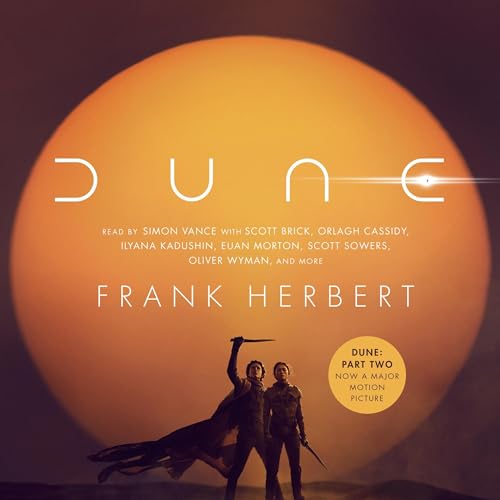
Author: Frank Herbert
Category: Science Fiction
Published: 1965
Pages: 688
Key Takeaways
- Power corrupts, and even heroes can become tyrants when they gain absolute control over others
- Environmental adaptation shapes culture more profoundly than political ideology or religious belief
- Resource scarcity and control create the foundation for political conflict and imperial exploitation
- Religion can be weaponized as a tool of manipulation and control rather than genuine spiritual guidance
- Charismatic leaders pose inherent dangers to societies that place blind faith in their wisdom
- The tension between fate and free will is central to human experience and moral responsibility
- Ecological balance is fragile and irreplaceable once destroyed by human intervention
- True survival requires adaptation to environment rather than domination over it
- Prophecy and prescience can trap individuals in predetermined paths they cannot escape
- The spice melange represents how dependency on vital resources creates vulnerability and exploitation
- Political structures built on feudalism and resource monopolies inevitably breed corruption and conflict
- The Bene Gesserit demonstrate how secret organizations can manipulate entire civilizations through planted myths
- Paul's transformation from hero to reluctant god shows how power changes even well-intentioned individuals
- The Fremen culture exemplifies how harsh environments create strong, resilient societies
- Herbert warns against messianic thinking and the dangers of absolute devotion to any leader
About This Summary
An Analysis of Frank Herbert's "Dune": Power, Prophecy, and Peril
Frank Herbert's 1965 novel, Dune, stands as a monumental work of science fiction, weaving a complex tapestry of political intrigue, ecological consciousness, and philosophical exploration. More than a simple adventure story, it is a profound examination of the human condition set against the backdrop of a vast, interstellar empire. This analysis will distill the novel's core narrative and its profound, interwoven themes, offering a comprehensive overview of this enduring classic.
Core Plot Summary: A Hero's Rise, a Universe's Peril
The Setup: The narrative unfolds in a distant future, within a feudalistic galactic empire governed by the Padishah Emperor Shaddam IV. The political structure is a delicate tripod of power: the Emperor and his elite military force, the Sardaukar; the Spacing Guild, which holds a monopoly on interstellar travel through its prescient Navigators; and the great noble houses of the Landsraad, who constantly vie for influence and wealth. This delicate balance is maintained through a complex web of alliances, betrayals, and the overarching economic interests of the CHOAM company, which controls the wealth of the empire. At the heart of all conflict lies the desert planet Arrakis, the sole source of the consciousness-expanding spice, melange. This substance is the most valuable in the universe, essential for the Guild Navigators to foresee safe paths through foldspace, for the Bene Gesserit sisterhood to unlock their superhuman abilities, for extending human life, and for heightening awareness. Control of Arrakis means control of the spice, and therefore, control of the universe. The story centers on the centuries-long blood feud between the noble and honorable House Atreides and the cruel, scheming House Harkonnen, a rivalry that traces its roots back 10,000 years to the Battle of Corrin, the final conflict of the Butlerian Jihad against thinking machines.
The Trap: Citing his fear of Duke Leto Atreides' growing popularity within the Landsraad and the effectiveness of his elite fighting force, the Emperor conspires with the depraved Baron Vladimir Harkonnen to annihilate House Atreides. He orders House Atreides to relinquish their lush, ancestral home world of Caladan and assume stewardship of the spice-mining operations on Arrakis, a fiefdom long held and brutally exploited by the Harkonnens. This apparent promotion is, in reality, a meticulously calculated trap, designed to lure the Atreides into a hostile environment, far from their allies and resources, and crush them between the Harkonnen forces and the Emperor's own Sardaukar troops.
Fall and Flight: Soon after their arrival on the unforgiving desert planet, the Harkonnens, secretly aided by the Emperor's elite Sardaukar disguised in Harkonnen livery, launch a devastating and overwhelming attack. Betrayed from within by their trusted Suk doctor, Wellington Yueh—whose conditioning was broken by the Harkonnens holding his wife captive—Duke Leto is captured and killed. His son, the young heir Paul Atreides, and his concubine, the Bene Gesserit Lady Jessica, manage a desperate escape into the vast and unforgiving desert wilderness of Arrakis, a landscape considered a death sentence for any outsider.
The Fremen Awakening: Paul and Jessica find unlikely refuge among the Fremen, the planet's native inhabitants who have adapted to the brutal environment with a fierce and deeply spiritual culture. The Fremen are the descendants of the Zensunni Wanderers, a religious sect that has been persecuted across the galaxy for millennia. Their society is built around the conservation of water, which is the most precious resource on Arrakis. As Paul and Jessica integrate into Fremen society, Paul's latent prescient abilities, a result of the Bene Gesserit's secret breeding program and his own training, are awakened and amplified by his exposure to the spice-saturated desert. The Fremen, whose culture has been deliberately seeded with prophecies by the Bene Gesserit's Missionaria Protectiva program, begin to see Paul as the fulfillment of those legends—their long-awaited messiah, the Lisan al-Gaib ("The Voice from the Outer World"). Paul adopts the Fremen name "Muad'Dib," the desert mouse, and is hailed as their prophesied leader, a role he accepts with growing apprehension.
The Ascension: Harnessing the Fremen's fierce fighting skills, their intimate knowledge of the desert, and their ability to ride the colossal sandworms, Paul forges them into a formidable guerilla army. He leads them in a masterful campaign against Harkonnen rule, systematically dismantling their spice production and bringing the galactic economy to its knees. This forces a direct confrontation with the Emperor, who travels to Arrakis with his Sardaukar legions to quell the uprising. In a decisive and climactic battle, Paul's Fremen warriors, riding the giant sandworms, overwhelm and defeat both the Harkonnen forces and the Emperor's supposedly invincible Sardaukar.
The Victor's Burden: Paul emerges from the conflict as the undisputed master of Arrakis. He avenges his father by killing Baron Harkonnen's heir, the brutish Feyd-Rautha, in a ritual duel and forces the Emperor to abdicate by threatening the complete destruction of the spice. By securing absolute control of Arrakis and its precious resource, Paul becomes the most powerful figure in the known universe and ascends to the Imperial throne, taking the Emperor's daughter, Princess Irulan, as his consort to legitimize his rule. However, his triumph is a profound and tragic irony. Paul is haunted by his prescient visions, which show him that his victory has unleashed an unstoppable, galaxy-spanning holy war—a bloody jihad—that will be carried out in his name, leading to the deaths of sixty-one billion people. He becomes a reluctant god, trapped by the very messianic fervor he consciously used to gain power, unable to steer humanity away from this catastrophic path he has set in motion.
Thematic Analysis: The Ideas Beneath the Sand
Ecology and Survival: The harsh desert ecosystem of Arrakis is more than just a setting; it is a central character that shapes every aspect of the narrative. Frank Herbert, who dedicated the novel to "dry-land ecologists," meticulously details how the environment dictates culture, politics, and survival. The Fremen's entire society is a testament to adaptation in extreme conditions, from their water-conserving stillsuits that recycle the body's moisture to their deep reverence for the giant sandworms, which they worship as manifestations of their god, Shai'Hulud. The novel explores the delicate balance of this ecosystem, where the sandworms are both a deadly threat and the source of the spice that underpins the entire galactic economy. The Fremen's long-term goal of terraforming Arrakis into a lush, green world raises complex questions about the morality of environmental manipulation and whether humanity should reshape a planet to suit its own needs, even if it means destroying the unique life that has adapted to it. This ecological focus serves as a powerful allegory for humanity's relationship with its own planet, highlighting the dangers of resource exploitation and the profound connection between a people and their environment.
Power, Politics, and Exploitation: Dune is a masterclass in the analysis of power in its many forms. It examines the intricate dance of political maneuvering between the great houses of the Landsraad, the economic power derived from controlling a vital resource (the spice is a clear parallel to modern-day oil), and the subtle art of social manipulation. The central conflict is driven by the universal desire to control the spice, showcasing how resource dependency can fuel political strife, imperialistic exploitation, and war. The feudal structure of the empire, with its powerful houses, a seemingly absolute Emperor, and the monopolistic Spacing Guild, creates a tinderbox of competing interests where loyalty is a commodity and betrayal is a constant threat. Herbert demonstrates that power is not merely military might, but also the control of information, the manipulation of economic systems, and the ability to inspire unwavering devotion.
Religion as a Tool of Control: Herbert presents religion not as a matter of genuine faith, but as a potent and cynical instrument of power. The Bene Gesserit sisterhood exemplifies this through their Missionaria Protectiva, a program that deliberately "seeds" primitive worlds with prophecies and myths. These "infectious superstitions" are designed to be exploited later by a Bene Gesserit in need, allowing them to masquerade as a prophesied figure and manipulate the native populations for their own ends. Paul and his mother, Jessica, consciously and skillfully leverage these implanted legends to rally the Fremen, demonstrating how messianic beliefs can be wielded to forge a powerful and fanatical army. The novel critically examines the dangers of religious fanaticism and how easily genuine faith can be co-opted for political purposes, turning believers into weapons.
The Danger of Charismatic Heroes: One of the most critical warnings in Dune is against the uncritical worship of charismatic leaders. Frank Herbert himself was deeply suspicious of hero-worship and stated, "charismatic leaders ought to come with a warning label on their forehead: 'May be dangerous to your health.' Paul Atreides embodies this cautionary principle perfectly. He is initially presented as a classic hero on a righteous quest for vengeance and justice. However, his heroic rise and his embrace of the messianic role directly lead to a catastrophic, galaxy-wide holy war that he is powerless to stop. Paul becomes a tragic figure, a superhero whose very success unleashes unparalleled destruction, forcing readers to question the nature of heroism itself and the inherent dangers of placing absolute faith and power in the hands of a single individual.
Fate vs. Free Will: The novel intricately and relentlessly explores the philosophical tension between determinism and free will. The Bene Gesserit's centuries-long, clandestine genetic breeding program is a profound attempt to control fate and produce a superbeing, the male Kwisatz Haderach, who can see into the future and guide humanity. Paul's prescient abilities, unlocked and amplified by the spice, give him terrifyingly clear visions of possible futures, suggesting he has the free will to choose his path. Yet, he finds himself increasingly trapped by the future he foresees, locked onto a "terrible purpose" from which he cannot deviate without seeing even worse outcomes. This creates a profound philosophical struggle, questioning whether knowing the future ultimately negates the freedom to change it. Paul's journey suggests that while he can choose the path, all paths lead to the same catastrophic destination, implying that humanity is ultimately powerless against the tides of fate.