Self-Help summary
101 Essays That Will Change the Way You Think Summary: Key Ideas and Takeaways
Read a practical summary of 101 Essays That Will Change the Way You Think by Brianna Wiest, including key takeaways, lessons, and useful ideas.
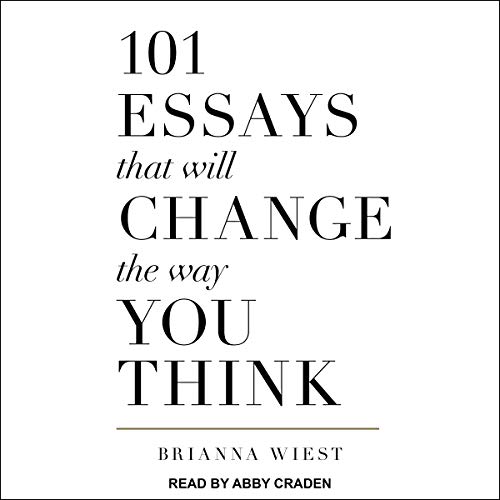
Author: Brianna Wiest
Category: Self-Help
Published: 2016
Pages: 448
Key Takeaways
- **Your Life Reflects Your Thoughts**: Your circumstances are a direct reflection of your thinking patterns, not external events.
- **Emotional Maturity is Feeling Without Control**: The ability to feel everything without being controlled by anything is true emotional intelligence.
- **Self-Sabotage is a Survival Mechanism**: We sabotage what we don't believe we deserve—it's the brain keeping us in the 'safe' known.
- **Purpose Over Passion**: Passion is volatile emotion; purpose is logical commitment. Logic, not emotion, drives fulfillment.
- **The 15 Types of Distorted Thinking**: Mental fallacies like catastrophizing and black-and-white thinking prevent us from seeing reality clearly.
- **Routine Creates Flow**: Consistency in small habits creates a psychological container for the ego to rest, allowing creativity to emerge.
- **Pain is a Catalyst**: Pain is not an indicator something is wrong—it's a catalyst for growth and self-discovery.
- **Radical Responsibility**: We cannot control events, but we are the sole authors of our interpretations and reactions.
- **Happiness is a Skill**: Happiness is not a destination to reach but a practice to cultivate in the present moment.
- **Metanoia is Daily Practice**: Complete change of mind is not a one-time event but a daily choice of awareness over habit.
About This Summary
101 Essays That Will Change the Way You Think
Introduction: The Architecture of the Mind
Brianna Wiest's central thesis is both simple and revolutionary: Your life is a direct reflection of your thoughts, not your circumstances. Wiest, a graduate in professional writing with a deep interest in psychology and philosophy, posits that humans are often victims of their own "monoculture"—a governing pattern of beliefs that we unconsciously accept as objective truth.
The book argues that most of our suffering stems from a misalignment between our conscious desires (e.g., wanting success, love, or health) and our subconscious fears (e.g., the fear of being seen, the fear of losing control, or the belief that we are unworthy). By exploring the mechanics of how we think, Wiest encourages a "metanoia"—a complete change of mind and heart.
Her philosophy is heavily influenced by Stoicism (the idea that the obstacle is the way) and modern cognitive-behavioral insights, suggesting that emotional maturity is the ability to feel everything without being controlled by anything.
The 8 Pillars of Wisdom
To understand the 101 essays holistically, they can be grouped into eight core pillars:
I. Emotional Intelligence & Maturity
This pillar focuses on the radical idea that "bad" feelings are not enemies to be defeated but signals to be understood. Wiest argues that emotional maturity is the thoroughness with which we allow ourselves to feel.
II. The Psychology of Routine
Wiest reframes routine not as a boring constraint but as a pathway to "flow." This pillar emphasizes that consistency in small habits creates a safe psychological container for the ego to rest, allowing creativity and purpose to emerge.
III. Breaking Self-Sabotage & Subconscious Processing
Wiest explores why we hold ourselves back. She posits that self-sabotage is a survival mechanism—our brain's way of keeping us safe in the "comfortable" known, even if the known is painful.
IV. Purpose Over Passion
In a culture that lionizes fleeting "passion," Wiest advocates for "purpose." Passion is an emotional high; purpose is a logical commitment. This pillar teaches that logic, not emotion, is the true engine of a fulfilling life.
V. Social Intelligence & Interpersonal Boundaries
The book suggests that our relationship with others is an extension of our relationship with ourselves. This pillar focuses on projection, validation, and the necessity of defining ourselves from the inside out.
VI. Cognitive Deconstruction & Distorted Thinking
By identifying the "15 Types of Distorted Thinking" (e.g., catastrophizing, black-and-white thinking), Wiest provides the tools to dismantle the mental filters that color our reality.
VII. Radical Responsibility & The Power of Choice
Wiest asserts that we are responsible for our reactions. This pillar is about shifting from a "victim" mindset to a "creator" mindset, recognizing that while we cannot control events, we are the sole authors of our interpretations.
VIII. Mindfulness & Present-Moment Awareness
The final pillar addresses the "illusion of the future." Wiest argues that we cannot arrive at happiness; we can only inhabit it in the present moment through a series of "micro-habits" and intentional awareness.
Key Essays Breakdown
Essays 1–10: The Foundation of Thought
Subconscious Behaviors Keeping You from Your Best Life: This essay identifies that "feeling stuck" is often a choice to remain in the familiar. Wiest argues that growth requires walking into the unknown.
The Psychology of Daily Routine: Successful people use routine to automate the mundane, freeing the mind for higher-level thinking.
10 Things Emotionally Intelligent People Do Not Do: Highlights that the wise do not assume feelings are reality or blame others for their internal states.
Why You Should Pursue Purpose Over Passion: Passion is volatile; purpose is a grounding force that sustains us through the "boring" parts of success.
The 15 Types of Distorted Thinking: A checklist of mental fallacies (like overgeneralization) that prevent us from seeing reality clearly.
Why We Choose Suffering Over Change: We prefer a known hell to an unknown heaven. Real change starts when the pain of staying the same exceeds the fear of changing.
Essays 11–30: The Emotional Landscape
The Power of Vulnerability: True strength is the willingness to be seen in our imperfection.
Shifting Your Perception of Comfort: Resistance is a sign that you are at the edge of your comfort zone. Growth lives in that tension.
Why You Are Not Upset for the Reason You Think You Are: Our current anger is usually a placeholder for an older, unaddressed wound.
The Difference Between Your Ego and Your Higher Self: The ego seeks protection; the self seeks expansion.
The Importance of Solitude: Being alone is where we learn to hear our own voice amidst the "noise" of the world.
The Psychology of Self-Sabotage: We sabotage what we don't believe we deserve.
Why You Struggle to Be Happy: Happiness is a skill and a practice, not a destination.
Essays 31–50: Habits, Logic, and Self-Esteem
The Truth About Success: Success is usually quiet, repetitive, and unglamorous.
How to Stop Overthinking: Action is the antidote to anxiety. Clarity comes from doing.
The Brain Doesn't Know Good or Bad: It only knows "known" and "unknown."
The 6 Pillars of Self-Esteem: Self-efficacy and self-respect are the foundations of confidence.
The Power of Surrender: Surrender isn't giving up; it's stopping the war with reality.
The Myth of Motivation: Don't wait to "feel like it." Use systems to bypass the need for motivation.
How to Stop Caring What People Think: Recognizing that people's opinions are a reflection of them, not you.
Why We Distract Ourselves: Distraction is the avoidance of our internal world.
Essays 51–70: Deepening Perspective
The Difference Between Love and Attachment: Attachment is "I need you to be okay"; love is "I want you to be you."
How to Know You've Evolved: You no longer react to the things that used to trigger you.
Why You Need to Grieve Your Old Self: Every new version of you requires the death of the old one.
The Wisdom of Your Body: Listening to somatic signals when the mind is lying.
How to Practice Radical Acceptance: Saying "yes" to the present moment, exactly as it is.
Why You Are Not a Victim of Your Past: Your past informs you, but it does not have to define you.
The Psychology of "Enough": Learning to be satisfied is the ultimate form of wealth.
The Importance of Boundaries: Boundaries are how we teach people how to love us.
The Truth About Relationships: They are mirrors. What you see in them is a part of you.
Essays 71–90: Expanding Consciousness
How to Deal with Toxic People: Recognize that they are a reflection of your own lack of boundaries.
Why You Are Afraid of Your Own Power: Success brings responsibility, which is why we hide.
The Psychology of Money: Wealth is a mindset of abundance, not just a bank balance.
How to Be Truly Productive: Focus on impact, not "busyness."
Why You Should Stop Waiting for Permission: No one is coming to save you or "discover" you.
How to Break a Habit: Replace the cue and the reward, don't just "willpower" it away.
The Psychology of Creativity: Creativity is the act of letting the subconscious speak.
Why You Struggle with Intimacy: To be intimate is to be seen, and we are afraid of being found wanting.
Every Relationship You Have is with Yourself: We interpret others through the lens of our own self-worth.
Why You Should Follow Your Curiosity: Curiosity is a better guide than passion.
Essays 91–101: The Metanoia
The Value of Stillness: In stillness, we find the answers that were drowned out by the noise.
Why You Should Trust Your Intuition: Your gut knows what your head hasn't figured out yet.
How to Deal with Uncertainty: Embrace the "not knowing" as the space where possibility lives.
The Psychology of Gratitude: Gratitude shifts the brain from a state of lack to a state of abundance.
Why You Should Be Kind to Everyone: Everyone is fighting a hard battle; kindness is our common ground.
The Value of Integrity: Integrity is doing the right thing when no one is watching.
How to Practice Mindfulness in Daily Life: Bringing awareness to the "mundane"—washing dishes, walking, breathing.
The Importance of Hope: Hope is the belief that the future is worth showing up for.
Why You Are Enough: Your worth is inherent; it is not something you "earn" through success.
What You Should Know if You're Experiencing Metanoia: A final message on the "change of mind." Wiest concludes that big love is not the same as "forever love," and that loving yourself is an action, not a feeling.
Key Transformative Shifts
Wiest emphasizes the "Before" vs. "After" mindset. Here are the most transformative shifts:
| Concept | Before (Reactive Mindset) | After (Proactive Mindset) | |---------|---------------------------|---------------------------| | Happiness | A destination I will reach when X happens. | A skill I practice in the ordinary present. | | Pain | An indicator that something is wrong. | A catalyst for growth and self-discovery. | | Routine | A boring, soul-crushing cage. | A sanctuary that fosters flow and creativity. | | Others' Opinions | A definition of my worth and identity. | A projection of their own internal world. | | Self-Sabotage | A personal failure or lack of willpower. | A subconscious defense mechanism to keep me "safe." | | Passion | A fire I must find and follow. | A feeling I bring to my chosen purpose. |
Practical Application: A Manual for Living
To implement Wiest's 101 lessons, one must engage in a disciplined practice of "metacognition"—thinking about your thinking.
The Vocabulary Shift
Stop saying "I have to" and start saying "I choose to." This acknowledges your agency in even the smallest tasks.
The Routine Audit
Create a "safety container" by anchoring your morning and evening in non-negotiable routines. This reduces decision fatigue and calms the ego.
The Emotional Check-in
When a negative emotion arises, instead of trying to "fix" it or distract from it, ask: "What is this feeling trying to show me about my needs or boundaries?"
The Cognitive Filter
Practice identifying your "distorted thinking." When you feel a spiral, name it: "I am catastrophizing right now. This is a mental filter, not objective reality."
Micro-Habits
Focus on "the 1%." If you want to be a writer, write one sentence. If you want to be healthy, walk for five minutes. Prove the new identity to your subconscious through repetition.
Conclusion: The Manual for Being Human
Brianna Wiest's "101 Essays" is more than a book; it is a curriculum for consciousness. Its long-term value lies in its refusal to offer "quick fixes." Instead, it provides a rigorous framework for deconstructing the self.
The book serves as a "manual for being a human" because it addresses the universal struggle between the ego's desire for safety and the soul's desire for growth. By reading and internalizing these essays, the reader moves from being a passive observer of their own life to being its conscious architect.
The ultimate lesson is that while we cannot change the world, by changing the way we think, we effectively change the world we live in. Metanoia is not a one-time event; it is a daily practice of choosing awareness over habit, purpose over passion, and truth over comfort.