Biography summary
Finding Ultra: Rejecting Middle Age, Becoming One of the World's Fittest Men, and Discovering Myself Summary: Key Ideas and Takeaways
Read a practical summary of Finding Ultra: Rejecting Middle Age, Becoming One of the World's Fittest Men, and Discovering Myself by Rich Roll, including key takeaways, lessons, and useful ideas.
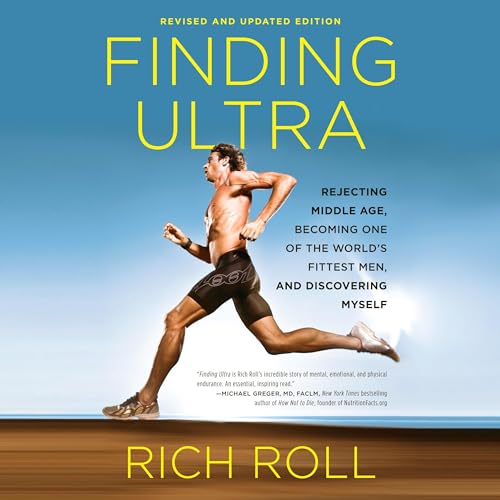
Author: Rich Roll
Category: Biography
Published: 2012
Pages: 320
Key Takeaways
- **Success Doesn't Immunize Against Struggle**: Achievement in one area doesn't protect you from addiction or dissatisfaction in others.
- **Sobriety is Just the Beginning**: Stopping a bad habit is necessary but not sufficient for thriving; you must actively build a new life.
- **Wake-Up Calls in Ordinary Moments**: Life-changing epiphanies often happen in mundane situations, like being winded on the stairs.
- **Research and Experimentation**: Don't blindly follow norms. Educate yourself and test what works for your unique physiology and life.
- **Plant-Based Performance**: Nutrition is a performance enhancer. Eating for vitality rather than entertainment changes everything.
- **Expand Your Goals**: As your capacity grows, your vision of what's possible should expand with it.
- **Leaning Into Suffering**: Embracing discomfort in controlled environments (like endurance sports) builds resilience for all life's challenges.
- **Compounding Small Decisions**: Transformation isn't one big leap but the sum of thousands of small, daily positive choices.
- **Redefine Your Limits**: Most limitations are self-imposed beliefs, not biological facts. Challenge your assumptions about aging and capacity.
- **Radical Honesty**: You cannot transform what you will not acknowledge. Brutal self-assessment is the prerequisite for change.
About This Summary
Finding Ultra: A Blueprint for Radical Life Transformation
Opening Overview
Rich Roll's "Finding Ultra" is far more than a memoir about athletic achievement—it's a raw, unflinching account of personal resurrection that speaks to anyone who has ever felt trapped by their own choices. At forty years old, overweight, exhausted, and climbing a flight of stairs in his own home, Roll experienced what he describes as a wake-up call that would fundamentally reshape his existence. This former college swimmer turned corporate entertainment lawyer had spent years drowning his potential in alcohol and poor lifestyle choices, only to discover that midlife crisis could become midlife opportunity.
What makes Roll's story particularly compelling is the sheer audacity of his transformation. Within two years of that pivotal staircase moment, he would complete the Ultraman World Championships—a grueling three-day, 320-mile odyssey involving a 6.2-mile ocean swim, 261.4 miles of cycling, and a 52.4-mile run. This wasn't simply about getting in shape; it was about completely reimagining what was possible for his life, his body, and his purpose.
The book has become a touchstone in both the plant-based nutrition movement and the broader personal development space because it challenges fundamental assumptions about aging, athletic capacity, and the relationship between diet and performance. Roll's journey demonstrates that transformation isn't reserved for the young or the already-athletic—it's available to anyone willing to confront themselves honestly and commit to profound change. His story resonates because it's both extraordinary and deeply relatable, proving that our darkest moments often contain the seeds of our greatest breakthroughs.
Chapter-by-Chapter Breakdown
The Rock Bottom Foundation
The book opens with Roll's childhood and early athletic promise as a competitive swimmer at Stanford University. These early chapters establish the foundation of natural talent and discipline that would later reemerge, but they also chronicle the beginning of his relationship with alcohol. Roll doesn't romanticize his past; instead, he presents it honestly, showing how addiction quietly infiltrated his life even during his seemingly successful college years.
The narrative shifts to his descent into full-blown alcoholism during law school and his early career as an entertainment lawyer. Roll describes the soul-crushing nature of his work, the mounting weight gain, and the progressive disconnection from his authentic self. These chapters are particularly powerful because they capture the insidious nature of slow decline—how we can wake up one day and barely recognize the person we've become.
The Moment of Truth
Roll dedicates significant attention to his sobriety journey, which began in his late twenties. He describes the intervention by his father, the decision to get sober, and the challenging early years of recovery. However, sobriety alone wasn't enough. Even after years without alcohol, Roll found himself physically deteriorating, overweight, and spiritually hollow. He was sober but not truly alive.
The pivotal moment arrives on the eve of his fortieth birthday when Roll finds himself winded and alarmed after climbing the stairs in his home. This scene becomes the book's emotional fulcrum—the instant when denial crumbles and clarity emerges. Roll describes the terror of realizing he was on a path toward disease and premature death, despite having already overcome his primary addiction.
The Decision to Change
Following his staircase epiphany, Roll commits to radical lifestyle change. He begins researching nutrition and discovers the work of plant-based advocates. Initially skeptical, he experiments with eliminating animal products from his diet, documenting the immediate changes in his energy levels and recovery. These chapters detail his self-education process, the books he read, and the paradigm shifts in his thinking about food as fuel versus food as entertainment or comfort.
Roll also describes his tentative return to exercise, starting with short swims and bike rides. The humiliation of being passed by children on bikes, the struggle to complete even modest workouts—he spares no detail in conveying how far he'd fallen from his athletic past. Yet there's also wonder in these passages, as he rediscovers the joy of movement and begins to glimpse possibility.
Plant-Powered Performance
Roll dedicates substantial portions of the book to explaining his nutritional philosophy and the science supporting plant-based athletics. He addresses common concerns about protein, describes his typical meals, and shares the research that convinced him this approach was sustainable for extreme endurance performance. These chapters balance personal narrative with practical information, making the case that plant-based eating isn't just ethical or environmental—it's performance-enhancing.
He chronicles the progressive improvement in his training as his diet optimized. Recovery times shortened, inflammation decreased, and his capacity for volume training expanded dramatically. Roll emphasizes that this wasn't about deprivation but about abundance—consuming massive quantities of nutrient-dense whole foods that fueled his increasingly ambitious athletic goals.
Building Toward the Impossible
As Roll's fitness improves, his goals expand exponentially. He progresses from completing his first triathlon to tackling increasingly demanding ultra-distance events. These chapters capture the physical and mental preparation required for ultra-endurance competition, but also the deeper psychological work of believing he deserved to pursue such audacious dreams.
Roll introduces readers to the ultra-endurance community, a tribe of athletes who redefine possible. He describes the unique mental toughness required for events lasting six, twelve, or twenty-four hours, where pain management and psychological resilience matter as much as physical conditioning. The narrative tension builds as he sets his sights on Ultraman, widely considered among the world's most challenging endurance events.
The Ultraman Challenge
Roll's account of his first Ultraman World Championships in Hawaii represents the book's climactic sequence. He describes each day of the three-day event in vivid detail: the terror of the open ocean swim in rough conditions, the grueling bike segments across volcanic terrain in punishing heat, and the marathon-plus run that tests the absolute limits of human endurance.
Beyond the physical challenge, Roll explores the transcendent mental states that emerge during extreme suffering. He writes about the ego dissolution that occurs when pain persists beyond the capacity to resist it, the strange peace found in complete surrender to the present moment. These passages transform the Ultraman from mere athletic competition into spiritual practice, a meditation on impermanence, suffering, and the nature of self.
The chapter also chronicles his relationship with his support crew, particularly his wife Julie, whose partnership enabled his pursuit. Roll honestly addresses the strain his training placed on his family and the vulnerability required to accept help during the race itself.
Integration and Authenticity
The final chapters explore what happened after Ultraman—the challenge of integrating extraordinary experience into ordinary life. Roll describes his decision to leave corporate law and pursue work aligned with his values, despite the financial uncertainty. He launched his podcast, began speaking about his transformation, and committed to living authentically even when it meant leaving behind security and status.
Roll reflects on the deeper lessons of his journey: that transformation isn't about becoming someone new but uncovering who you truly are beneath layers of conditioning and compromise. He discusses the ongoing nature of personal development, acknowledging that crossing finish lines, while meaningful, doesn't erase the need for continued growth and self-examination.
These concluding chapters address the practical realities of maintaining transformation—how to sustain motivation when the initial excitement fades, how to navigate relationships as you change, and how to serve others from your own experience without becoming preachy or self-righteous.
Core Themes and Arguments
Plant-Based Nutrition and Athletic Performance
Roll's most controversial and compelling argument challenges the conventional wisdom that elite athletic performance requires animal protein. Drawing on emerging research and his own experience, he makes the case that plant-based nutrition not only supports endurance athletics but may actually enhance performance through faster recovery, reduced inflammation, and improved cardiovascular health. He doesn't advocate for plant-based eating solely on ethical grounds—though those matter to him—but primarily on performance and health metrics.
The book systematically dismantles protein myths, explaining how plant foods provide complete amino acid profiles when consumed in variety. Roll emphasizes whole food nutrition over processed alternatives, focusing on fruits, vegetables, whole grains, legumes, nuts, and seeds. His approach is less about restriction than optimization—eating for maximum vitality rather than minimum harm.
Addiction, Recovery, and Personal Transformation
Roll's frank discussion of alcoholism serves as a foundation for understanding his later transformation. He draws explicit connections between the all-or-nothing thinking that characterized his drinking and the intensity he later brought to athletics. Rather than pathologizing this tendency, he explores how to channel addictive energy toward life-affirming pursuits.
The book suggests that addiction often masks deeper spiritual hunger—a longing for transcendence, connection, or purpose that substance abuse falsely promises to fulfill. Roll's journey demonstrates that lasting recovery requires addressing this underlying hunger, not merely abstaining from the substance. His ultra-endurance pursuits, plant-based nutrition, and service to others become healthy expressions of the same intensity that once fueled his drinking.
The Midlife Crisis as Opportunity for Reinvention
Rather than accepting midlife as inevitable decline, Roll frames it as opportunity. The book challenges cultural narratives that treat aging as synonymous with diminishing capacity, demonstrating that fitness, vitality, and achievement aren't exclusive to youth. Roll argues that midlife actually offers unique advantages: self-knowledge, resources, and the wisdom to pursue meaningful rather than merely impressive goals.
His transformation at forty becomes proof that our past doesn't determine our future. The skills and discipline developed in earlier life—even if dormant—remain accessible. Roll's story suggests that midlife crisis emerges not from aging itself but from the gap between who we've become and who we know we could be.
Ultra-Endurance as Metaphor for Life Challenges
Throughout the book, Roll uses ultra-endurance athletics as metaphor for navigating life's inevitable suffering. The pain of a hundred-mile run mirrors the discomfort of personal growth, career change, or relationship challenges. Both require moving forward despite discomfort, finding meaning in the process rather than fixating on the destination, and developing the capacity to tolerate uncertainty.
The ultra-endurance mindset—breaking overwhelming challenges into manageable segments, staying present rather than catastrophizing, maintaining forward progress even at a crawl—applies equally to non-athletic transformations. Roll demonstrates that the psychological tools for completing an Ultraman translate directly to staying sober, changing careers, or rebuilding relationships.
Mind-Body Connection and Holistic Wellness
Roll rejects the Cartesian split between mind and body, presenting wellness as fundamentally holistic. His nutritional changes affected his mental clarity and emotional stability as much as his physical performance. His athletic training became a form of meditation, producing psychological and spiritual benefits alongside cardiovascular adaptation.
The book argues that we cannot transform one dimension of life in isolation. Physical health influences mental health; spiritual practice affects relationships; career satisfaction impacts physical vitality. Roll's comprehensive transformation addressed every dimension simultaneously, each supporting and reinforcing the others.
Family, Relationships, and Authentic Living
Roll honestly examines the impact of his journey on his marriage and children. He acknowledges the selfishness inherent in pursuing extreme athletic goals—the time away from family, the physical and financial resources consumed, the emotional unavailability during intense training blocks. Yet he also demonstrates how living authentically and pursuing meaningful challenges ultimately serves relationships better than quiet desperation or comfortable stagnation.
His relationship with his wife Julie emerges as central to his success. Her support, patience, and willingness to join him on the journey (she also adopted plant-based eating and became an athlete) created partnership rather than conflict. Roll argues that transformation requires both independence—the willingness to pursue your path regardless of others' approval—and interdependence, recognizing that we cannot thrive in isolation.
Notable Insights and Lessons
The Compounding Effect of Small Decisions
Perhaps Roll's most practical insight concerns the cumulative impact of daily choices. His transformation didn't result from a single dramatic decision but from thousands of seemingly insignificant ones: choosing a salad over a burger, going for a swim instead of watching television, reading about nutrition rather than scrolling social media. These micro-decisions compound exponentially, creating momentum that eventually feels inevitable.
This principle challenges the all-or-nothing thinking that paralyzes many would-be transformers. Roll demonstrates that you don't need perfect execution, just directional consistency. Missing a workout or indulging in processed food doesn't negate progress; it's the overall trajectory that matters. This liberating perspective makes sustainable change accessible rather than overwhelming.
Redefining Limits and Challenging Assumptions
Roll systematically dismantles assumptions about what's possible, particularly regarding aging, nutrition, and athletic capacity. Before his transformation, he accepted cultural narratives about inevitable midlife decline. The book reveals these narratives as self-fulfilling prophecies rather than biological inevitabilities.
This lesson extends beyond athletics. Roll challenges readers to examine which of their limitations are actual constraints versus internalized beliefs. How many dreams have we abandoned not because they're impossible but because we've accepted others' definitions of realistic? The book doesn't promote magical thinking—Roll's achievements required enormous effort—but it demonstrates that our sense of possible is often dramatically constrained by unexamined assumptions.
The Necessity of Radical Honesty
Roll's willingness to confront uncomfortable truths about himself—his alcoholism, his physical deterioration, his spiritual bankruptcy—enabled his transformation. The book argues that meaningful change begins with radical honesty, the courage to see ourselves clearly without the protective distortions of ego. This honesty extends to acknowledging both our failures and our potential, our wounds and our strengths.
For readers, this translates to examining their own lives with similar unflinching clarity. What are you avoiding? Where have you compromised yourself? What truth have you been unwilling to face? Roll suggests that the discomfort of honest self-assessment is far less damaging than the slow death of self-deception.
Purpose Beyond the Finish Line
While Roll's athletic achievements anchor the narrative, his deepest insight concerns purpose. The ultra-endurance competitions matter less than what they revealed about his capacity for transformation and service. His post-Ultraman work—podcasting, speaking, inspiring others—emerges as the real point. The races were preparation for his actual life's work: helping others discover their own capacity for change.
This reframes achievement entirely. The goal isn't the medal or the accomplishment itself, but becoming the kind of person capable of pursuing such goals. Roll's transformation equipped him to serve others meaningfully, to speak from authentic experience rather than theoretical knowledge. The finish line was never the destination; it was the beginning.
Compelling Conclusion
"Finding Ultra" matters because it demolishes the excuses that keep us small. Rich Roll's story proves that transformation isn't reserved for the young, the already-athletic, or those with perfect circumstances. It's available to anyone willing to confront themselves honestly and commit to the daily work of becoming.
This book will resonate most powerfully with those experiencing their own staircase moment—the instant when denial crumbles and you see clearly where your current path leads. It speaks to the corporate professional who feels trapped by golden handcuffs, the recovering addict seeking sustainable wellness beyond abstinence, the midlife individual who refuses to accept diminishment as inevitable, and anyone who suspects they're capable of more than their current life reflects.
Roll's lasting contribution isn't the specific prescription of plant-based eating or ultra-endurance athletics—though both prove remarkably effective for him—but the broader template for radical reinvention. He demonstrates that transformation requires three elements: unflinching honesty about where you are, clear vision of where you want to go, and committed action repeated daily regardless of how you feel.
The book's deepest wisdom is this: You are not your past. You are not your mistakes. You are not the compromises you've made or the potential you've squandered. At any moment, you can decide to become something new. Not through magical thinking or positive affirmations, but through the unglamorous, demanding, ultimately liberating work of aligning your daily choices with your deepest values.