Self-Help summary
Psycho-Cybernetics Summary: Key Ideas and Takeaways
Read a practical summary of Psycho-Cybernetics by Maxwell Maltz, including key takeaways, lessons, and useful ideas.
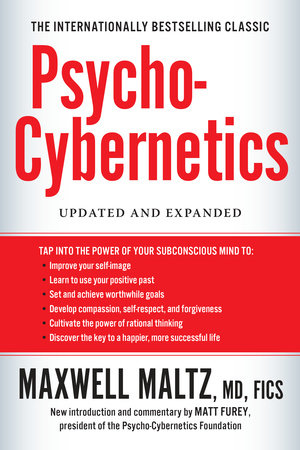
Author: Maxwell Maltz
Category: Self-Help
Published: 2015
Pages: 336
Key Takeaways
- **Your self-image guides behavior:** People tend to act consistently with the internal picture they accept as true, even when that picture is outdated or inaccurate.
- **Treat identity as editable:** A self-image is learned through interpretation and experience, so it can be revised through more accurate beliefs and new evidence.
- **Use the servo-mechanism metaphor:** Choose a direction, act, notice error, correct the course, and continue instead of demanding a flawless path.
- **Mistakes are feedback, not verdicts:** Error becomes useful when it improves the next attempt rather than being converted into shame.
- **Rehearse the process mentally:** Visualization can make useful responses more familiar when it includes preparation, obstacles, correction, and real-world action.
- **Challenge false beliefs rationally:** Separate facts about a specific event from sweeping conclusions about your permanent capacity or worth.
- **Relax excessive control:** Preparation works better when you stop monitoring every movement and allow trained abilities to operate.
- **Practice happiness in the present:** Do not postpone all permission to live until an external condition is finally satisfied.
- **Build the SUCCESS qualities:** Direction, understanding, courage, charity, esteem, self-confidence, and self-acceptance support effective growth.
- **Read failure signals diagnostically:** Frustration, aggression, insecurity, loneliness, uncertainty, resentment, and emptiness call for correction—not a fixed label.
- **Heal emotional scars without erasing boundaries:** Forgiveness can release attachment to past injury while accountability and protection remain intact.
- **Use remembered competence:** Recalling a genuine experience of courage or skill can help you approach the next challenge with a “winning feeling.”
- **Create evidence through action:** Credible confidence comes from behaving, learning, and recovering—not from repeating exaggerated affirmations.
- **Keep the science in proportion:** The cybernetic model and twenty-one-day practice window are useful frameworks, not literal guarantees or substitutes for professional care.
About This Summary
Psycho-Cybernetics: Changing the Inner Picture That Directs Your Life
Introduction: The Face Beneath the Face
Maxwell Maltz arrived at the central idea of Psycho-Cybernetics through an unusual route. He was a plastic surgeon, not an academic psychologist. In his practice, he saw patients whose lives seemed to change after an operation. A corrected feature sometimes brought confidence, sociability, and a willingness to pursue opportunities. Yet other patients remained ashamed or unhappy even when the procedure had objectively succeeded. Their appearance had changed, but the mental picture they carried of themselves had not.
Maltz concluded that everyone lives through a self-image: an internal portrait assembled from experience, interpretation, praise, criticism, success, failure, and imagination. This portrait contains beliefs about what kind of person you are and what you can expect from life. Because people tend to behave consistently with their identity, the self-image can function like a boundary. Someone who sees himself as socially awkward may interpret a quiet conversation as proof of rejection, withdraw, and then use the awkward outcome as further evidence. Someone who sees herself as capable may treat the same silence as neutral and keep engaging.
The book argues that lasting change therefore requires more than forcing new behavior. If a goal conflicts with the identity a person accepts as true, effort becomes an internal struggle. Maltz proposes changing the guiding picture through imagination, rational examination, relaxation, corrective action, and repeated successful experience. He calls this system psycho-cybernetics, borrowing the language of guidance and feedback from the mid-twentieth-century science of cybernetics.
The updated 2015 edition preserves the original 1960 text while adding commentary by Matt Furey. Its machinery metaphors can feel dated, and several scientific claims deserve caution. Still, the practical insight remains powerful: behavior is easier to change when a person updates the assumptions, images, and expectations from which behavior begins.
The Self-Image: Your Internal Operating Picture
The self-image is not simply self-esteem or a list of affirmations. It is the working model through which a person organizes experience. It may include beliefs such as “I finish what I start,” “I am bad with money,” “people like me do not lead,” or “I can learn difficult things.” These conclusions often feel like observations of fact even when they began as interpretations of a few emotionally charged events.
Maltz emphasizes that the image can be inaccurate. A childhood insult, a public mistake, or repeated comparison may become a general identity long after the original situation has ended. The person then filters new evidence to protect the established picture. Success is dismissed as luck; failure is treated as revelation. In this way, identity becomes self-confirming.
Trying to act far outside the accepted image creates tension. A person may consciously want to speak confidently, sell a service, or form a close relationship while unconsciously expecting exposure and rejection. The conflict can produce hesitation, procrastination, or self-sabotage. Maltz interprets these not as proof of permanent weakness but as efforts to remain consistent with an outdated picture.
Change begins by separating the person from the picture. A self-image is learned, not sacred. It can be revised when its beliefs are examined and when the nervous system receives repeated experiences that contradict them. The aim is not grandiosity. An effective self-image is realistic, flexible, and grounded in basic human worth: capable of mistakes, learning, repair, and growth.
The Servo-Mechanism: Aim, Act, Correct
Maltz compares the human mind and nervous system to a servo-mechanism, a goal-directed system that uses feedback to correct its course. A guided device does not need a perfect path calculated in advance. It moves toward a target, notices error, adjusts, and continues. The error signal is useful because it shows the difference between the present course and the destination.
In human terms, the conscious mind selects a meaningful goal while the “automatic” system draws on memory, learned skill, and creative association to help pursue it. A speaker does not consciously command every muscle and retrieve every word. A tennis player cannot calculate each movement during a fast rally. Preparation sets the direction; performance depends partly on trained processes operating below deliberate awareness.
This model changes the meaning of mistakes. Error is not a verdict on identity. It is information for the next correction. People learn to walk, write, drive, and perform complex work through repeated deviations and adjustments. Demanding error-free action at the start interrupts this process. Perfectionism turns feedback into shame, making experimentation feel dangerous.
A guidance system also requires a target. Vague wishes give it little to organize around. Maltz recommends a clear picture of the result or way of being you want, followed by concrete movement. The target does not guarantee success, and the metaphor should not be taken as literal neuroscience. Its practical value lies in a feedback loop: choose a direction, act, observe honestly, correct without condemning yourself, and act again.
Imagination and Mental Rehearsal
Imagination is the first major tool for revising the self-image. Maltz argues that vivid mental experience can influence emotion and performance because the nervous system responds to imagined situations in ways that resemble its response to actual ones. A remembered embarrassment can produce a racing heart in a safe room; an anticipated confrontation can create tension before anyone speaks. If imagination can rehearse fear, it can also rehearse skill and composure.
The book recommends a daily “theatre of the mind.” In a relaxed state, picture a specific future situation as if watching a detailed film. See yourself performing the desired behavior naturally: speaking with steadiness, responding to a setback, completing the work, or entering a room without shrinking. Include sensory detail and, more importantly, the emotional quality of the response.
This is not supposed to replace practice. Mental rehearsal helps make an unfamiliar response more familiar, directs attention toward useful cues, and reduces the shock of the situation. It is most effective when paired with preparation and real-world exposure. A person rehearsing a presentation still needs to know the material. An athlete still needs physical training.
Maltz sometimes states the relationship between imagination and reality too strongly. The brain can distinguish imagined from actual events, and visualization alone does not program results. A modern reading treats rehearsal as one input into learning, confidence, planning, and emotional regulation—not as magic. Imagine the process as well as the outcome: obstacles, corrections, effort, and recovery.
Dehypnotizing Yourself From False Beliefs
Maltz uses “hypnosis” broadly to describe the way an accepted idea can narrow behavior. A teacher says a student lacks talent, a parent labels a child careless, or one failure becomes “I cannot do this.” Once accepted, the suggestion guides attention and action as though it were an instruction.
Dehypnotizing yourself means bringing such conclusions back into question. What is the evidence? Was the judgment about one performance converted into a statement about the whole person? Does the belief confuse lack of practice with lack of capacity? Would you make the same judgment about someone else from the same facts?
The book distinguishes facts from opinions and identity from behavior. “I missed the deadline” may be true; “I am incapable of responsibility” is an interpretation. Rational thinking can challenge the leap without denying the mistake. A more accurate conclusion might be, “My current system failed, and I need a smaller scope and an earlier checkpoint.” Accuracy produces a response; global condemnation produces paralysis.
Positive thinking is useful only when the new belief is credible enough to practice. Repeating “I am the greatest” while feeling fraudulent can strengthen the conflict. Maltz instead builds from human capability and evidence: you have learned before, can correct errors, and can behave differently in the next instance. New belief becomes convincing through new action.
Rational Thinking and the Present Tense
Some self-help traditions treat conscious reasoning as weak beside the subconscious. Maltz gives it an active role. Beliefs can be examined, decisions can be made, and attention can be redirected. The conscious mind chooses targets and refuses to keep feeding conclusions that no longer fit the facts.
This does not mean arguing with every anxious thought for hours. The purpose of rational thinking is to identify distortions and return to useful action. Ask what is happening now, what part is controllable, and what the next constructive response is. The past supplies information, but it does not issue commands.
Maltz repeatedly urges readers to live in the present. Old failures exist now as memories and habits of reaction. Replaying them as active threats keeps the body responding to a situation that has ended. The present offers the only point at which a new pattern can be performed. You need not solve your entire identity before making one call, writing one page, or telling one truth.
Relaxation Lets Trained Ability Work
Excessive conscious control can jam performance. A person who monitors every word becomes less conversational; an athlete who analyzes every movement loses fluidity. Maltz advises preparing carefully and then relaxing enough for learned ability to operate.
Relaxation is not laziness. It reduces the noise created by panic, muscular tension, and compulsive correction. The book offers simple practices: sit comfortably, release tension through the body, imagine heaviness or warmth, and picture peaceful scenes. During action, focus on the task rather than constantly grading yourself.
The deeper lesson is to stop demanding that anxiety disappear before beginning. Calm can be practiced, but performance need not wait for perfect calm. Do the preparation, select the target, and allow an imperfect response. Trust grows when you discover that you can function without supervising every internal movement.
Happiness as a Practiced Orientation
Maltz treats happiness less as a reward delivered by circumstances and more as a habit of response. People often postpone permission to live: they will be content after the promotion, relationship, achievement, or correction of some flaw. The moving condition trains chronic dissatisfaction.
The alternative is not compulsory cheerfulness. It is practicing attention, gratitude, friendliness, and useful engagement now. Interpret ordinary friction less personally. Stop rehearsing grievances that cannot change the past. Choose behaviors consistent with being alive rather than waiting to feel transformed first.
This chapter links happiness to the self-image. A person who believes suffering is deserved or that joy is unsafe may reject good experiences. Practicing small moments of interest and appreciation supplies contradictory evidence. Happiness becomes a direction of participation, not a permanent emotional high.
The Success-Type Personality
Maltz organizes the success-type personality with the acronym SUCCESS: sense of direction, understanding, courage, charity, esteem, self-confidence, and self-acceptance.
- Sense of direction means having goals that matter enough to organize effort.
- Understanding means seeking accurate information instead of protecting a preferred story.
- Courage means acting under uncertainty rather than waiting for guaranteed safety.
- Charity means respecting other people and recognizing their dignity.
- Esteem means treating yourself as worthy of care and responsibility.
- Self-confidence grows from remembered experience of acting, learning, and recovering.
- Self-acceptance means beginning with the person you are, including limitations, instead of making self-hatred the engine of improvement.
These traits reinforce each other. Direction invites action; action produces experience; experience builds confidence; acceptance makes errors survivable. Success in this framework is not merely status. It is effective, humane movement toward worthwhile goals.
Recognizing the Failure Mechanism
The same goal-seeking capacity can be directed toward threat, defeat, and avoidance. Maltz describes warning signs through FAILURE: frustration, aggressiveness, insecurity, loneliness, uncertainty, resentment, and emptiness.
These states are signals, not identities. Chronic frustration may show that goals are impossible, vague, or approached rigidly. Aggression can be misdirected energy from blocked purpose. Insecurity grows when worth is measured through constant comparison. Loneliness can deepen when fear prevents the openness that connection requires. Uncertainty becomes disabling when a person refuses to act without certainty. Resentment keeps attention tied to an unpaid emotional debt. Emptiness often follows life without personally meaningful direction.
The useful response is diagnosis and correction. Adjust the goal, interpretation, behavior, or environment. Negative feedback should guide, not dominate. Just as a steering system notices error and then returns attention to the route, a person can acknowledge a warning without staring at it indefinitely.
Emotional Scars, Forgiveness, and the Real Personality
Maltz compares unresolved hurt to scar tissue that protects a wound but reduces flexibility. After humiliation, betrayal, or rejection, a person may construct emotional armor: detachment, cynicism, hostility, or refusal to risk closeness. The protection reduces immediate vulnerability while also blocking affection, creativity, and spontaneous action.
His “emotional facelift” depends heavily on forgiveness. Forgiveness here does not declare the harm acceptable or require renewed access to an unsafe person. It releases the demand that the past become different before life can continue. Boundaries and accountability may remain. The goal is to stop organizing identity around the injury.
Maltz also argues that a healthy personality is expressive rather than manufactured. Inhibition often comes from excessive self-surveillance and fear of error. When people feel safe enough to stop watching themselves from the audience, humor, warmth, and creativity become available. Unlocking the “real personality” therefore involves acceptance, outward attention, and willingness to be seen imperfectly.
Serious trauma cannot always be resolved through reframing and forgiveness exercises. Professional treatment may be necessary, and no reader should interpret persistent symptoms as a failure to think correctly. The metaphor is helpful when it encourages healing, not when it minimizes injury.
Tranquilizers, Crisis, and the Winning Feeling
The book's “do-it-yourself tranquilizers” are psychological ways of reducing conditioned overreaction. Delay the response, relax the body, refuse to animate a frightening mental picture, and practice letting a stimulus pass without performing the old habit. A ringing phone, critical expression, or memory need not control the next action merely because it once did.
In crisis, the principle becomes preparation plus present focus. Pressure can produce either disorganization or unusually effective action. Maltz recommends rehearsing likely challenges before they occur, then responding to the immediate demand rather than imagining every consequence. Crisis is not desirable, but it can reveal trained capacity and become a creative opportunity.
The winning feeling is an emotional memory of effective action. Recall a moment when you felt capable, connected, brave, or absorbed in good work. Re-create its posture, imagery, and emotional tone, then carry that state into the next task. This is not proof that you will win. It is a way to approach performance from a remembered identity of capability rather than an anticipated identity of defeat.
A Practical Twenty-One-Day Experiment
Maltz encourages sustained practice rather than intellectual agreement. A useful modern version is a twenty-one-day experiment:
- Write one limiting identity statement and replace it with a specific, credible learning statement.
- Choose one meaningful goal and define the next observable action.
- Spend ten minutes mentally rehearsing the process, including obstacles and recovery.
- Practice physical relaxation, then begin before you feel completely ready.
- Record feedback without insults: what worked, what missed, and what adjustment comes next.
- Recall one real example of courage or competence and use it to strengthen the new picture.
- Repeat the behavior in the world, because identity changes through lived evidence.
The famous association between Maltz and “twenty-one days” should not be mistaken for a universal law of habit formation. People and behaviors vary widely. Three weeks is a manageable practice window, not a guaranteed deadline for permanent change.
Limitations and Critique
Psycho-Cybernetics is influential partly because its central metaphor is memorable, but metaphor is not mechanism. The mind is not literally a guided missile, the subconscious is not a single automatic machine, and vivid imagination is not identical to experience. Many arguments rest on clinical anecdotes, quotations, and the scientific language available in the 1950s rather than the evidence standards expected today.
The book can also place too much causal weight on self-image. Poverty, discrimination, illness, unsafe relationships, poor instruction, and lack of opportunity are not simply projections of identity. Changing an inner picture can alter attention and behavior, but it cannot guarantee an external result or remove structural constraints.
Visualization may help performance when joined to skill, planning, feedback, and action. Used alone, it can become comforting fantasy or encourage self-blame when reality does not cooperate. Likewise, rational examination and relaxation are useful tools but not substitutes for medical or psychological care.
The strongest modern interpretation is modest. Self-image is one important model among many. Mental rehearsal is practice, not prophecy. Errors are feedback, not identity. Confidence grows through corrected experience, not slogans. Read this way, Maltz's framework remains practical without requiring acceptance of every scientific claim.
Conclusion: Steer, Correct, Continue
The lasting contribution of Psycho-Cybernetics is its shift from condemnation to guidance. A person is not a finished character revealed by every mistake. People are goal-directed learners who build internal pictures, act from them, receive feedback, and can revise both picture and action.
Maltz asks readers to choose a meaningful target, imagine the process, question false conclusions, relax excessive control, and move. Mistakes then become course corrections. Past pain becomes something to heal rather than an identity to protect. Confidence becomes remembered evidence that you can act and adjust.
The self-image does not control everything, and no mental technique guarantees success. But the picture you repeatedly consult affects what you notice, attempt, tolerate, and practice. Change that picture through truthful thought and lived experience, and a wider range of behavior becomes possible. The instruction is simple: set the direction, take action, read the feedback, correct the course, and continue steering.