Self-Help summary
Situated Summary: Key Ideas and Takeaways
Read a practical summary of Situated by Angela Duckworth, including key takeaways, lessons, and useful ideas.
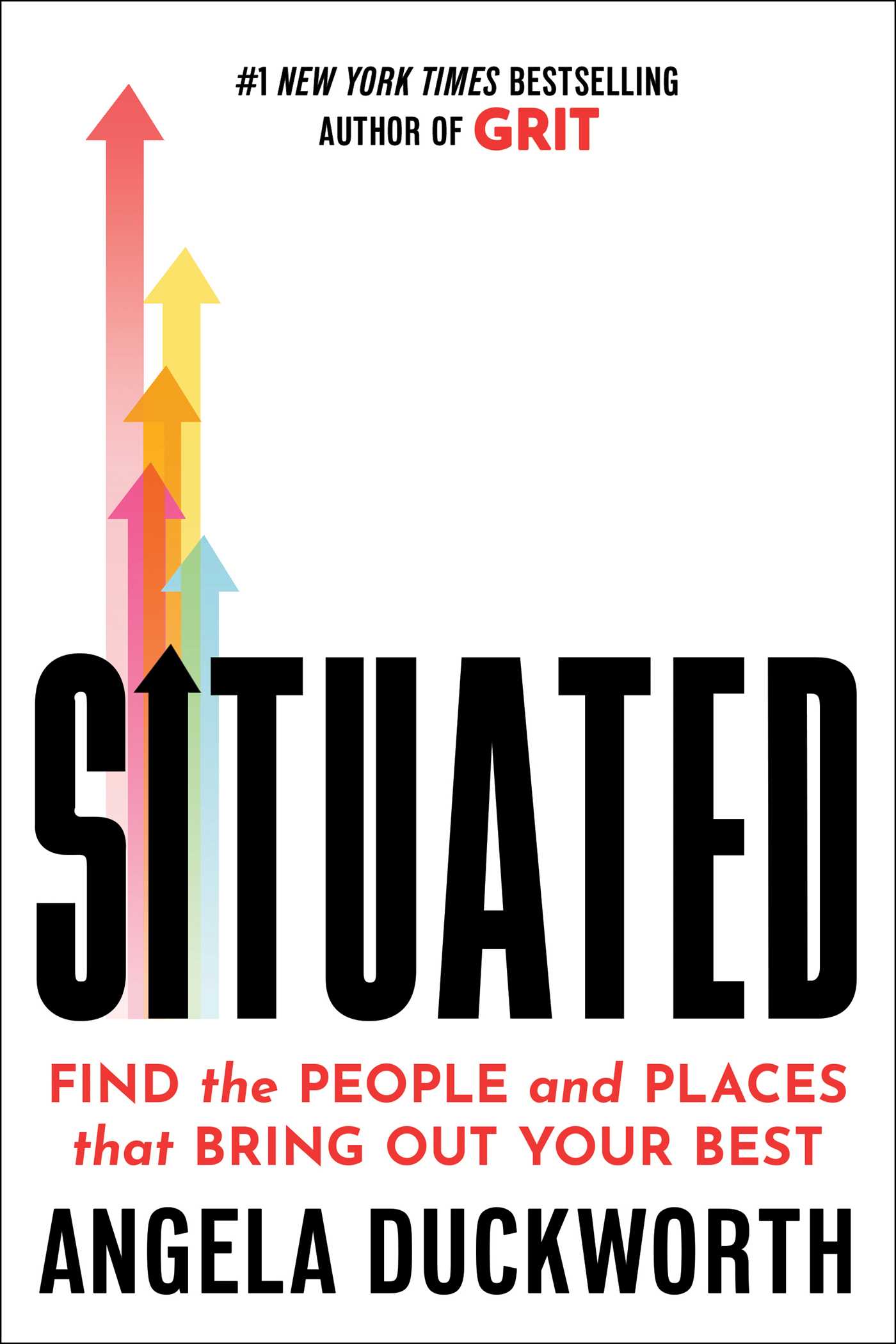
Author: Angela Duckworth
Category: Self-Help
Published: 2026
Pages: 352
Key Takeaways
- **Grit is necessary but not sufficient:** Persistent effort produces more when the surrounding situation supports the goal instead of taxing every attempt.
- **Practice situational agency:** Shape the physical and social conditions that influence your attention, thoughts, feelings, and actions.
- **Work upstream:** Change cues and defaults before temptation arrives rather than relying on willpower at the last possible moment.
- **Set up your space:** Make desired actions visible, easy, and rewarding while adding distance and friction to recurring temptations.
- **Trace behavior back to its trigger:** Examine the response, the thought or feeling before it, and the earlier situational cue that started the chain.
- **Pick peers intentionally:** Seek reciprocal groups that create accountability, share knowledge, and make your desired standards feel normal.
- **Become the peer you want:** Contribute preparation, honesty, encouragement, and reliability instead of treating relationships as personal productivity tools.
- **Attract mentors through action:** Ask specific questions, listen, apply advice, follow up, and look for opportunities to work alongside skilled people.
- **Use more than one mentor:** Different advisers can guide craft, career decisions, relationships, or character; no single person must fill every role.
- **Choose culture consciously:** Notice what a workplace or community actually rewards and seek environments that combine high challenge with strong support.
- **Challenge status quo bias:** Research alternative teams, organizations, and communities before assuming the familiar situation is the only realistic one.
- **Treat burnout as information:** Persistent depletion may signal a mismatch in workload, support, control, values, or culture—not merely weak discipline.
- **Design conditions for others:** Parents, teachers, managers, and leaders should improve tools, norms, feedback, and incentives before blaming character.
- **Keep the framework in proportion:** Personal situation changes cannot replace structural reform, and unequal resources limit how freely people can choose their circumstances.
About This Summary
Situated: Find the People and Places That Bring Out Your Best
Introduction: Character Does Not Act Alone
In Situated, psychologist Angela Duckworth revises a familiar story about achievement. Her earlier work emphasized grit—the combination of enduring passion and perseverance that helps people stay committed to demanding goals. This book does not reject that insight. It argues that grit operates inside a setting, and that the setting can strengthen or weaken nearly every effort a person makes. The same individual may appear focused in one room, distracted in another, generous with one group, defensive with another, and unusually ambitious inside a community where ambition is normal.
This matters because popular advice usually treats behavior as evidence of fixed character. If someone procrastinates, we call that person lazy. If a student struggles, we question motivation. If an employee burns out, we recommend better discipline. Duckworth asks readers to look upstream. What objects are visible and within reach? What actions are easy or awkward? What do nearby people consider normal? Who offers guidance? What does the larger culture reward? These circumstances do not erase responsibility, but they help explain why good intentions so often fail.
The book's central concept is situational agency: the ability to shape the physical and social conditions that shape you. Rather than waiting until temptation, fatigue, or confusion arrives and then demanding heroic willpower, you improve the situation beforehand. Duckworth organizes this work into four elements, moving outward from what is closest and easiest to alter: set up your space, pick your peers, attract mentors, and choose your culture. Together they offer a practical answer to a liberating question: instead of repeatedly asking what is wrong with me, where and with whom might I become better?
From Grit to Situational Agency
Grit explains why persistent effort matters, but persistence alone cannot make every strategy wise. A person can work intensely inside a system that constantly creates distraction, withholds feedback, normalizes mediocrity, or punishes the very behavior the person wants to develop. Trying harder in such a situation may produce exhaustion rather than progress. Duckworth's argument is not that hard work is unnecessary; it is that effort has a multiplier. Supportive conditions increase its return, while hostile conditions tax it.
This is a correction to the fundamental attribution error, our tendency to explain another person's behavior through personality while underestimating context. We see someone make a mistake and decide that the person is careless, even though we explain our own mistakes through time pressure, unclear instructions, or fatigue. The error is morally attractive because it creates a simple world of strong and weak people. But it is practically costly. If the cause is misdiagnosed as defective character, the proposed solution becomes shame, lectures, or more determination. If the situation is part of the cause, we can change instructions, defaults, tools, relationships, and incentives.
Duckworth describes a reinforcing loop. A situation influences what people notice and think. Thoughts influence feelings and actions. Actions then create outcomes and often modify the next situation. A helpful environment can begin an upward flywheel: better cues support better action, better action creates evidence of progress, and progress makes future action easier. The same mechanism can run downward when distraction, isolation, or discouraging norms repeatedly produce choices that make the environment worse.
Situational agency enters this loop before the final moment of choice. It does require effort to rearrange a room, join a group, contact an adviser, or change organizations. But that earlier investment can remove hundreds of later battles. The aim is not a frictionless life. It is to reserve perseverance for challenges that deserve it rather than spending it on avoidable obstacles.
Element One: Set Up Your Space
The most immediate situation is the physical space around you. Objects exert influence because attention is limited. What is visible becomes mentally available; what is within reach becomes easier to use. A phone on the desk silently offers news, messages, and entertainment. Food on the counter invites eating without a conscious plan. A guitar stored in its case or running shoes hidden in a closet make a desired activity slightly harder. Each cue is small, but repeated exposure gives small cues enormous cumulative power.
Duckworth advises readers to make wise actions obvious, easy, and rewarding, while making temptations less visible and less convenient. Put the phone in another room before sleep or focused work. Place the book, medicine, water bottle, notebook, or exercise clothes where the next intended action begins. Remove steps from good routines and add steps to impulsive ones. This may feel like cheating because achievement is often associated with resisting temptation face-to-face. But arranging the choice in advance is not weakness; it is a more intelligent use of self-control.
Willpower is a poor first line of defense because it arrives at the last possible moment, after the tempting cue has captured attention and competing desires are active. Space design acts earlier. It changes what reaches the mind and how much effort each option requires. The person still chooses, but the choice no longer takes place on a perfectly level field that favors whatever is loudest or closest.
The principle extends beyond tidiness. A workspace communicates what kind of activity belongs there. Notifications, open browser tabs, lighting, seating, noise, and the presence of other people can all alter attention. The correct arrangement depends on the goal: collaboration may benefit from visibility and conversation, while concentrated writing may require separation. The question is functional, not aesthetic: what behavior does this space repeatedly pull from me?
Duckworth's “Three Boxes” logic helps reverse-engineer a behavior. Begin with the response you want to change, then examine the thoughts or feelings immediately before it, and finally identify the situational trigger that came earlier. If late-night scrolling follows anxiety and the phone is beside the bed, a motivational speech attacks the final box. Moving the device and creating a calmer bedtime sequence changes the upstream box. The goal is to discover leverage rather than blame.
Element Two: Pick Your Peers
People are part of the environment. Peers influence standards, language, aspirations, emotional tone, and the behaviors that feel ordinary. A habit practiced alone can feel exceptional; the same habit inside the right group becomes simply what people like us do. This is why friends, teammates, colleagues, and study partners can change performance without issuing explicit instructions.
Duckworth emphasizes several benefits of strong peers. First, they create accountability. A commitment becomes more concrete when another person expects you to appear, contribute, or report progress. Second, peers provide distributed knowledge. Each person sees problems differently, and a group can solve more than isolated individuals who all share the same blind spots. Third, mutual dependence gives effort a social purpose. People often work harder when someone else genuinely needs their contribution.
Picking peers does not mean treating relationships as productivity tools. The deeper point is reciprocity: seek communities whose values you respect, then become the kind of peer who improves the situation for others. Bring preparation, encouragement, candor, and reliability. Ask whether your group challenges you without humiliating you and supports you without lowering every standard. The healthiest settings combine belonging with expectation.
Peer influence also requires discernment. A group may normalize cynicism, chronic distraction, reckless spending, or avoidance while providing warmth and loyalty. Affection does not eliminate influence. Situational awareness means noticing which version of yourself appears around particular people. You need not reject everyone who has different goals, but you can vary how much time, access, and decision-making power each social setting receives.
For many adults, peers must be chosen intentionally. School once created repeated contact automatically; later life often does not. Joining a class, professional group, sports club, volunteer project, reading circle, or online community can create the repetition from which trust grows. The practical test is not whether a network looks impressive. It is whether regular participation makes desired behavior more likely and whether your participation does the same for others.
Element Three: Attract Mentors
Peers travel beside you; mentors have traveled farther along a relevant path. They can shorten the distance between confusion and useful action by sharing judgment that is difficult to obtain from instructions alone. A mentor notices patterns, introduces possibilities, corrects errors, and expands a mentee's sense of what is attainable. Duckworth therefore treats mentorship as a need rather than a decorative advantage.
You cannot command another person to invest in you, but you can become what Duckworth calls a mentor magnet. Curiosity is central. Ask specific questions whose answers you have not been able to find. Prepare enough to understand the response. Listen carefully, act on useful advice, and return with evidence that the conversation mattered. Gratitude, effort, and follow-through make continued guidance rewarding.
This reframes the awkward request, “Will you be my mentor?” A durable relationship often grows through a sequence of smaller exchanges: a thoughtful question, a short conversation, a shared project, useful feedback, and respectful follow-up. Rather than seeking a famous person who can transform your life, look for people with relevant experience who are close enough to observe your work. One mentor may help with craft, another with career decisions, and another with character or family life.
Working on a real project with someone more skilled is especially powerful because much expertise is tacit. It lives in timing, priorities, standards, and distinctions that experts may not know how to explain abstractly. Observation and feedback reveal this knowledge. Books, recorded talks, and biographies can provide “distant mentors,” but living relationships add diagnosis: they can see what you are doing and adapt guidance to your actual situation.
Mentorship should become a cycle. Today's learner can guide someone one step behind, and a good mentor creates conditions in which the other person becomes more capable rather than more dependent. Advice works best when combined with opportunity, honest feedback, and room to practice. The purpose is not to borrow another person's status; it is to develop judgment that eventually travels with you.
Element Four: Choose Your Culture
Culture is the widest circle in Duckworth's framework. It includes the shared assumptions and norms of a household, school, workplace, profession, organization, neighborhood, or city. Culture answers questions before anyone asks them: What is admired here? What is embarrassing? How do people treat mistakes? Who belongs? Is asking for help a strength or a weakness? What must someone do to earn trust?
Because culture feels like “the way things are,” its influence is easy to miss. Duckworth uses the idea of fish unaware of the water around them to illustrate situational awareness. When everyone follows the same norm, it can look natural rather than chosen. Comparison with another team, company, or community makes the invisible visible.
A productive culture is both challenging and supportive. Challenge without support produces fear, concealment, and burnout. Support without challenge can produce comfort without development. The strongest cultures communicate high standards while providing the coaching, resources, psychological safety, and second chances that make growth possible. They do not merely celebrate outcomes; they shape daily behavior through what leaders notice, reward, tolerate, and model.
Choosing culture may require changing jobs, teams, schools, or locations. Duckworth confronts status quo bias, the tendency to prefer the familiar even when alternatives may fit better. Moving has real financial, relational, and emotional costs, so the message is not to escape whenever work becomes difficult. It is to stop treating the current setting as the only imaginable one. Research other environments, run small experiments, speak to people already inside them, and compare what each culture would repeatedly ask you to become.
Geography can matter because interests cluster. Certain places offer denser networks, facilities, institutions, jobs, and norms around a particular pursuit. Yet culture is not only a zip code, and relocation is not equally available to everyone. A person may find a better microculture within the same city, workplace, or online network. The principle is to choose at the scale you can influence, beginning with nearby groups before assuming that only a dramatic move can help.
Changing a Relationship From the Outside In
One of the book's most personal applications concerns Duckworth's marriage. During a period when she and her husband were raising children while managing demanding work, both became depleted. The crisis was not solved by promising to exert even more effort. They recruited help from family and friends, sought therapy, and changed routines around sleep, exercise, and shared life. In other words, they altered the surrounding conditions in which the relationship had been failing.
The story illustrates an important distinction. Changing a situation does not always mean abandoning it. Sometimes it means bringing in resources, removing pressures, creating recovery time, or redesigning responsibilities. A relationship, team, or career may contain a worthy commitment inside an unsustainable arrangement. Before concluding that the commitment itself is impossible, examine the system supporting it.
Burnout is therefore information. Persistent exhaustion, cynicism, and the sense that effort never produces movement can indicate a mismatch between demands and resources. Rest may be necessary, but repeated burnout invites a wider audit: workload, role clarity, control, support, values, and culture. Personal coping strategies cannot permanently compensate for a system that continues to create the same injury.
Creating Better Situations for Other People
The framework changes how parents, teachers, managers, coaches, and public leaders think about influence. When another person struggles, the reflex is often to explain, warn, reward, punish, or demand more effort. Duckworth asks helpers to inspect the setting they control. Are expectations clear? Are useful tools accessible? Is practice structured? Do peers support the desired behavior? Is feedback timely? Do incentives contradict the stated goal?
This is not a denial of individual agency. It is recognition that leadership always creates a situation, whether intentionally or accidentally. A parent decides what enters the home and how routines operate. A manager shapes meetings, information flow, workload, and what behavior earns advancement. A teacher creates classroom norms and determines whether mistakes become evidence of stupidity or material for learning.
Effective help preserves the other person's dignity. Instead of assuming a character defect, begin with curiosity about the conditions producing the response. Then change what is changeable and invite the person to participate. The aim is not to engineer people like machines. It is to remove needless obstacles and create a setting in which their own motivation and judgment have a better chance to operate.
Limits and Critique
The book's most useful claim can also be overstated. People do not have equal freedom to choose homes, schools, jobs, neighborhoods, health care, childcare, or professional networks. Money, discrimination, disability, immigration status, caregiving responsibilities, and local opportunity place genuine limits on situational agency. Advice to relocate or join an elite network can sound universal while depending on resources many readers do not possess.
Duckworth acknowledges that circumstances are not entirely controllable, but her optimistic emphasis can still underplay structural power. A worker cannot personally redesign an abusive industry, and a student cannot remove every social barrier through better desk organization. Sometimes collective action, policy, accommodation, or institutional accountability is the required form of situation change. Personal agency and structural reform are complements, not substitutes.
There is also a risk of endless optimization. If every object and relationship is judged only by whether it advances a goal, life becomes instrumental and friendships become transactions. A good situation should support rest, care, play, moral commitments, and belonging—not only measurable achievement. Difficulty itself is not proof of a bad setting; meaningful work often remains difficult after the environment improves.
The correct use of the framework is diagnostic rather than absolute. Character matters, grit matters, and situations matter. Ask which lever is most relevant now. Sometimes you should practice harder. Sometimes you should change the practice conditions. Sometimes you should keep a promise through a difficult season, and sometimes leaving is the responsible act. Situational agency improves judgment by adding context; it should not replace judgment with another slogan.
A Practical Situated Audit
Readers can apply the book through a four-part review:
- Space: Identify one recurring behavior. List what is visible, close, easy, noisy, or rewarding immediately before it. Remove one harmful cue and place one helpful cue in the path of action.
- Peers: Name the people with whom the desired behavior feels normal. Create repeated contact and a concrete form of mutual accountability. Notice which groups consistently pull you away from your values.
- Mentors: List at least two people you could ask for relevant advice. Prepare one specific question, respect their time, act on the answer, and follow up. Seek opportunities to work beside someone more skilled.
- Culture: Describe what your current environment actually rewards, not what its mission statement claims. Ask whether it is both challenging and supportive. Research one alternative team, community, or place before assuming you must stay.
The sequence matters. Start near and concrete. Moving a phone or changing a meeting can happen today; changing jobs or cities may take months. Small improvements can create the energy, information, and relationships needed for larger ones. Revisit the audit because situations change. The peer group that helped during one stage may not fit the next, and a once-supportive culture may evolve.
Conclusion: Make the Situation Your Ally
Situated replaces the lonely image of success with a more accurate one. Achievement is never only a person pushing against the world. It is a person interacting with objects, routines, relationships, mentors, institutions, and norms. Some settings constantly demand self-control; others make wise action ordinary. Some drain grit; others multiply it.
Duckworth's four elements turn this insight into a usable progression. Arrange the space nearest to you. Build reciprocal relationships with peers who embody useful standards. Attract mentors through curiosity and follow-through. Choose cultures whose daily norms support the person you hope to become. Then create similarly strong conditions for people who depend on you.
The message is neither surrender to circumstance nor fantasy that everyone can control everything. It is a call to expand the circle of agency. You are responsible not only for how hard you try within a situation, but, where choice is possible, for which situations you enter, maintain, redesign, and leave. A little effort invested upstream can make every later effort more effective. Grit helps you keep going; situational agency helps ensure that the path, the people, and the place are helping you go somewhere worth reaching.