Business summary
Unreasonable Hospitality Summary: Key Ideas and Takeaways
Read a practical summary of Unreasonable Hospitality by Will Guidara, including key takeaways, lessons, and useful ideas.
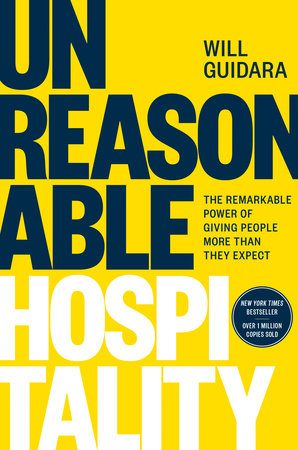
Author: Will Guidara
Category: Business
Published: 2022
Pages: 288
Key Takeaways
- **Separate service from hospitality:** Service delivers the task correctly; hospitality shapes how the person feels while receiving it.
- **Compete through human connection:** Products and processes can be copied more easily than a culture that makes people feel genuinely seen.
- **Practice enlightened hospitality:** Care for and develop employees so they have the capacity and motivation to care for everyone else.
- **Lead with intention:** Explain the purpose behind standards so people can exercise sound judgment when scripts no longer fit.
- **Combine restaurant-smart and corporate-smart strengths:** Pair frontline autonomy and creativity with reliable systems, budgets, and controls.
- **Use the 95/5 rule:** Manage the core operation rigorously so a deliberate share of resources remains available for memorable generosity.
- **Search for the third option:** Resolve departmental tension by designing an outcome that improves the whole customer experience.
- **Make it cool to care:** Publicly recognize enthusiasm, thoughtful recovery, coaching, and human attention as real forms of performance.
- **Earn informality through excellence:** Master the operational basics so warmth and improvisation feel natural rather than careless.
- **Give specific praise and direct feedback:** Affirm what should be repeated and correct problems while preserving dignity.
- **Adopt one size fits one:** Listen for personal clues and match gestures to the individual instead of substituting generic luxury.
- **Build infrastructure for improvisation:** Budgets, contacts, decision rights, and Dreamweaver-style support help frontline ideas become action.
- **Scale principles rather than stunts:** Standardize the conditions for hospitality while leaving the gesture itself responsive and personal.
- **Protect fairness and sustainability:** Hospitality must respect privacy, employee boundaries, consistent rules, and the organization’s real resources.
About This Summary
Unreasonable Hospitality: Turning Service Into Human Connection
Introduction: Excellence Gets You to the Table; Hospitality Makes You Memorable
Will Guidara's Unreasonable Hospitality is part leadership memoir, part operating manual, and part argument about what businesses are really for. Guidara recounts how he and chef Daniel Humm transformed Eleven Madison Park from an underachieving New York brasserie into one of the world's most celebrated restaurants. The food, systems, and technical standards had to become exceptional. Yet technical excellence alone did not create the restaurant's identity. The decisive advantage was learning to make guests and employees feel genuinely seen.
That distinction anchors the book. Service is the competent execution of a transaction: the meal arrives correctly, the product works, the appointment starts on time. Hospitality is the emotional experience surrounding that transaction: the person feels welcomed, understood, and cared for. Service can be standardized. Hospitality must respond to the individual.
“Unreasonable” does not mean careless, extravagant, or financially irresponsible. It means going beyond the reasonable minimum when a thoughtful gesture can create disproportionate human value. A small act, precisely matched to a person's story, may matter more than an expensive generic gift. Guidara argues that this principle applies far beyond restaurants. Banks, hospitals, retailers, software companies, schools, and households all create experiences. Every organization can decide whether those experiences feel merely efficient or meaningfully human.
The book's stories are entertaining, but its deeper subject is culture. Extraordinary gestures cannot depend on one charismatic leader. They require clear standards, disciplined finances, empowered employees, productive feedback, and a shared language that makes caring part of the job.
The Hospitality Economy
Guidara believes modern businesses compete in a hospitality economy. Products and processes are increasingly easy to copy. Convenience becomes expected, and technical advantages eventually spread. What remains difficult to duplicate is the way an organization makes people feel.
This does not reduce hospitality to a marketing tactic. A memorable experience can generate loyalty and word of mouth, but customers quickly detect generosity performed only for publicity. The feeling must arise from attention. Someone listened, noticed a clue, and acted with care.
Guidara's claim is not that emotion replaces competence. A restaurant cannot compensate for unsafe food with charm, and a hospital cannot excuse clinical errors with kindness. Service is the foundation. Hospitality adds meaning to reliable execution. The strongest companies deliver both.
Intention Turns Ordinary Actions Into Culture
One of the book's recurring ideas is the power of intention. Every detail communicates what an organization values: how a meeting begins, how a mistake is discussed, how a guest is greeted, and how leaders behave under pressure. Culture is not the values statement on a wall. It is the accumulated pattern of these choices.
Intentional leadership starts by deciding the desired effect. A pre-service meeting can distribute information, but it can also create energy, belonging, and focus. A rule can control behavior, or it can protect a standard the team understands. Feedback can humiliate, or it can help someone improve while preserving dignity.
Guidara urges leaders to explain why, not merely what. People are more capable of judgment when they understand the purpose behind a standard. A server who knows that the goal is to make a guest feel at ease can adapt when the script does not fit. Without purpose, employees either obey rigidly or improvise in ways that undermine quality.
Enlightened Hospitality Begins With the Team
Guidara learned from restaurateur Danny Meyer and the philosophy of enlightened hospitality, which places employees at the beginning of a virtuous cycle. When people are selected carefully, developed seriously, and treated with respect, they are more able and willing to care for guests. Satisfied guests support a healthy business, which can then invest further in the team and community.
Putting employees first is not the same as avoiding standards. High care and high accountability should reinforce each other. People deserve clarity about what excellent performance looks like, the tools to reach it, and honest feedback when they fall short. They also deserve leaders who notice effort, celebrate growth, and take responsibility for the environment they create.
Guidara describes leadership as an emotional presence. A strong leader can make people stand a little taller while also making them glad to be in the room. Authority without warmth produces compliance; warmth without direction produces confusion. The aim is both trust and momentum.
This approach treats hospitality as something employees receive, not just something they perform. Scheduling, training, communication, and recognition are internal service systems. If these are thoughtless, asking the team to create thoughtful experiences for others becomes hypocrisy.
Restaurant-Smart and Corporate-Smart
As the organization grew, Guidara saw tension between being restaurant-smart and corporate-smart. Restaurant-smart operations value speed, instinct, creativity, and frontline autonomy. The people closest to guests have detailed information and can respond immediately. Corporate-smart operations value budgeting, human resources, purchasing, measurement, and repeatable systems.
Either strength becomes a weakness when isolated. Pure improvisation creates inconsistency, waste, and dependence on heroic individuals. Excessive control pushes authority upward, away from the people who possess the most relevant information. Employees then need permission for small decisions and stop thinking like owners.
The solution is not choosing one side. It is building systems that protect excellence while preserving initiative. Clear budgets, training, and principles create boundaries inside which employees can act. Leaders provide enough structure for reliability and enough trust for creativity.
This balance matters in every industry. A support agent who understands policy but cannot solve an unusual problem produces frustration. An agent with total freedom but weak tools produces unpredictable results. Good systems make judgment safer; good judgment keeps systems humane.
The 95/5 Rule: Discipline Funds Generosity
The 95/5 rule explains how unreasonable gestures can coexist with responsible management. Guidara's idea is to manage roughly 95 percent of the business with intense financial discipline so that the remaining 5 percent can be spent in ways that may look foolish on a spreadsheet but create lasting value.
The ratio is a principle, not a universal accounting formula. Control overtime, purchasing, waste, turnover, and routine expenses. Then deliberately reserve resources for moments that strengthen relationships, energize the team, or create unforgettable experiences.
This matters because indiscriminate spending is not hospitality. Expensive gestures offered to everyone become an entitlement and may threaten the business. Conversely, cutting every expense can remove the very moments that differentiate the brand. Efficiency should create the capacity for generosity, not eliminate generosity.
The 5 percent can include money, time, attention, or organizational flexibility. A handwritten note may cost almost nothing but require someone to notice and care. A team celebration may be financially inefficient in isolation yet valuable for trust and retention. The leader's job is to protect both sides: operational rigor and purposeful abundance.
Partnership and the Search for a Third Option
Eleven Madison Park's rise depended on the partnership between Guidara, who led the dining room, and Humm, who led the kitchen. Their disciplines had different traditions, incentives, and forms of status. The partnership worked when both sides were treated as equally essential to the guest's experience.
Collaboration is difficult when people defend territory. Guidara advocates searching for a third option rather than accepting a false choice between two departments. Instead of asking whether culinary excellence or hospitality should win, the team asks what design can elevate both.
The lesson transfers to product and sales, clinical and administrative teams, creative and financial functions, or any pair whose priorities appear to compete. The customer experiences the combined system, not the organizational chart. Collaboration should be judged by the quality of that whole experience.
Set Expectations and Give People Ownership
Empowerment works only when expectations are precise. Telling employees to “do whatever it takes” without standards, budgets, or training creates anxiety and uneven decisions. Guidara first establishes the nonnegotiable elements of excellence, then gives people room to express judgment within them.
He distinguishes between rules that protect the mission and rules that merely preserve habit. Leaders should examine inherited practices and ask what purpose each serves. When a rule blocks care without protecting safety, fairness, quality, or sustainability, it may deserve to be broken.
Ownership grows when people understand how their role contributes to the larger result. A busser should not see the job as clearing plates alone. The role participates in pace, comfort, observation, teamwork, and the guest's story. When the meaning expands, so does the range of useful action.
Leaders must respond well when empowered people make imperfect decisions. If every mistake produces punishment, autonomy disappears. The better response separates negligence from thoughtful experimentation, repairs any harm, and turns the event into learning. Accountability remains, but fear does not become the operating system.
Work With Purpose, on Purpose
Guidara treats purpose as practical management infrastructure. People work with more energy when they know what the organization is trying to create and why their effort matters. Purpose guides decisions that no manual can anticipate.
Language helps make purpose portable. Repeated phrases, rituals, stories, and examples turn abstract values into shared references. Saying that hospitality is “one size fits one,” for example, reminds the team to adapt rather than deliver a polished but generic script. Stories of successful gestures show what attention looks like in action.
The danger is turning culture into slogans. Language creates culture only when leaders behave consistently with it. A company cannot praise ownership while requiring approval for every small choice. It cannot claim people come first while tolerating abusive high performers. Contradictions teach the real values more powerfully than speeches.
Purpose also needs renewal. Fast-paced teams can become consumed by tasks and forget the human result. Brief rituals, storytelling, and recognition reconnect daily work to the mission without requiring grand corporate events.
Make It Cool to Care
High-performance environments sometimes protect themselves with cynicism. Caring openly can feel naive, while detachment appears sophisticated. Guidara wanted a culture where enthusiasm, earnestness, and attention were socially rewarded.
Leaders establish that norm through what they notice. If praise goes only to revenue or technical brilliance, people infer that relationships are decorative. If leaders celebrate someone who found a thoughtful solution, coached a colleague, or recovered a mistake with grace, care becomes part of achievement.
Pursue Excellence Without Losing Warmth
Unreasonable hospitality is effective only when paired with excellent basics. Guidara emphasizes repetition, preparation, observation, and continuous refinement. Small defects matter because they interrupt trust and force attention onto the machinery of service.
Perfectionism, however, can make an experience stiff. The team must master standards well enough to move beyond them. Like a musician who practices scales before improvising, an employee earns freedom through competence. Guidara calls this progression earning informality: casual warmth feels effortless only when supported by disciplined preparation.
This concept resolves a common tension. Organizations often choose between rigid professionalism and friendly inconsistency. The better goal is precise operations delivered with natural human presence. The guest should feel cared for, not processed through an impressive machine.
Excellence also requires leaders to inspect what they expect. Standards decay when no one follows up. Inspection should not become surveillance; it should surface obstacles, reveal training needs, and demonstrate that the details genuinely matter.
Feedback, Affirmation, and Repair
Guidara argues that praise and criticism both require intention. Vague praise feels pleasant but teaches little. Specific affirmation tells people what they did well and why it mattered, making excellent behavior easier to repeat.
Corrective feedback should be timely, direct, and proportionate. Avoiding hard conversations may look kind, but it allows confusion and resentment to grow. The recipient deserves a clear description of the behavior, its impact, and the expected change. The goal is improvement, not emotional release for the manager.
Relationships are simple in principle—listen, be honest, show appreciation, keep commitments—but simple is hard under pressure. Misunderstandings and failures are inevitable. Healthy cultures repair them. Leaders acknowledge their contribution, apologize when appropriate, and restore working trust rather than pretending nothing happened.
Affirmation also counterbalances the natural management bias toward problems. If leaders speak only when something is wrong, employees experience attention as threat. Regular, earned recognition makes correction easier to hear because the relationship is not built entirely around deficiency.
The Hot Dog and One Size Fits One
The book's defining story begins when Guidara overhears guests regretting that they had eaten at New York's finest restaurants without trying a street-cart hot dog. He buys one, asks the kitchen to present it with care, and serves it as a surprise course. The inexpensive gesture becomes more memorable than the luxurious meal around it.
The point is not that every company should give away hot dogs. The power came from listening to a specific person at a specific moment. Generic luxury might have cost more and meant less. This is the logic of one size fits one: standardized service provides consistency, while personalized hospitality creates emotional resonance.
Personalization requires clues. Employees must listen for celebrations, disappointments, preferences, fears, and passing remarks. They then need permission and resources to respond. The best gesture often connects the organization's capabilities with something uniquely meaningful to the recipient.
There are ethical limits. Listening should not become surveillance, and personalization should not expose private information or make someone uncomfortable. A gesture must respect consent, culture, and context. The aim is recognition, not performance.
Dreamweavers and Improvisational Hospitality
To make bespoke gestures repeatable, the restaurant created Dreamweaver roles and systems that helped employees turn clues into experiences. This sounds paradoxical: how can spontaneity be systematized? Guidara's answer is to build infrastructure for improvisation rather than scripts for every outcome.
The infrastructure includes a modest budget, a network of local contacts, stored supplies, clear escalation paths, and people responsible for helping ideas happen quickly. Employees remain the source of observation; the system removes friction between a good idea and execution.
Improvisation still needs judgment. The gesture should be relevant, feasible, safe, and consistent with the brand. Teams can develop that judgment by discussing examples: which ideas felt generous, which were excessive, and which accidentally centered the giver rather than the guest?
This model is useful outside hospitality. A software support team can empower agents to solve unusual customer problems. A clinic can design small comforts for anxious patients. A school can help teachers mark meaningful milestones. The specific gesture changes; the capability to notice and respond remains.
Scale Principles, Not Theater
As a business grows, founders often fear that special care will disappear. Guidara argues that culture can scale when principles, stories, training, and authority scale with it. Copying the same dramatic gestures everywhere is not the answer. Once a surprise becomes a script, it loses much of its personal meaning.
Organizations should standardize the conditions for hospitality: reliable core service, careful hiring, shared language, useful budgets, decision rights, and feedback loops. The frontline then adapts those conditions to real people.
Limits and Critique
The book is inspiring, but its examples emerge largely from luxury restaurants where guests pay high prices and employees operate in an unusually theatrical environment. Smaller businesses, public services, and understaffed teams may have far less money and time for individualized gestures. Translating the principle requires modesty about resources.
The language of going above and beyond can also contribute to burnout. Service workers are often expected to absorb disrespect while performing warmth. Hospitality should never mean tolerating harassment, hiding exhaustion, or making unpaid emotional labor limitless. Care for guests must be matched by staffing, boundaries, recovery, and care for employees.
Personalization can conflict with privacy or consistency. Collecting personal details demands restraint, and discretionary exceptions can create unfair outcomes. Some settings—health care, finance, law, safety—require rules that should not bend for a memorable experience.
The business case may be overstated when extraordinary stories are treated as proof of return. Memorable gestures can generate loyalty, but not every act will pay back financially, and attribution is difficult. Leaders should embrace generosity because it fits the mission, then manage it within a sustainable model.
Finally, charisma and storytelling can obscure structural questions. Warm interactions cannot compensate for poor wages, unstable schedules, discrimination, or unsafe conditions. The strongest reading of the book joins hospitality with operational justice rather than using hospitality to decorate its absence.
A Practical Hospitality System
Leaders can apply the ideas through a simple operating cycle:
- Define excellent service first: the reliable, safe, accurate basics that must happen every time.
- Describe the feeling you want customers and employees to have, using language specific enough to guide decisions.
- Remove rules that protect habit rather than safety, fairness, quality, or sustainability.
- Train people to listen for clues and understand the purpose behind standards.
- Establish a small, explicit resource pool using the spirit of the 95/5 rule.
- Give frontline employees decision rights, examples, and an easy way to request help.
- Celebrate thoughtful attempts, review mistakes without humiliation, and share stories that teach judgment.
- Measure operational health and relationship outcomes while preserving room for unquantifiable human value.
- Audit who receives special attention so discretion does not become bias.
- Protect employee boundaries, recovery, and dignity with the same seriousness given to guest experience.
The system begins small. One team can choose a recurring point in its workflow—onboarding, problem resolution, a delivery, or a farewell—and redesign it for both competence and care. The goal is not spectacle. It is making attention reliable.
Conclusion: Generosity as an Operating Advantage
Unreasonable Hospitality argues that human connection is not separate from serious business. It can be the result that disciplined operations are built to enable. Excellent service earns trust; personal attention gives that trust emotional meaning.
Guidara's central ideas reinforce one another. Enlightened hospitality starts with the team. Clear expectations and purposeful language help people act with ownership. Restaurant-smart autonomy and corporate-smart systems must coexist. Financial discipline creates room for the 95/5 moments that look inefficient but become unforgettable. One size fits one, and Dreamweaver-style infrastructure helps good judgment travel beyond a single leader.
The philosophy is most credible when bounded by fairness and sustainability. Unreasonable hospitality should not require unreasonable sacrifice from workers, violate privacy, or substitute charm for quality. It should use careful systems to release generosity at the moments where generosity matters.
The enduring question is simple: after the transaction is complete, how did the person feel? Organizations that ask it seriously notice different details, empower different decisions, and tell different stories. They stop treating care as an accidental personality trait and begin designing for it. In a world of competent, comparable options, that deliberate humanity can become both a moral choice and a durable advantage.