Self-Help summary
The Four Agreements Summary: Key Ideas and Takeaways
Read a practical summary of The Four Agreements by Don Miguel Ruiz, including key takeaways, lessons, and useful ideas.
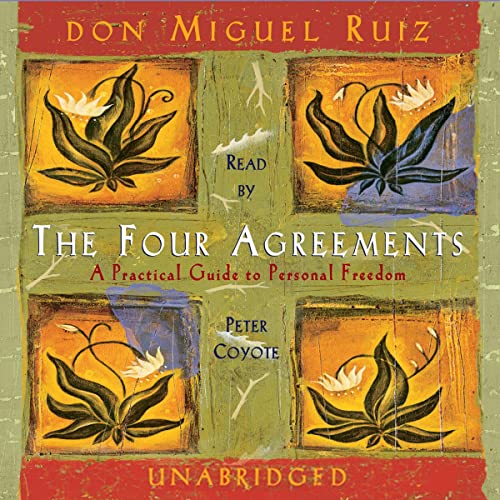
Author: Don Miguel Ruiz
Category: Self-Help
Published: 1997
Pages: 160
Key Takeaways
- **Be Impeccable With Your Word**: Speak with integrity. Say only what you mean. Avoid using the word to speak against yourself or to gossip about others.
- **Don't Take Anything Personally**: Nothing others do is because of you. What others say and do is a projection of their own reality.
- **Don't Make Assumptions**: Find the courage to ask questions and to express what you really want. Communicate clearly to avoid misunderstandings.
- **Always Do Your Best**: Your best is going to change from moment to moment. Under any circumstance, simply do your best, and you will avoid self-judgment.
- **The Dream of the Planet**: We are domesticated by society to believe in rules that cause suffering. We must wake up from this dream.
- **The Judge and the Victim**: The internal voices that punish us for not being perfect. We must silence them.
- **Personal Freedom**: The reward for breaking old agreements is the freedom to be who you really are.
- **Gossip is Poison**: Spreading gossip is spreading emotional poison. Refuse to participate.
- **Love vs. Fear**: All agreements are based on either love or fear. Choose love.
- **The Present Moment**: Life is action. Live in the now and express your love through action.
About This Summary
THE FOUR AGREEMENTS: A Practical Guide to Personal Freedom
Based on The Four Agreements by Don Miguel Ruiz
INTRODUCTION: The Dream of the Planet
We are living in a dream. Not the dreams we have when we sleep, but a collective dream—a shared hallucination of beliefs, rules, and assumptions that we've been taught since birth. Don Miguel Ruiz calls this "The Dream of the Planet."
This dream is created by society—by parents, teachers, religions, governments, and cultures. It tells us what to believe, how to behave, what is acceptable, and what is not. Most importantly, it tells us who we are.
The tragedy is that we never chose this dream. It was imposed upon us before we had the capacity to accept or reject it. And yet, it governs our lives completely.
The Process of Domestication
Ruiz uses a powerful metaphor: we are domesticated like animals. Through a system of punishment and reward, we are trained to follow the rules of the dream.
How Domestication Works:
As children, we learn what behaviors bring approval and what behaviors bring punishment. We quickly learn to modify ourselves to please others. We abandon our authentic nature in exchange for acceptance.
The rewards are powerful: love, attention, praise, belonging. The punishments are equally powerful: rejection, shame, withdrawal of affection. Under this pressure, we surrender our true selves and adopt the beliefs of those around us.
By the time we are adults, we no longer need external judges. We have internalized the dream so completely that we judge ourselves constantly. We become our own tyrants.
The Judge and the Victim
Living inside each of us are two characters:
The Judge: A harsh internal voice that constantly evaluates everything we do. The Judge finds fault with our actions, our thoughts, our bodies, our choices. The Judge compares us to impossible standards and finds us forever lacking.
The Victim: The part of us that receives the Judge's abuse. The Victim believes we deserve punishment. The Victim carries shame, guilt, and self-rejection.
This internal drama creates what Ruiz calls "emotional poison"—a constant stream of negative emotions that pollute our experience of life. We suffer not because of what happens to us, but because of the agreements we have made about what things mean.
The Path to Freedom
The good news is that we can break free from the dream. We can replace the old agreements—the ones based on fear—with new agreements based on love and truth.
This is not easy. The old agreements are deeply embedded in our minds. They feel like reality because we've never known anything else. But with practice and persistence, transformation is possible.
The Four Agreements are the foundation of this transformation.
AGREEMENT I: BE IMPECCABLE WITH YOUR WORD
This is the most important agreement, and also the most difficult to honor.
Understanding Impeccability
The word "impeccable" comes from the Latin pecatus, meaning "sin." The prefix im- means "without." To be impeccable is to be "without sin."
But what is sin? In Ruiz's framework, sin is anything we do against ourselves. Sin is self-rejection, self-judgment, self-abuse. Sin is going against our own nature and truth.
To be impeccable with your word means to speak with integrity. It means to say only what you mean. It means to use the power of your word in the direction of truth and love.
The Power of the Word
The word is not just a sound or a symbol. It is a creative force. With words, you can create the most beautiful dream or destroy everything around you.
Consider the power of words:
- A single word of encouragement can change a child's life trajectory
- A word of hatred can start a war
- Wedding vows create a legal and spiritual bond
- A doctor's prognosis can heal or kill
Words are magic. They can cast spells—literally "spelling" reality into existence. When you speak, you are casting spells on yourself and others.
Using the Word Against Yourself
Most of us use the word against ourselves constantly:
- "I'm so stupid."
- "I'll never succeed."
- "I'm not good enough."
- "Nobody will ever love me."
Each time you speak against yourself, you strengthen the agreements that imprison you. You reinforce the dream of limitation and suffering.
The Poison of Gossip
Gossip is the worst form of black magic. When you gossip, you spread emotional poison. You damage reputations, destroy trust, and create suffering.
But gossip is not just about others. The worst gossip is what you spread about yourself—the negative self-talk that runs constantly in your mind.
Stopping Gossip:
- Refuse to participate when others gossip
- Don't spread information unless you have verified it and speaking it serves truth
- When you catch yourself speaking negatively about yourself, stop
- Replace negative self-talk with words of encouragement
Practicing Impeccability
Being impeccable with your word is a daily practice:
- Before speaking, pause. Is what you're about to say true? Is it necessary? Is it kind?
- Eliminate self-deprecating language. Stop calling yourself names, even "jokingly."
- Keep your promises. If you say you'll do something, do it. If you can't, don't commit.
- Speak what you want, not what you fear. Words create reality. Use them intentionally.
- Practice silence. Sometimes the most impeccable choice is not to speak at all.
AGREEMENT II: DON'T TAKE ANYTHING PERSONALLY
Whatever happens around you, don't take it personally. Nothing other people do is because of you. It is because of themselves.
The Truth About Other People's Behavior
Every person lives in their own dream—their own private reality created by their beliefs, wounds, and perspectives. When someone says or does something, they are expressing their dream, not making a statement about yours.
Example:
If someone calls you stupid, they are expressing their own dream about intelligence, their own need to feel superior, their own wounds around competence. The statement reveals their inner world, not your actual intelligence.
If you take it personally, you are agreeing with their dream. You are accepting their poison. You are making their opinion more important than your own truth.
Personal Importance
The root of taking things personally is what Ruiz calls "personal importance"—the selfish belief that everything is about "me."
When we are trapped in personal importance:
- We assume others are thinking about us (they're not)
- We interpret neutral events as meaningful attacks
- We believe we are the center of everyone's universe
- We are hypersensitive to any hint of criticism
Personal importance is a form of arrogance. It assumes our importance in others' minds far exceeds reality. In truth, most people are too busy worrying about themselves to think much about us.
Becoming Immune to Emotional Poison
When you don't take things personally, you become immune to emotional poison. People can say whatever they want, and it won't affect you.
The Gift Analogy:
Imagine someone offers you a gift. You can accept it or refuse it. If you refuse, who does the gift belong to? The giver.
Insults, criticism, and hatred work the same way. If someone offers you emotional poison and you don't accept it, it remains theirs. Their poison has no power over you unless you take it.
Freedom from Approval
Not taking things personally means not needing others' approval. You don't need to be validated by anyone. Your worth is not determined by others' opinions.
This is profound freedom. You can be authentically yourself without fear. You can take risks without worrying about judgment. You can love without needing to be loved back.
Practicing Non-Personal Interpretation
- When criticized, pause. Ask: "Is this about me or about them?"
- Consider the source. What is their dream? What wounds might they be expressing?
- Check your emotional reaction. Strong reactions often indicate you've taken it personally.
- Affirm your own truth. You know who you are. Others' opinions don't change that.
- Have compassion. Those who attack are suffering. They deserve empathy, not retaliation.
AGREEMENT III: DON'T MAKE ASSUMPTIONS
We have a tendency to make assumptions about everything. We assume we know what others are thinking, feeling, and planning. We assume others know what we want without being told. We assume our interpretations are accurate.
And then we believe our assumptions are true.
The Danger of Assumptions
Assumptions create immense suffering:
In Relationships:
- We assume our partner knows what we need
- When they don't deliver, we feel hurt and betrayed
- But we never actually asked for what we wanted
- The partner is bewildered; we are wounded
In Communication:
- We assume we know what someone means
- We fill in gaps with our imagination
- Our imagination is often wrong
- Misunderstandings multiply
In Self-Perception:
- We assume others think badly of us
- We assume we can't succeed
- We assume the worst-case scenario
- These assumptions become self-fulfilling prophecies
Why We Make Assumptions
We make assumptions because we're afraid to ask questions. Asking questions makes us vulnerable. We might look ignorant. We might be rejected. We might not like the answer.
So instead of asking, we assume. We create a story in our minds and treat it as fact. We then act on this story, often creating the very problems we feared.
The Antidote: Ask Questions
The cure for assumptions is simple but not easy: ask questions. Communicate clearly. Express what you really want.
In Relationships:
- Instead of assuming your partner knows you're upset, tell them
- Instead of assuming they should do something, ask them
- Instead of assuming what they meant, clarify
In Work:
- Instead of assuming you understand the assignment, confirm
- Instead of assuming others know the deadline, communicate it
- Instead of assuming the meeting went well, get feedback
In Self:
- Instead of assuming you can't do something, try
- Instead of assuming people will reject you, test it
- Instead of assuming the worst, consider alternatives
Finding Your Voice
Many of us were taught not to ask questions. We were told to be quiet, not to bother people, not to seem stupid. We lost our voice.
Reclaiming your voice is essential. You have the right to ask for clarification. You have the right to express your needs. You have the right to understand before you agree.
Practicing Assumption-Free Living
- Catch yourself assuming. Notice when you're filling in gaps with imagination.
- Ask clarifying questions. "What did you mean by that?" "Can you help me understand?"
- Express your needs clearly. Don't expect others to read your mind.
- Verify before reacting. Check your interpretation before acting on it.
- Accept that you don't know. Uncertainty is more honest than false certainty.
AGREEMENT IV: ALWAYS DO YOUR BEST
This agreement allows the other three to become deeply ingrained habits. It is the agreement that makes transformation possible.
Your Best Changes
Your best is not a fixed standard. It varies depending on circumstances:
- In the morning, your best is different than at night
- When healthy, your best is different than when sick
- When rested, your best is different than when exhausted
- When inspired, your best is different than when discouraged
The fourth agreement asks you to always do your best—whatever that best happens to be in the moment. No more, no less.
Avoiding the Extremes
Doing More Than Your Best:
Trying to exceed your capacity leads to depletion, burnout, and self-punishment. It comes from the belief that you are not enough as you are. It is another form of self-rejection.
Doing Less Than Your Best:
Not living up to your potential creates guilt, regret, and self-judgment. The Judge attacks you for what you could have done but didn't.
The sweet spot is simply doing your best—fully engaging with life without pushing beyond healthy limits.
Action for Action's Sake
True freedom comes from doing your best because you love the action, not because you want the reward.
When you do something expecting a reward, you are not fully present. Part of your mind is in the future, anticipating the payoff. If the reward doesn't come, you suffer.
When you do something for the love of the action itself, you are fully present. The action is its own reward. Whatever happens afterward is a bonus.
Silencing the Judge
If you always do your best, the Judge cannot attack you. You can honestly say: "I did everything I could." There is nothing to regret, nothing to feel guilty about.
This is not about perfection. You will make mistakes. You will sometimes fall short. But if you truly did your best with what you had in that moment, you can accept the outcome with peace.
The Integration of All Four Agreements
The fourth agreement integrates the other three:
- Be impeccable with your word: Do your best to speak with integrity
- Don't take anything personally: Do your best to not accept emotional poison
- Don't make assumptions: Do your best to ask questions and communicate clearly
Each time you fall short, you begin again. Each day is a new opportunity. Progress is not linear, but with persistence, the new agreements become stronger than the old.
SYNTHESIS: Creating the New Dream
The Four Agreements are tools for breaking free from the Dream of the Planet and creating a new dream—what Ruiz calls the "Dream of Heaven."
The Dream of Hell
Most people live in a Dream of Hell. They are governed by fear. They suffer because of their agreements. They are controlled by the Judge and Victim. They spread emotional poison to themselves and others.
This is not a metaphor. Look around. Look within. The suffering is real.
The Dream of Heaven
The Dream of Heaven is not a place you go when you die. It is a state of being you can create right now.
In the Dream of Heaven:
- You are free to be yourself
- You are no longer governed by fear
- You love unconditionally, beginning with yourself
- You see the truth clearly
- You take action based on love, not fear
- You create beauty and joy
The Daily Practice
Transformation requires daily practice. Each morning, recommit to the Four Agreements:
- Be Impeccable With Your Word: Today, I will speak only truth and love
- Don't Take Anything Personally: Today, I will not accept emotional poison
- Don't Make Assumptions: Today, I will ask for what I want and clarify what I don't understand
- Always Do Your Best: Today, I will fully engage with life
When you fail—and you will—don't add self-judgment to the failure. Simply begin again.
CONCLUSION: The Path of the Toltec Warrior
The Toltecs were ancient Mexican people known for their wisdom and knowledge. The word "Toltec" means "artist"—specifically, an artist of life.
To follow the Four Agreements is to walk the path of the Toltec warrior. This warrior is not fighting external enemies. The warrior is fighting the internal battle against fear, self-judgment, and the old agreements that create suffering.
This is the greatest battle any of us can fight. And it is the only battle that truly matters.
The reward is freedom:
- Freedom from self-judgment
- Freedom from the need for approval
- Freedom from fear
- Freedom to be who you truly are
- Freedom to love without conditions
- Freedom to create your own dream
"I am alive. I am free. I am love."
This is not just an affirmation. When the Four Agreements become your way of life, it becomes your truth.