Finance summary
The Total Money Makeover Summary: Key Ideas and Takeaways
Read a practical summary of The Total Money Makeover by Dave Ramsey, including key takeaways, lessons, and useful ideas.
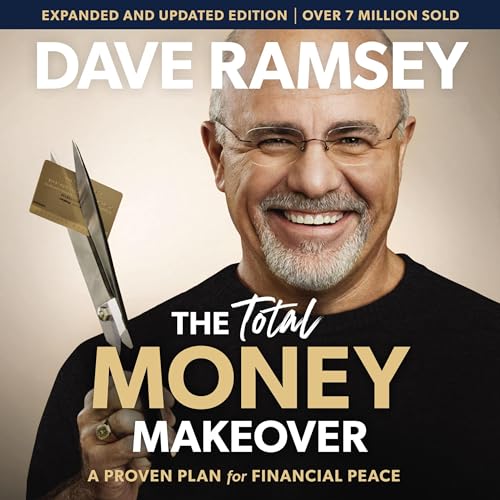
Author: Dave Ramsey
Category: Finance
Published: 2003
Pages: 288
Key Takeaways
- **Personal finance is 80% behavior, 20% knowledge.** The problem isn't math—it's the person in the mirror. Stop being 'normal' (broke).
- **Baby Step 1: $1,000 Emergency Fund.** Get this fast by selling stuff, working extra, and cutting spending. It's small on purpose—stay uncomfortable.
- **Baby Step 2: Debt Snowball.** List debts smallest to largest, attack the smallest first. Quick wins create hope and momentum—behavior beats math.
- **Gazelle Intensity:** Run from debt like a gazelle from a cheetah. Cut up credit cards, no restaurants, no vacations, sell the car if needed.
- **Baby Step 3: Full Emergency Fund.** Save 3-6 months of expenses. This is your 'sleep at night' insurance—not an investment.
- **Baby Step 4: Invest 15% for Retirement.** Order: Company match → Roth IRA → Back to 401(k). Buy growth stock mutual funds, not single stocks.
- **Baby Step 5: College Funding.** Use ESAs or 529 plans. Remember: There are scholarships for college, but no scholarships for retirement.
- **Baby Step 6: Pay Off Home Early.** 100% of foreclosures happen to people with mortgages. A paid-for house = total security.
- **Baby Step 7: Build Wealth & Give.** The most fun you can have with money is giving it away. Change your family tree.
- **Zero-Based Budget:** Every dollar gets a name. Income minus expenses must equal zero. Give every dollar a job before the month begins.
About This Summary
THE TOTAL MONEY MAKEOVER MASTERCLASS: THE BLUEPRINT TO FREEDOM
Instructor: The Coach Subject: Your Financial Survival and Thriving Method: The 7 Baby Steps
INTRODUCTION: The Philosophy of Debt-Free Living
Listen to me closely because what I am about to tell you is going to fly in the face of everything you have ever been taught by our toxic culture. You have been sold a bill of goods. You have been told that debt is a tool. You have been told that you need a credit score to win at life. You have been told that car payments are a rite of passage and that student loans are "good debt."
It is all a lie.
Normal in America is broke. Normal is living paycheck to paycheck, driving a car you can't afford, to a job you don't like, to impress people you don't even know. If you do what normal people do, you will get what normal people get: stress, anxiety, divorce, and a retirement spent eating Alpo. I don't want you to be normal. I want you to be weird.
The philosophy of this blueprint is simple, but it is not easy. It requires you to look in the mirror and identify the problem. The problem isn't the economy. The problem isn't your boss. The problem isn't the interest rate. The problem is the person in your mirror. Personal finance is 80% behavior and only 20% head knowledge. Most of us know what to do; we just don't do it. We don't have a math problem; we have a "you" problem.
This guide is about behavior modification. We are going to attack the cancer of debt with the ferocity of a cheetah chasing a gazelle. We are going to strip away the crutches.
The FICO Score Myth
Let's talk about the "FICO score" worship. The credit score is technically an "I Love Debt" score. It doesn't measure your wealth; it measures how good you are at borrowing money and paying it back to the bank so they can build skylights in their headquarters. If you inherited ten million dollars tomorrow, your credit score wouldn't go up by one point. Stop worshiping the FICO.
You don't need credit cards. You don't need the points. I've never met a millionaire who said, "Dave, I made my fortune on airline miles." It doesn't happen. When you play with snakes, you get bitten.
We are going to walk through seven specific steps. They are sequential. You do not skip steps. You do not multitask. You focus with laser intensity on one thing at a time. This is how you win.
BABY STEP 1: $1,000 Starter Emergency Fund
The first step in your makeover is to stop the bleeding. Before we can attack the debt, we have to put a buffer between you and life. We call this Baby Step 1: The Starter Emergency Fund.
Your goal is simple: Get $1,000 cash in the bank. Do not invest it. Do not put it in a CD that locks it up. Put it in a savings account or a money market account where you can touch it if the house is burning down, but not so easily that you grab it for a pizza night.
Why $1,000?
Some of you are screaming, "Dave, $1,000 isn't enough! What if the transmission blows?" You are right. It's not enough. That is the point. It is supposed to scare you. It is a meager safety net. If you had $20,000 sitting there, you would get comfortable. I don't want you comfortable yet. I want you uncomfortable enough to attack your debt in Step 2, but secure enough that every little hiccup doesn't send you back to the credit card.
This fund is for EMERGENCIES ONLY.
Let's define an emergency:
- Emergency: The car breaks down, a kid breaks an arm, or the heater dies in January.
- Not Emergency: Christmas (it happens every December 25th), a sale at the mall, a vacation, you want a new iPhone.
How to get it fast:
You need to get this money together now. I'm talking about this week.
- Sell stuff. Look around your house. You are sitting on money. Sell the treadmill you use as a clothes hanger. Sell the golf clubs. Have a garage sale. Go on eBay or Facebook Marketplace. If you haven't used it in a year, it's gone.
- Work extra. Deliver pizzas. Drive Uber. Cut grass. Pick up overtime.
- Cut spending. Stop eating out. Stop buying lattes. Rice and beans, beans and rice.
The psychological power of Baby Step 1 is massive. For the first time in your life, when "Murphy's Law" knocks on your door, you don't have to use a credit card. You write a check. You pay cash. It turns a crisis into a mere inconvenience. This builds the muscle of self-reliance. It proves to you that you can handle your own problems without the bank's "help."
Get the thousand dollars. Circle the wagons. Prepare for war.
BABY STEP 2: The Debt Snowball
Now that you have your $1,000 buffer, it is time for the main event. This is where we separate the adults from the children. This is Baby Step 2: The Debt Snowball.
In this step, you will list all of your debts, except for your house. List them in order from the smallest balance to the largest balance. Do not worry about the interest rate.
The Strategy:
- Pay minimum payments on everything except the little one.
- Attack the little one with a vengeance. Every extra dollar you squeezed out of your budget, every item you sold, every pizza you delivered—it all goes to the smallest debt.
- Cross it off. When that first debt is gone, you take the minimum payment you were paying on it, plus all the extra money, and you roll it into the next smallest debt.
- Repeat. The snowball grows. By the time you get to the largest debt (usually the student loans or the cars), you have a massive amount of cash flow attacking it every month.
The Math vs. Behavior Argument (Crucial):
I hear the sophisticated financial people whining, "But Dave! The math says you should pay the highest interest rate first! That's the Debt Avalanche! You're losing money!"
Shut up.
If you were doing math, you wouldn't have credit card debt to begin with. You are not a math machine; you are a biological, emotional being. We need quick wins.
When you pay off that little $500 medical bill or that $800 credit card, something happens in your brain. Your shoulders drop. You feel a rush of dopamine. You look at the statement and see $0.00. You think, "I can actually do this."
That hope is infinitely more valuable than the 2% interest spread you saved by doing the math way. If you start with the giant $50,000 student loan because the interest is high, you will pay on it for three years and see almost no progress. You will lose hope. You will quit. And you will stay in debt.
Gazelle Intensity:
The Bible says, "Deliver yourself like a gazelle from the hand of the hunter." Have you ever seen a nature documentary? When the cheetah is chasing the gazelle, the gazelle isn't grazing. It isn't looking at the scenery. It is running for its life.
You need to run for your life. The bank is the hunter.
- Plastic Surgery: Cut up the credit cards. Literally. Get a pair of scissors and destroy them.
- No Restaurants: Unless you are working there.
- No Vacations: You can't afford a vacation; you owe the bank money.
- Sell the Car: If your car payment is ridiculous, sell the car. Drive a hoopty. Drive a beater. It's temporary.
You stay in Baby Step 2 until the student loans, the car notes, the credit cards, the personal loans, and the furniture payments are GONE.
BABY STEP 3: The Full Emergency Fund
Congratulations. You are debt-free except for the house. The payments are gone. The stress is lifting. But we aren't done. We still have that rinky-dink $1,000 savings account. It's time to build the fortress.
Baby Step 3 is a Fully Funded Emergency Fund of 3 to 6 months of expenses.
Notice I said expenses, not income. If your household budget requires $4,000 a month to operate (mortgage, lights, water, food), then you need between $12,000 and $24,000 in a Money Market account.
Why pause investing?
"Dave, shouldn't I be getting my 401(k) match?" NO.
While you are in Baby Steps 1, 2, and 3, you completely stop all investing. We want singular focus. If you are trying to do six things at once, you will fail at all of them. By pausing investing, you freed up cash flow to kill the debt. Now, you use that same cash flow to build this savings account rapidly.
3 Months or 6 Months?
- Lean toward 3 months if: You are single, have a very stable job, and rent your home.
- Lean toward 6 months if: You are married, have kids, have a variable income (commission-based), or someone has health issues.
The Purpose of Step 3:
This money is not for investing. It is for peace of mind. It is insurance. It will likely not earn much interest, and I don't care. The "return on investment" here is that you sleep like a baby.
When you have six months of expenses in the bank, you walk differently. You don't take trash from your boss because you aren't desperate. If the economy tanks and you lose your job, it's not a tragedy; it's an inconvenience. You have six months to find the right job, not the first job.
This is the foundation. You cannot build a skyscraper of wealth on a foundation of quicksand. This fund is the concrete slab. Once this is in place, you never, ever touch it unless it is a dire emergency. And if you do use it, you stop everything and refill it immediately.
You have now reached the point of Financial Security. Now, we pivot to Wealth Building.
BABY STEP 4: Invest 15% for Retirement
Now that the debt is gone and the emergency fund is full, it is time to get serious about becoming a millionaire. Baby Step 4 is investing 15% of your gross household income into retirement.
The Golden Rule: 15%
Why 15%? Why not more? Why not less?
If you invest less, you might eat dog food in retirement. If you invest more (right now), you won't have the cash flow to save for your kids' college (Step 5) or pay off the house early (Step 6). The 15% is the magic number that builds wealth while leaving room for the other goals.
Where to put the money (The Order of Operations):
- Company Match: If your employer offers a 401(k) match, you take it. That is 100% return on your money instantly. Invest up to the match.
- Roth IRA: After the match, move to a Roth IRA. Roth is the magic word. It means you pay taxes now, but the money grows tax-free, and you withdraw it tax-free in retirement. If you become a millionaire in a Roth, the government gets zero. I love that.
- Back to the 401(k): If you haven't hit 15% of your income yet with the Match and the Roth, go back to your 401(k) or 403(b) to finish it out.
What to buy?
Do not buy single stocks. That is gambling. Do not buy crypto. That is Vegas.
Buy Good Growth Stock Mutual Funds. I recommend spreading your money across four categories:
- Growth and Income (Large Cap)
- Growth (Mid Cap)
- Aggressive Growth (Small Cap)
- International
The Power of Consistency:
This is not a "get rich quick" scheme. This is a "get rich slow" scheme. But it works 100% of the time.
If you are 30 years old, earning $50,000 a year, and you invest 15% ($625/month) into good mutual funds averaging 10-12% growth... by the time you retire at 67, you could have millions of dollars.
Compound interest is the Eighth Wonder of the World. You are now harnessing it for you, instead of paying it to the banks.
BABY STEP 5: College Funding
Now that retirement is moving, we look at the kids. Baby Step 5 is saving for your children's college education.
Priorities:
Notice that this is Step 5, not Step 1.
There are no scholarships for retirement. There are scholarships for college. You can work through college. You cannot work through being 85 and broke. You must put on your own oxygen mask first. If you are behind on retirement, you do not save for college until the retirement is fixed.
How to Save:
We use ESAs (Education Savings Accounts) or 529 Plans.
- ESA: Great flexibility, grows tax-free.
- 529: Allows for higher contribution limits. Choose a plan that leaves you in control of the investment options. Stay away from "pre-paid tuition" plans; they break even at best. We want growth.
The Philosophy:
We are breaking the cycle of debt for the next generation. Your kids are not going to take out student loans. Student loans are a cancer on the young. They steal their choices and their future.
Sit your kids down. Tell them: "We are saving for you, but you are also going to work. You are going to get good grades. And we are going to choose a school we can afford."
If they want to go to a private school that costs $60,000 a year and you have $20,000 saved, they are not going there unless they get a scholarship. Going $150,000 into debt for a degree in Left-Handed Puppetry is stupid.
By saving now, you give your children a debt-free start to life. That is a legacy.
BABY STEP 6: Pay Off Home Early
This is the step that makes the sophisticated math nerds angry again. Baby Step 6 is paying off your home early.
Any extra money—bonuses, raises, side hustles—now that the emergency fund is full and retirement is set at 15%, you throw it at the mortgage principal.
The Math Argument:
"But Dave, my mortgage rate is only 3%! I can make 8% in the market! I should keep the mortgage and invest the spread!"
Technically, mathematically, maybe. But risk-wise? No.
When you have a paid-for house, the grass feels different under your feet. The sun shines brighter.
100% of foreclosures happen to people with a mortgage. If you have no payments, you have total security.
The Interest Savings:
If you have a $200,000 mortgage at 4% for 30 years, you will pay back roughly $343,000. That's $143,000 in interest alone. By paying it off in 7-10 years (which is typical for people on this plan), you save tens of thousands of dollars. You are denying the bank their profit.
Imagine your life with no payments. No car payment. No student loan. No Visa bill. And NO MORTGAGE.
What would you do with your income? You would be unshakeable. You would be free. This is the bridge to becoming ultra-wealthy.
BABY STEP 7: Build Wealth and Give
We have arrived. You have climbed the mountain. The air is thin and sweet up here. Baby Step 7 is Build Wealth and Give.
You have no debt. Your house is paid for. You have a pile of cash in the bank. You are maxing out retirement.
Now, the fun begins.
Build Wealth:
Now you can invest more than 15%. Max out everything. Buy real estate with cash. Buy mutual funds. Watch your net worth skyrocket. Money makes money. At this stage, your money works harder than you do.
Give:
This is the most important part. The most fun you can have with money is giving it away.
When you are in debt, you can't give. You are too busy trying to survive. When you are debt-free and wealthy, you can be outrageously generous.
- Leave a $500 tip for a single mom waitress.
- Buy a car for a struggling family.
- Fund a wing of a hospital.
- Support your church or charity in a way that moves the needle.
Money is like a magnifying glass. If you are a jerk, money makes you a huge jerk. If you are generous and kind, money allows you to be incredibly generous and kind.
We want to change your family tree. We want your grandkids to say, "Grandpa and Grandma were weird. They didn't have debt. And because of them, we are free."
IMPLEMENTATION TOOLS
You cannot build a house without a hammer, and you cannot build wealth without a budget.
TOOL 1: The Zero-Based Budget
You must do a written budget every single month. Spend every dollar on paper before the month begins.
Income minus Expenses must equal Zero.
If you have $4,000 coming in, you write down where every cent goes until you hit $0. If you have $50 left over, you don't leave it in the account "just in case." You assign it to debt or savings. Give every dollar a name, or it will leave you.
TOOL 2: The Envelope System
For categories where you tend to overspend (Groceries, Restaurants, Entertainment, Clothing), use cash.
Go to the bank. Pull out the allotted amount. Put it in an envelope marked "Food." When the envelope is empty, you don't eat.
There is a psychological pain to handing over cash that does not exist when you swipe a card. Studies show you spend 12-18% less when you use cash.
THE SUMMARY TABLE
| Step | Name | Goal | |------|------|------| | BS1 | Starter Emergency Fund | Save $1,000 fast. Stop the borrowing. | | BS2 | The Debt Snowball | Pay off all debt (except house) smallest to largest. | | BS3 | Full Emergency Fund | Save 3–6 months of expenses. | | BS4 | Retirement Investing | Invest 15% of household income into retirement. | | BS5 | College Funding | Save for kids' college (ESAs/529s). | | BS6 | Pay Off Home | Throw all extra money at the mortgage. | | BS7 | Build Wealth & Give | Live like no one else, give like no one else. |
10 NON-NEGOTIABLE ACTION ITEMS TO START TODAY
- Print your bank statements for the last 3 months. Look at where your money is actually going.
- Sit down with your spouse (if married). You must be on the same page. No more financial infidelity.
- Perform "Plastic Surgery." Cut up every single credit card. Close the accounts.
- Sell something. Find $1,000 worth of junk in your house and get it sold this weekend.
- List your debts. Smallest to largest. Put it on the fridge. Stare at it. Hate it.
- Stop 401(k) contributions temporarily (only until Step 4). Increase your take-home pay to fight debt.
- Create a Zero-Based Budget for the upcoming month.
- Stop eating out. Pack a lunch. It's better for your waistline and your wallet.
- Say "No." Tell your friends you are on a "financial cleanse." If they mock you, they are broke.
- Get angry. Get angry at the debt. Get angry at the banks. Use that anger to propel you to freedom.
You can do this. Millions of people have walked this path before you. It is hard, but it is worth it. Live like no one else today, so later you can live and give like no one else.
Now, get to work.