Self-Help summary
The Alchemist Summary: Key Ideas and Takeaways
Read a practical summary of The Alchemist by Paulo Coelho, including key takeaways, lessons, and useful ideas.
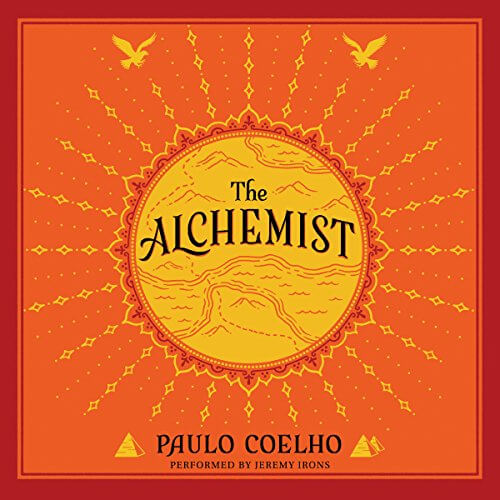
Author: Paulo Coelho
Category: Self-Help
Published: 1988
Pages: 208
Key Takeaways
- **The Personal Legend**: Your only real obligation is to realize your destiny. The universe conspires to help you achieve it.
- **Fear of Suffering**: The fear of suffering is worse than the suffering itself. Acknowledge fear but don't let it stop you.
- **The Universal Language**: The world speaks to us through omens and intuition. Learn to read the signs.
- **Love vs. Possession**: True love never holds you back from your Personal Legend. It liberates and fuels you.
- **The Present Moment**: The secret is here in the present. If you pay attention to the present, you can improve it.
- **Maktub**: 'It is written.' Trust that the universe has a plan and is guiding you toward abundance.
- **Transformation**: Alchemy is not about turning lead into gold, but about the spiritual evolution of the self.
- **Beginner's Luck**: Early success is the universe's way of whetting your appetite for the journey.
- **The Journey is the Treasure**: The external treasure is just confirmation of the internal transformation.
- **All is One**: Realize your fundamental unity with the universe and the Soul of the World.
About This Summary
THE ALCHEMY OF THE SOUL: A Masterclass on The Alchemist
Based on The Alchemist by Paulo Coelho
INTRODUCTION: The Power of the Personal Legend
The Alchemist is not just a fable; it is a manual for spiritual evolution. It maps the journey of the soul through the story of Santiago, a shepherd boy in search of treasure.
The Core Philosophy:
- Personal Legend: "What you have always wanted to accomplish." It is your Dharma, your spiritual reason for existing.
- The World's Greatest Lie: The belief that fate controls our lives. The truth is we have agency to shape reality.
- The Conspiracy of the Universe: "When you want something, all the universe conspires in helping you to achieve it." The universe is a mirror reflecting your faith and courage.
STAGE I: LEAVING THE FLOCK (The Initial Call)
The transition from an unconscious life to a conscious one.
The Symbolism of the Sheep
The sheep represent the "unexamined life"—content with food and water, unaware of destiny. Comfort is the enemy of the Personal Legend.
The King of Salem & Beginner's Luck
- Principle of Favorability: Early success is the universe's way of encouraging you.
- The Payment: You must give up what you have (security) to get what you might get (destiny).
The First Threshold
Santiago is robbed in Tangier. He reframes his narrative from "victim of a thief" to "adventurer in quest of treasure." Circumstances don't define the journey; your narrative does.
STAGE II: THE ILLUSION OF SECURITY (The Crystal Merchant)
The test of endurance and the fear of realization.
The Crystal Merchant
A foil to the hero, the Merchant knows his dream (Mecca) but refuses to pursue it. He prefers the dream of Mecca to the reality, fearing he will have no reason to live if he achieves it. He chooses the Illusion of Security.
Innovation and Flow
Santiago innovates in the shop (crystal glasses, tea).
- Maktub: "It is written." Aligning with the Soul of the World leads to inevitable success.
Money as a Tool
Santiago earns enough to return to his sheep but chooses to continue to the Pyramids. Security is always available to the competent; therefore, risk should be taken.
STAGE III: THE PATH OF LOVE AND TRIALS (The Desert)
The spiritual proving ground. Moving from "doing" to "being."
The Englishman vs. Santiago
- The Englishman: Seeks knowledge through books (intellect).
- Santiago: Seeks wisdom through observation (experience). The secrets are written on the face of the world, not just in manuscripts.
The Camel Driver: Living in the Present
"I don't live in either my past or my future. I'm interested only in the present." Surviving the void of the journey requires deep engagement with the Now.
Fatima: Love and Destiny
Santiago meets Fatima and wants to stay.
- True Love: Love is fuel, not an anchor. "Love never keeps a man from pursuing his Personal Legend." If it does, it is not true love.
Intuition and Courage
Santiago predicts an attack on the oasis by observing hawks. He risks his life on this intuition. Intuition requires the bravery to act on it.
STAGE IV: MASTERY AND THE FINAL LESSON (The Alchemist)
Wisdom is powerful and dangerous.
The Alchemist's Lesson
He teaches Santiago to find life in the desert, connecting him to the network of life.
The Heart
Santiago learns to dialogue with his fearful heart. "The fear of suffering is worse than the suffering itself." He integrates mind and soul.
Transforming into the Wind
Facing execution, Santiago must turn into the wind. He converses with the Desert, Wind, Sun, and finally the Creator. He realizes his soul is the Soul of God. Alchemy is the spiritual evolution of the alchemist, realizing unity with the universe.
The Ultimate Irony
Santiago reaches the Pyramids but finds no treasure. He is beaten, but learns the treasure is back home.
- Why Travel?: To meet Fatima, to learn the Universal Language, and to become the kind of man who can handle the treasure.
- The Real Treasure: The Alchemical Transformation of the Self.
CONCLUSION: The 10 Mandates of the Personal Legend
- Acknowledge Your Legend: Don't ignore your destiny.
- Trust Beginner's Luck: It's a down payment from the universe.
- Burn the Ships: Sacrifice security for potential.
- Ignore Crystal Merchants: Don't let others' fear of change infect you.
- Master Presence: Power lives in the Now.
- Read the Omens: Coincidences are road signs.
- Love Must Liberate: True love supports your destiny.
- Embrace Fear: The pursuit is worth the risk.
- Persist: Dead ends are tests of resolve.
- The Treasure is Within: You travel to find the eyes to see what you already have.