Sociology summary
Black Rednecks and White Liberals Summary: Key Ideas and Takeaways
Read a practical summary of Black Rednecks and White Liberals by Thomas Sowell, including key takeaways, lessons, and useful ideas.
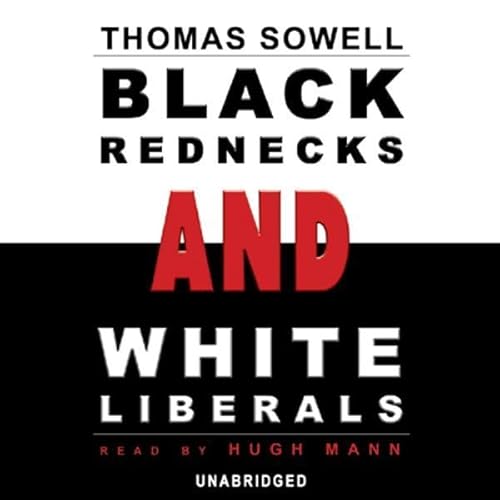
Author: Thomas Sowell
Category: Sociology
Published: 2005
Pages: 372
Key Takeaways
- **Cultural Capital is King**: Skills, habits, and values (human capital) are more decisive than politics or biology in determining economic success.
- **Culture is Functional**: Cultures are not just 'different'; they are productive or counter-productive for specific economic goals.
- **The Redneck Roots**: 'Black' ghetto culture is historically a survival of white 'cracker' culture from the British borderlands, transplanted to the American South.
- **The Liberal Trap**: White liberals harm black progress by celebrating counter-productive cultural habits as 'authentic' identity.
- **Middleman Minorities**: Groups like Jews, Chinese, and Armenians succeed globally through thrift and trust, despite lacking political power.
- **Economic Illiteracy**: Hostility toward middlemen comes from a failure to understand the value of distribution and risk-taking.
- **Slavery was Universal**: Slavery existed on every continent; it was not unique to the West or to white people.
- **Racism Followed Slavery**: Racial ideology was invented to justify slavery in an age of liberty, not the other way around.
- **The West Ended Slavery**: The West is unique not for slavery, but for the moral crusade (Abolition) that ended it globally.
- **Political Power ≠ Economic Success**: History shows that groups often prosper economically while being politically marginalized.
About This Summary
Deep-Dive Analysis and Study Guide: Black Rednecks and White Liberals by Thomas Sowell
Part I: Introduction
The Central Thesis: Cultural Capital as the Primary Driver
Thomas Sowell’s Black Rednecks and White Liberals represents a culmination of his decades-long inquiry into the causes of disparities between groups. The central thesis of this collection is that cultural habits, values, and skills—what economists call "human capital"—are significantly more potent than either biological determinism or external discrimination in determining the economic and social outcomes of a demographic group.
Sowell challenges the two prevailing orthodoxies of the 20th and 21st centuries. First, he dismantles the older, discredited notion that genetic biology dictates intelligence or capability. Second, and more central to this specific work, he rigorously critiques the contemporary sociological consensus that explains all disparities in performance solely through the lens of systemic discrimination, oppression, or institutional barriers.
Instead, Sowell posits that culture is functional. Cultures are not merely "different" in an aesthetic sense; they are "productive" or "counter-productive" in relation to specific economic goals. He argues that specific cultural traits—such as attitudes toward education, violence, savings, and entrepreneurship—create tangible effects. These traits can be transferred, adopted, or discarded, but they persist over long periods and have real-world consequences that cannot be waved away by political narratives.
Methodology: Global Empiricism
Sowell’s methodology is distinctive for its reliance on broad, international, and trans-historical patterns rather than a narrow focus on American political history. He argues that to understand the black American experience, one must understand the history of the Scots-Irish; to understand the Jewish experience, one must look at the Armenians in the Ottoman Empire or the Overseas Chinese in Southeast Asia.
By using a comparative historical approach, Sowell isolates variables. If a specific cultural group succeeds in widely different political environments (e.g., the Chinese in hostile Southeast Asia vs. the Chinese in the welcoming U.S.), then the driver of that success is likely internal to the culture rather than external to the political system. This empirical rigor allows Sowell to test hypotheses about discrimination and poverty against a global dataset, often revealing that political power and economic success are rarely correlated in the way modern social theories suggest.
Part II: Essay-by-Essay Analysis
Essay 1: Black Rednecks and White Liberals
This titular essay provides the foundational argument for the book, offering a provocative historical revision of African American culture. Sowell aims to trace the genealogy of what is contemporarily known as "ghetto" or "urban" culture, arguing that it is not authentically African, nor is it a direct product of slavery’s oppression. Instead, he identifies it as a survival of an archaic white culture transplanted from Britain.
#### The "Cracker" Culture of the British Borderlands Sowell begins by examining the social culture of the "Celts" from the northern borderlands of England, the Scottish Highlands, and Ulster (Northern Ireland). In centuries past, these regions were characterized by statelessness, constant clan warfare, and a lack of central legal authority. The resulting culture prioritized personal honor, vigilantism, aversion to hard, consistent labor, and a predilection for violence and emotional oratory.
When these populations emigrated to North America, they settled overwhelmingly in the American South. They brought with them their specific cultural traits: a "touchy" sense of honor that led to dueling and brawling, a leisure-oriented lifestyle that scorned commerce, and a specific dialect. Sowell documents that these traits were observed by contemporaries as distinct to the "redneck" or "cracker" populations of the South, differing sharply from the commercial, Puritan-influenced culture of New England.
#### Transmission to the Black Population The core of Sowell’s argument is that the black population in the South, living in close proximity to these white southerners for centuries, absorbed this specific cultural package. He presents linguistic evidence, noting that words and grammatical structures often attributed to "Black English" (Ebonics) are actually derived from 17th-century regional British dialects spoken by white southerners.
Furthermore, behavioral patterns such as high rates of violence, illegitimacy, and a disregard for formal education were historically prevalent among white southern rednecks long before they became associated with the black urban underclass. Sowell uses census data and historical records to show that white southern migrants to the North displayed similar social pathologies—such as higher incarceration rates and lower test scores—when compared to white northerners, mirroring the later struggles of black migrants.
#### The Role of White Liberals The second half of the essay pivots to a critique of the "White Liberal" intelligentsia. Sowell argues that this group has played a detrimental role in the advancement of black Americans by re-branding this counter-productive "redneck" culture as a distinct, authentic "black identity" that must be celebrated and preserved.
By protecting this culture from criticism and conflating it with racial pride, white liberals (and black "identity mongers") have trapped the black underclass in a cycle of failure. Sowell contrasts this with the approach of early black elites and educators (like those at the Dunbar High School, discussed later), who recognized that "redneck" habits were impediments to success and actively sought to acculturate black students into the broader, more productive mainstream culture. Sowell concludes that the refusal to critique this culture—treating it instead as a sacred victim identity—is the primary barrier to closing the economic gap today.
Essay 2: Are Jews Generic?
In this essay, Sowell moves beyond the specific cultural history of the United States to examine a global economic phenomenon: the "middleman minority." The title serves as a rhetorical question—Sowell argues that the Jewish experience, while culturally specific in its religious details, is structurally generic in its economic and sociological patterns. The Jews are simply the most prominent example of a recurring human dynamic found across continents.
#### The Concept of the Middleman Minority Sowell defines middleman minorities as ethnic groups that act as intermediaries between producers and consumers. They typically dominate fields such as retailing, wholesaling, and money-lending. While they often lack political power or a military presence, they achieve higher-than-average economic success through specific cultural traits: thrift, hard work, credit-worthiness, and tight-knit community trust networks.
Sowell provides a sweeping comparative analysis of these groups to prove that the hostility they face is not unique to anti-Semitism but is a universal reaction to their economic function. His key examples include:
- The Overseas Chinese in Southeast Asia: Often controlling the retail sectors in nations like Malaysia, Indonesia, and Thailand, despite facing severe legal discrimination and occasional pogroms.
- The Armenians in the Ottoman Empire: Who served as the commercial backbone of the empire before the genocide.
- The Ibos in Nigeria: Often called "the Jews of Africa," who faced resentment and violence from other tribes due to their commercial success.
- The Lebanese in West Africa: Who established significant trading networks in nations distinct from their homeland.
#### The Economics of Hostility Sowell deconstructs the cause of the hatred directed at these groups. He argues that the hostility is rooted in economic illiteracy. To the average peasant or laborer, the "middleman" appears to be a parasite. The farmer works the land, and the customer eats the food, but the middleman merely moves the goods and takes a profit. Sowell explains that middleman minorities provide intangible but vital economic value: they assume the risk of inventory, they provide liquidity (credit) to poor farmers who cannot get bank loans, and they organize logistics. However, because they do not produce a physical, visible commodity, their wealth is viewed by the majority population as "theft" or exploitation.
#### Paradox of Political Power vs. Economic Success A crucial mechanism Sowell highlights is the inverse relationship between political power and economic success for these groups. Middleman minorities almost always succeed despite being shut out of political power.
- The Chinese in Southeast Asia often had no voting rights or legal protections yet dominated the economy.
- The Jews in Europe were often legally barred from owning land or joining guilds, forcing them into liquid assets (gold, gems, finance)—which ironically accelerated their accumulation of human capital and portable wealth.
Sowell uses this analysis to counter the modern argument that political representation is a prerequisite for economic prosperity. The history of middleman minorities suggests the opposite: groups that focus on developing human capital and economic utility prosper even in hostile political environments, whereas groups that rely on political patronage often stagnate.
Essay 3: The Real History of Slavery
Perhaps the most empirically dense essay in the collection, "The Real History of Slavery" challenges the Western-centric and American-centric view of the institution. Sowell’s objective is not to minimize the horrors of American slavery, but to contextualize them within the history of the human species. He argues that by viewing slavery strictly through a racial lens (White enslaving Black), modern commentators miss the fundamental historical reality of the institution.
#### The Universality of Slavery Sowell presents overwhelming historical evidence that slavery has been a universal institution among human societies on every continent.
- Europe: For centuries, Europeans enslaved other Europeans. The very word "slave" is derived from "Slav," referencing the Slavs of Eastern Europe who were enslaved by Romans, Ottomans, and Western Europeans alike.
- Africa and Asia: Slavery was indigenous to sub-Saharan Africa and Asia long before European contact.
- The Islamic World: Sowell highlights the massive scale of the Arab slave trade, which transported millions of Africans across the Sahara and to the Middle East. He notes a grim statistical difference: the Atlantic trade was largely male (for labor), while the Arab trade was largely female (for harems). Furthermore, the castration of male slaves in the Arab world meant there was no resulting diaspora population, unlike in the Americas.
#### Racism as a Result, Not a Cause A critical mechanism Sowell elucidates is the relationship between slavery and racism. He argues that racism did not cause slavery; slavery generated racism. In the ancient world, people were enslaved based on vulnerability, not race—capture in war was the primary driver. However, as the West developed liberal philosophies regarding the rights of man, slavery became morally untenable. To justify the continued enslavement of Africans in a society that spoke of liberty, a racial ideology was manufactured to dehumanize the enslaved. Thus, the specific virulent racism of the American South was a product of the institution attempting to survive the Age of Enlightenment.
#### The Uniqueness of Abolition Sowell argues that the West is not unique for having slavery (as all civilizations did), but is unique for ending it. He details the rise of the abolitionist movement in Great Britain, driven by religious evangelicals and Quakers. This was not an economic evolution, but a moral crusade. Sowell provides evidence that the abolition of slavery was economically disastrous for the British Empire.
- The Cost of the Royal Navy: Britain deployed its navy to patrol the Atlantic and Indian Oceans, intercepting slave ships (even those of other sovereign nations) and liberating captives.
- Diplomatic Friction: Britain risked war with France, the U.S., and Brazil to enforce its ban on the trade.
- African Resistance: Sowell documents that African chiefs and Arab traders bitterly opposed British abolition efforts, as the slave trade was a primary source of their wealth.
By framing the narrative this way, Sowell contends that the modern vision of "The West vs. The Rest" is historically inverted regarding slavery. It was Western imperialism—specifically British imperial power—that destroyed the global slave market, often imposing freedom on non-Western societies that wished to continue the practice.