Self-Help summary
The Science of Self-Discipline Summary: Key Ideas and Takeaways
Read a practical summary of The Science of Self-Discipline by Peter Hollins, including key takeaways, lessons, and useful ideas.
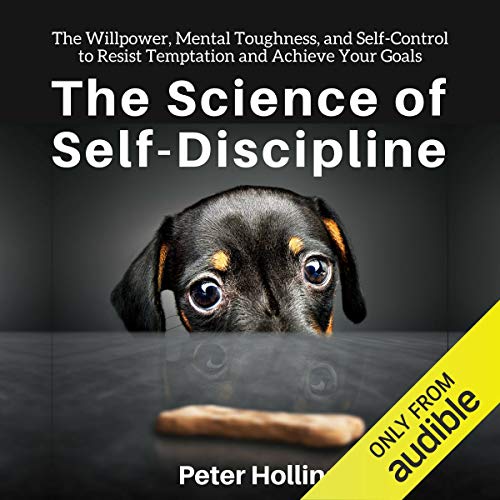
Author: Peter Hollins
Category: Self-Help
Published: 2017
Pages: 154
Key Takeaways
- **Discipline is a Biological Battle**: The war between the Prefrontal Cortex (rational CEO) and the Limbic System (emotional child)—willpower is finite and depletes like glucose throughout the day (Ego Depletion).
- **Motivation is Unreliable**: Relying on motivation guarantees failure—discipline must become automatic through habit formation and environmental design, not emotional inspiration.
- **The 40% Rule**: When your brain screams 'stop,' you've only used 40% of your actual capacity—the 'governor' in your brain stops you prematurely to preserve energy; override it through mental fortitude.
- **The 10-10-10 Rule**: Combat Hyperbolic Discounting by analyzing decisions through three timeframes—how will I feel in 10 minutes, 10 hours, 10 years? This engages long-term planning over immediate gratification.
- **Design Your Environment**: You can't fight your environment forever—increase friction for vices (unplug TV, hide remote) and decrease friction for virtues (pack gym bag the night before).
- **Implementation Intentions (If/Then)**: Pre-program behavior with scripts like 'If it's 6 PM, then I put on running shoes'—this removes the need for in-the-moment willpower by having your past rational self make the decision.
- **Decision Fatigue**: Every choice consumes neurotransmitters, degrading decision quality throughout the day—minimize variables (wear same clothes, eat same breakfast) to preserve mental energy for what matters.
- **The 75% Rule**: Act when you have 75% of the information—waiting for 100% certainty is Analysis Paralysis, a form of procrastination disguised as preparation.
- **Time Inconsistency**: We overvalue Present Self and treat Future Self like a stranger—procrastination is 'buying on credit,' borrowing happiness from the future; eventually the bill comes due with interest (stress and panic).
- **Procrastination is Emotion Regulation**: Most procrastination isn't laziness—it's avoiding tasks that trigger anxiety, incompetence, or boredom; the pain of anticipating work is always greater than the pain of doing it.
About This Summary
The Science of Self-Discipline: A Deep Dive Guide
Author: Peter Hollins Role: Behavioral Psychology & High-Performance Analysis
Part 1: Executive Summary
The Philosophy of the Disciplined Mind
In a world designed to distract us, self-discipline is not merely a virtue; it is the primary predictor of success, arguably more critical than intelligence or talent. Peter Hollins' The Science of Self-Discipline dismantles the myth that discipline is a genetic trait reserved for the lucky few. Instead, he posits that discipline is a muscle—a biological mechanism that can be trained, fatigued, and strengthened.
The core philosophy of the book rests on the tension between two competing systems in the brain: the Limbic System (the ancient, emotional brain seeking immediate gratification) and the Prefrontal Cortex (the modern, logical brain responsible for long-term planning).
Hollins argues that the average person fails at their goals not because they lack "passion," but because they fundamentally misunderstand how to regulate their autonomic nervous system. We are biologically wired to seek the path of least resistance (The Pleasure Principle). Therefore, relying on "motivation"—a fleeting emotional state—is a strategy guaranteed to fail.
The "Why" Behind the Book:
The book serves as an operational manual for the human brain. It moves away from "rah-rah" motivational speech and focuses on behavioral mechanics. The goal is to move the reader from a state of unconscious incompetence (being lazy without knowing why) to unconscious competence (being disciplined without thinking about it). By understanding the neuroscience of impulse control, dopamine regulation, and status quo bias, the reader can hack their biology to make hard work feel automatic.
Part 2: Chapter-by-Chapter Analysis
Chapter 1: The Biological Basis of Discipline
The Core Argument:
Self-discipline is a biological battle, not a moral one. You are fighting millions of years of evolution that prioritized energy conservation and immediate sugar consumption for survival.
The Science:
Hollins introduces the Marshmallow Test (Stanford University, 1960s/70s). Children were offered one marshmallow now or two if they waited 15 minutes. Follow-up studies decades later showed the "waiters" had better SAT scores, lower BMIs, and lower divorce rates.
Neurology: This is the war between the Prefrontal Cortex (PFC) and the Amygdala/Limbic System. The PFC is the CEO of the brain, handling executive functions. The Limbic system is the petulant child. Discipline is the measure of the PFC's ability to override the Limbic system.
Key Analogies:
The Rider and the Elephant: The Rider is your rational brain (PFC), holding the reins. The Elephant is your emotional brain (Limbic). The Rider can guide the Elephant, but if the Elephant decides to stop or charge, the Rider is easily overpowered. Discipline is training the Elephant to obey the reins.
Actionable Takeaways:
- Accept the Fatigue: The PFC gets tired. This is called "Ego Depletion." You have a finite amount of willpower per day.
- Eat for Discipline: Low glucose levels weaken the PFC. Maintain stable blood sugar to keep the "CEO" awake.
- Remove Temptation: Do not rely on willpower. If the Elephant sees a peanut (distraction), it will chase it. Hide the peanut.
Chapter 2: What Motivates Us?
The Core Argument:
Motivation is unreliable, but understanding its source allows us to manufacture it when necessary. Hollins argues that we are driven by the pursuit of pleasure or the avoidance of pain, but usually, the fear of loss is more powerful.
The Science:
- The Incentive Theory of Motivation: We are pulled toward external rewards (extrinsic) or pushed by internal desires (intrinsic).
- Loss Aversion: Psychological studies show that the pain of losing $10 is twice as intense as the joy of finding $10.
Key Analogies:
The Carrot and the Stick: Most people focus on the carrot (the goal). However, the stick (the consequence of failure) is often a faster motivator. Discipline requires you to hold your own stick.
Actionable Takeaways:
- Define Your "Why": Surface-level goals ("I want to lose weight") fail. Deep goals ("I want to live to see my grandkids") sustain discipline.
- Use Social Pressure: Utilize the "Hawthorne Effect"—people perform better when they are being watched. Get an accountability partner.
Chapter 3: Discipline Tactics & The Navy SEAL Mindset
The Core Argument:
When your brain screams "stop," you are nowhere near your actual physical or mental limit. We have a built-in "governor" that stops us prematurely to preserve energy.
The Science:
The 40% Rule: Popularized by Navy SEALs (specifically David Goggins), this concept states that when your mind tells you that you are completely exhausted and cannot go on, you have only used 40% of your actual capacity. The remaining 60% is unlocked through mental fortitude.
Key Analogies:
The Governor: Like a speed governor on a sports car that limits it to 155mph despite the engine being capable of 200mph, your brain limits your effort to keep you safe. You must manually override the governor.
Actionable Takeaways:
- The 75% Rule: Do not wait for 100% certainty or readiness. If you are 75% sure, act. Waiting for perfection is a form of procrastination disguised as preparation.
- Discomfort Training: Intentionally put yourself in uncomfortable situations (cold showers, awkward conversations) to raise your baseline tolerance for "pain."
Chapter 4: Habits and Routines (The Autopilot)
The Core Argument:
Discipline is hard; habits are easy. The ultimate goal of self-discipline is to stop needing self-discipline. By encoding behaviors into the basal ganglia (the habit center), you bypass the energy-expensive Prefrontal Cortex.
The Science:
Decision Fatigue: Every decision you make consumes neurotransmitters. By the end of the day, your ability to make good choices degrades (this is why you cheat on your diet at night, not in the morning).
Key Analogies:
Grooves in a Record: Every time you perform an action, you deepen a neural pathway. Eventually, the needle (your behavior) slides into that groove effortlessly. Trying to jump out of the groove takes massive force.
Actionable Takeaways:
- Minimize Variables: Wear the same clothes, eat the same breakfast. Save your "decision points" for work that matters.
- Implementation Intentions: Use "If/Then" statements. "If it is 6:00 PM, then I will put on my running shoes." This pre-programs the brain.
Chapter 5: Delayed Gratification & Time Inconsistency
The Core Argument:
We are cognitively biased to overvalue the "Present Self" and undervalue the "Future Self." We treat our future selves like strangers, dumping work on them that we don't want to do today.
The Science:
Time Inconsistency: The human preference for smaller, immediate rewards over larger, later rewards. This is also known as "Hyperbolic Discounting."
Key Analogies:
Buying on Credit: Procrastination is enjoying the present by borrowing happiness from your future self. Eventually, the bill comes due with interest (stress and panic).
Actionable Takeaways:
- The 10-10-10 Rule: Before giving in to an impulse, ask: How will I feel about this in 10 minutes? In 10 hours? In 10 years? This forces the brain to engage the long-term planning module.
- Wait 10 Minutes: If you want a craving (e.g., a cookie), tell yourself you can have it, but you must wait 10 minutes. Usually, the urge (a dopamine spike) will subside within that window.
Chapter 6: Designing the Environment
The Core Argument:
You cannot fight your environment forever. If your environment fights your goals, your willpower will eventually break. You must design a life where discipline is the default option.
The Science:
Status Quo Bias: We tend to leave things as they are. If the TV is plugged in and the remote is on the table, we watch TV. If the remote is in a drawer and the TV is unplugged, we are significantly less likely to watch it.
Actionable Takeaways:
- Increase Friction for Vices: Make bad habits annoying to start (e.g., take the batteries out of the controller).
- Decrease Friction for Virtues: Pack your gym bag the night before. Put a book on your pillow.
- The "Clean Slate" Policy: Never leave a workspace messy. Resetting the room to "neutral" at the end of a session reduces the activation energy required to start the next one.
Chapter 7: Managing the Emotional Mind
The Core Argument:
Most procrastination is not about laziness; it is about emotion regulation. We avoid tasks because they make us feel anxious, incompetent, or bored.
The Science:
- False Hope Syndrome: Setting unrealistic goals leads to failure, which leads to shame, which leads to quitting.
- Rationalization: The brain is an expert at creating logical excuses for emotional decisions ("I worked hard today, I deserve this pizza").
Actionable Takeaways:
- Just Get Started: The pain of anticipating work is always greater than the pain of doing the work.
- Monitor Self-Talk: Catch yourself rationalizing. When you hear "I'll do it tomorrow," recognize that as a lie from the Limbic System.
Part 3: The Toolkit (Master List of Discipline Techniques)
This section aggregates the specific mental models and exercises found throughout the book into a rapid-fire tactical guide.
1. The 10-Minute Rule
The Concept: When you feel the urge to quit or an urge to indulge in a distraction, force yourself to wait 10 minutes before giving in.
Why it works: Dopamine cravings act like waves. They spike and then crash. By riding the wave for 10 minutes, the "urge" usually dissipates, allowing the rational brain to regain control.
2. The 10-10-10 Rule
The Concept: Analyze every decision through three timeframes: 10 minutes, 10 hours, 10 years.
Why it works: It combats "Hyperbolic Discounting" by making the future consequences feel immediate and real.
3. The 40% Rule
The Concept: When you feel physically or mentally "done," assume you are only at 40% capacity. Push past the imaginary barrier.
Why it works: It recalibrates your pain tolerance and resets your "governor."
4. The 75% Rule
The Concept: Take action when you have 75% of the information you need.
Why it works: It prevents "Analysis Paralysis," a common form of procrastination where over-planning is used as a safety blanket to avoid the risk of action.
5. Implementation Intentions (If/Then)
The Concept: Script your behavior. "If [Situation X] happens, I will do [Action Y]."
Why it works: It removes the need for willpower in the moment of decision. The decision has already been made by your past, rational self.
6. Impulse Surfing
The Concept: When a distraction hits, acknowledge it. Do not fight it; observe it non-judgmentally like a wave, and let it pass.
Why it works: Fighting a thought makes it stronger (The White Bear Effect). Observing it detaches the emotion from the compulsion.
7. Box Breathing
The Concept: Inhale 4 seconds, Hold 4 seconds, Exhale 4 seconds, Hold 4 seconds.
Why it works: This creates a physiological reset. It shifts the body from a Sympathetic state (Fight or Flight/Anxiety) to a Parasympathetic state (Rest and Digest/Calm), allowing the Prefrontal Cortex to come back online.
Part 4: Critical Analysis & Conclusion
Value Proposition:
The Science of Self-Discipline distinguishes itself from other self-help books by stripping away the mysticism of "success." It does not rely on the Law of Attraction or vague spiritual concepts. It is a mechanical, biological approach to human performance. It is best suited for individuals who are tired of "feeling inspired" for three days and then crashing. It is for the reader who wants to look "under the hood" of their own psychology.
Comparison to Other Works:
- Vs. Atomic Habits (James Clear): Atomic Habits focuses on the systems of small changes. The Science of Self-Discipline focuses more on the willpower and mental fortitude required when systems fail. Hollins is more about the "grunt work" of discipline.
- Vs. The Power of Habit (Charles Duhigg): Duhigg focuses on the loop (Cue-Routine-Reward). Hollins focuses on the biology of the impulse and how to override the brain's desire for the reward.
Critical Perspective:
If there is a critique of the book, it is that it can be relentless. It assumes a level of self-awareness that some readers may not yet possess. Furthermore, the "40% Rule" and similar tactics, while effective, run the risk of promoting burnout if not paired with adequate rest (though Hollins does mention biology/sleep, the focus is on pushing).
Final Conclusion:
Peter Hollins proves that self-discipline is not a prison, but a key. It is the ability to align your actions with your intentions. By understanding that your brain is wired to be lazy, fearful, and hungry, you stop blaming yourself for your "lack of character" and start building the systems and mental calluses required to overcome your biology.
The ultimate lesson is this: Discomfort is the price of admission to a meaningful life. You can choose the pain of discipline, or the pain of regret. The science suggests that the pain of discipline weighs ounces, while the pain of regret weighs tons.
How to Use This "Deep Dive"
- Read the Toolkit every morning. Remind yourself of the 10-10-10 rule before your day starts.
- Audit your environment. Use Chapter 6 to rearrange your home office today.
- Practice Discomfort. Use Chapter 3 to do one thing today that you hate doing, solely to prove to your Limbic System that it is not in charge.