Self-Help summary
Brainwashed by your Gut Summary: Key Ideas and Takeaways
Read a practical summary of Brainwashed by your Gut by Manjari Chandra, including key takeaways, lessons, and useful ideas.
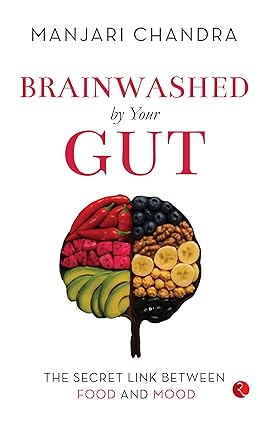
Author: Manjari Chandra
Category: Self-Help
Published: 2025
Pages: 288
Key Takeaways
- **The Second Brain**: The Enteric Nervous System (ENS) contains 100 million nerve cells and can function independently. It's not just a digestive system—it's a sophisticated brain.
- **95% of Serotonin is Made in the Gut**: Mental health issues like depression and anxiety may actually be gut health issues. An irritable bowel leads to an irritable mind.
- **The Vagus Nerve is a Two-Way Highway**: 80-90% of nerve fibers carry information UP from gut to brain, not down. The brain is more of a listener than a leader.
- **Leaky Gut Leads to Leaky Brain**: When the gut barrier is compromised, toxins leak into the bloodstream and cross the blood-brain barrier, causing brain fog and neuroinflammation.
- **The Tryptophan Steal**: When the gut is inflamed, tryptophan is diverted to produce neurotoxins instead of serotonin, biochemically causing anxiety and depression.
- **Parkinson's May Start in the Gut**: Misfolded proteins found in Parkinson's appear in the gut decades before the brain. Chronic constipation may be an early warning sign.
- **We Are Overfed but Undernourished**: Modern diets damage the gut microbiome, preventing nutrient absorption. You can be obese yet have a brain starving for micronutrients.
- **The 5R Protocol**: Remove triggers, Replace enzymes, Reinnoculate with probiotics, Repair the gut lining, Rebalance lifestyle. Healing requires systematic gut reset.
- **Food is Information, Not Just Fuel**: Every bite tells your genes whether to express health or disease. Food is epigenetic information that talks to your microbes.
- **Diversity is Health**: Aim for 30 different plant foods per week. A healthy gut is like a thriving rainforest; a diseased gut is like a monoculture or desert.
About This Summary
Brainwashed by your Gut: A Deep Dive
Executive Summary: The Revolution of the Gut-Brain Axis
For decades, the medical establishment viewed the human brain as the undisputed commander-in-chief of the body—a localized control center isolated by the blood-brain barrier. However, Manjari Chandra's "Brainwashed by your Gut" joins a growing vanguard of literature that dismantles this "brain-down" hierarchy. Chandra's central thesis is revolutionary yet biologically ancient: our health, our moods, our cognitive longevity, and even our personalities are significantly dictated by the Enteric Nervous System (ENS) and the trillions of microbes residing in our gastrointestinal tract.
Chandra argues that we are currently living through a crisis of "brainwashing"—not through propaganda, but through a modern lifestyle that systematically erodes our internal ecosystem. From the overuse of antibiotics and the consumption of ultra-processed foods to chronic stress and environmental toxins, our "first brain" (the gut) is being damaged, leading to a "second brain" (the head) that is inflamed, anxious, and prone to neurodegeneration.
This book is a vital contribution to modern health literature because it bridges the gap between Functional Medicine and Neuroscience. It moves beyond the simplistic "calories-in, calories-out" model of nutrition, instead focusing on how food acts as information that talks to our genes and our microbes.
Chapter-by-Chapter Breakdown
Chapter 1: The Hidden Commander – The Enteric Nervous System (ENS)
The Core Scientific Argument: In this opening chapter, Chandra establishes the biological foundation of the book: the Enteric Nervous System (ENS). Often called the "Second Brain," the ENS consists of two thin layers of more than 100 million nerve cells lining your gastrointestinal tract from esophagus to rectum.
Key Terminology & Concepts:
- The Second Brain: The ENS uses the same neurons and neurotransmitters found in the brain to control digestion.
- Autonomy: The ENS can function even if the Vagus nerve is severed, proving its inherent intelligence.
- Neurotransmitters: A staggering 95% of the body's serotonin is produced in the gut, not the brain.
The "Aha!" Moment: The most striking insight here is the realization that many "mental" disorders may actually be "dental-to-digestive" disorders. If 95% of your serotonin is produced in your gut, then an irritable bowel is almost guaranteed to lead to an irritable mind.
Chapter 2: The Microbial Rainforest – Diversity and Dominance
The Core Scientific Argument: Chandra shifts focus from the nerves to the inhabitants: the Microbiome. She posits that we are "more microbe than human," with microbial cells outnumbering human cells. The argument here is that health is defined by biodiversity.
Key Terminology & Concepts:
- Microbial Dysbiosis: An imbalance in the gut flora where "bad" bacteria outnumber the "good," leading to systemic issues.
- Symbiosis: The mutually beneficial relationship where we provide a home for microbes, and they synthesize vitamins (B and K), break down fiber, and train our immune system.
- Metabolic Byproducts: Bacteria produce "postbiotics" like Short-Chain Fatty Acids (SCFAs) which nourish the colon and reduce brain inflammation.
The "Aha!" Moment: Chandra presents the gut as an "Endocrine Organ." When you eat fiber, you aren't just "staying regular"; you are feeding specific bacteria that produce Butyrate, a substance that literally prevents your brain from aging prematurely.
Chapter 3: The Highway of Communication – The Vagus Nerve
The Core Scientific Argument: If the gut and brain are two separate entities, how do they talk? Chandra explains the Vagus Nerve—the longest cranial nerve in the body. She challenges the old assumption that the brain sends all the orders down. In reality, roughly 80% to 90% of the nerve fibers are sensory, meaning they carry information up from the gut to the brain.
Key Terminology & Concepts:
- Vagal Tone: The strength and efficiency of the Vagus nerve. High vagal tone is associated with better stress resilience.
- Afferent vs. Efferent: Afferent fibers (upward bound) dominate the gut-brain connection, suggesting the brain is more of a "listener" than a "leader."
- Cytokines: Chemical messengers of the immune system that can travel via the Vagus nerve to trigger "sickness behavior" (depression and lethargy) in the brain.
The "Aha!" Moment: The revelation that "gut feelings" are biologically literal. When you feel "butterflies" or a "sinking feeling," it is your Vagus nerve transmitting immediate physiological data to your limbic system.
Chapter 4: The Breach – Leaky Gut and the Blood-Brain Barrier
The Core Scientific Argument: Chandra introduces the concept of Intestinal Permeability, or "Leaky Gut." When this barrier is compromised by poor diet, stress, or toxins, undigested food particles and toxins "leak" into the bloodstream. Chandra argues that a "Leaky Gut" almost inevitably leads to a "Leaky Brain" (increased permeability of the Blood-Brain Barrier).
Key Terminology & Concepts:
- Zonulin: A protein that modulates the "tight junctions" between cells in the gut lining. High levels of zonulin cause these junctions to fly open.
- LPS (Lipopolysaccharides): Endotoxins found on the cell walls of certain bacteria. When LPS leaks into the blood, it triggers systemic inflammation.
- Neuro-inflammation: The process where the brain's immune cells (microglia) become overactive, leading to brain fog and cognitive decline.
The "Aha!" Moment: Chandra connects the dots between common bloating and serious neurological issues. "Brain Fog" isn't a vague psychological state; it is often the physical manifestation of LPS endotoxins crossing into the brain.
Chapter 5: The Chemistry of Mood – Anxiety, Depression, and the Microbiome
The Core Scientific Argument: This chapter is a deep dive into Psychobiotics—the study of how bacteria can treat mental health. Chandra argues that mental health is not just a "chemical imbalance" in the brain, but a "microbial imbalance" in the gut.
Key Terminology & Concepts:
- GABA: An inhibitory neurotransmitter that calms the nervous system. Certain strains of Lactobacillus and Bifidobacterium are prolific GABA producers.
- Tryptophan: An amino acid that is a precursor to serotonin. If the gut is inflamed, tryptophan is diverted to produce Kynurenine (a neurotoxin) instead of serotonin.
- HPA Axis: The Hypothalamic-Pituitary-Adrenal axis, which controls the stress response and is heavily regulated by gut microbes.
The "Aha!" Moment: The "Tryptophan Steal." Your body wants to make serotonin to make you happy, but if your gut is "on fire" with inflammation, your biology is hijacked to produce toxic byproducts that make you anxious and depressed instead.
Chapter 6: The Long Goodbye – Neurodegeneration and the Gut-Brain Link
The Core Scientific Argument: Chandra argues that neurodegenerative diseases like Alzheimer's, Parkinson's, and Multiple Sclerosis are not "bad luck" or purely genetic "death sentences." Instead, she presents them as systemic metabolic failures that originate in the gut.
Key Terminology & Concepts:
- Alpha-synuclein: A protein that, when misfolded, is a hallmark of Parkinson's. These misfolded proteins have been found in the gut decades before they appear in the brain.
- Amyloid Plaques: The "trash" that builds up in an Alzheimer's brain. Poor gut health prevents the brain's "drainage system" from clearing these plaques.
- Insulin Resistance: The inability of cells to respond to insulin, which in the brain leads to "starving neurons."
The "Aha!" Moment: The "Gut-to-Brain Prion" theory. Parkinson's may actually start in the intestinal wall and literally "crawl" up the Vagus nerve to the brain. Chronic constipation might be one of the earliest clinical warning signs of future neurodegeneration.
Chapter 7: The Modern Sabotage – Sugar, Toxins, and the "Brainwash"
The Core Scientific Argument: In this chapter, Chandra identifies the "villains" of the modern world. She argues that the Standard Modern Diet (SMD) is a form of biological "brainwashing" that desensitizes our taste buds and disrupts our microbial signaling.
Key Terminology & Concepts:
- Advanced Glycation End-products (AGEs): Formed when sugar bonds with proteins or fats. Chandra describes them as "biological crust," which stiffens tissues and "browns" the brain.
- Glyphosate: A common herbicide found in GMO foods that acts as a potent antibiotic, selectively killing "good" bacteria.
- Exorphins: Peptides derived from the incomplete digestion of gluten and dairy that can cross the blood-brain barrier and attach to opioid receptors, causing "brain fog" and food addiction.
The "Aha!" Moment: We are "overfed but undernourished." A person can be clinically obese yet have a brain that is literally starving for micronutrients because their gut microbiome is too damaged to absorb them.
Chapter 8: The Roadmap to Recovery – Functional Medicine and the 5R Protocol
The Core Scientific Argument: The final chapters move from diagnosis to "The Cure." Chandra introduces the Functional Medicine approach, which treats the body as an integrated system.
Key Terminology & Concepts:
- The 5R Framework: (1) Remove (triggers/toxins), (2) Replace (digestive enzymes/HCL), (3) Reinnoculate (probiotics/prebiotics), (4) Repair (nutrients for the gut lining), (5) Rebalance (lifestyle/stress).
- Bio-individuality: There is no "one-size-fits-all" diet; what is a superfood for one person might be an inflammatory trigger for another.
- Hormesis: Short bursts of "good stress" (like cold showers or intermittent fasting) that trigger the gut and brain to become more resilient.
The "Aha!" Moment: Healing isn't just about what you add (supplements), but what you stop doing. Even "healthy" people often sabotage their gut by drinking chlorinated tap water or using antibacterial mouthwash.
Thematic Synthesis: The Three Pillars of the Gut-Brain Connection
1. The End of the "Chemical Imbalance" Myth (Mental Health)
Chandra's book fundamentally shifts the conversation around mental health. The overarching theme is that anxiety and depression are often downstream symptoms of upstream biological chaos. By focusing on the "Psychobiotic" potential of the gut, she empowers the reader to view mental health through the lens of inflammation and microbial ecology.
2. Inflammaging: The Fire Within (Chronic Inflammation)
The second major theme is the concept of "Inflammaging"—the idea that premature aging of the brain and body is driven by low-grade, chronic systemic inflammation. Chandra masterfully connects "Leaky Gut" to "Leaky Brain," showing that when the barrier breaks down, the "fire" of inflammation spreads to every organ, including the brain.
3. Food as Information, Not Fuel (Lifestyle Medicine)
The third theme is a paradigm shift in how we view nutrition. Chandra argues that food is not just calories; it is epigenetic information. Every bite tells your genes whether to express health or disease.
Practical Application: The Chandra Protocol for Gut-Brain Health
I. The Dietary "Removal" Phase
- Eliminate Pro-inflammatory Triggers: For at least 30 days, remove gluten, A1 dairy, refined sugar, and seed oils.
- Reduce Chemical Load: Switch to organic produce to avoid Glyphosate, and filter your drinking water.
II. The "Seeding and Feeding" Phase
- Diversity is Key: Aim for 30 different plant foods per week.
- Prebiotic Fibers: Consume garlic, onions, leeks, asparagus, and Jerusalem artichokes.
- Fermented Foods: Integrate raw sauerkraut, kimchi, or traditionally fermented pickles.
III. The Brain-Gut Lifestyle Shift
- Intermittent Fasting (12-16 hours): Gives the gut's cleaning crew time to sweep out debris.
- Vagus Nerve Stimulation: Gargling loudly, singing, deep breathing, and cold exposure can "tone" the Vagus nerve.
- Sleep Hygiene: Prioritize 7-9 hours of sleep to allow the brain's glymphatic system to "wash" the brain of amyloid plaques.
Conclusion & Value Proposition: Reclaiming the Mind
"Brainwashed by your Gut" is more than a health book; it is a manifesto for the modern era. Manjari Chandra challenges the conventional medical wisdom that treats the human body as a series of disconnected silos. By placing the gut at the center of the neurological universe, she offers hope where there was once only the prospect of "management" through medication.
Who Needs This Book?
- The "Brain Fog" Sufferer: Those who feel cognitively "dimmed" despite normal blood work.
- The Caregiver: Anyone looking to prevent or slow the progression of Alzheimer's or Parkinson's.
- The Mental Health Advocate: Those looking for a biological explanation for anxiety and depression.
Final Verdict: Chandra successfully "washes" away the old, limiting beliefs about our brains. She teaches us that we are not victims of our genes, but architects of our internal ecosystem. To read this book is to finally understand that the path to a clear head begins in the belly.