Finance summary
The Book on Investing In Real Estate with No (and Low) Money Down Summary: Key Ideas and Takeaways
Read a practical summary of The Book on Investing In Real Estate with No (and Low) Money Down by Brandon Turner, including key takeaways, lessons, and useful ideas.
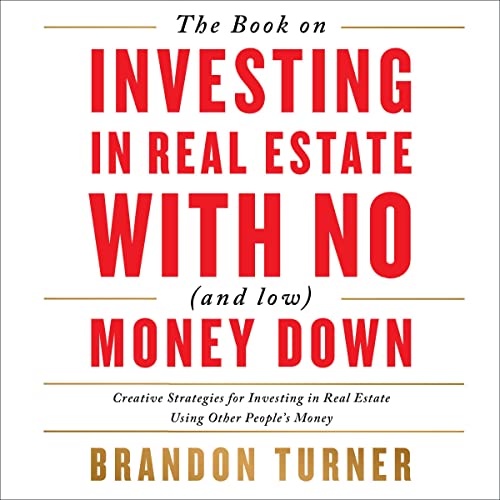
Author: Brandon Turner
Category: Finance
Published: 2014
Pages: 264
Key Takeaways
- **Mindset Shift**: Change from 'I can't afford it' to 'How can I afford it?' Resourcefulness beats resources. Lack of capital forces creativity and better deals.
- **FHA House Hacking**: 3.5% down on 2-4 unit property, live in one unit, rent others to cover mortgage. Live free while building equity. Repeat after 12 months.
- **Private Money**: Borrow from your network (friends, family, colleagues) at 6-12% returns. Formalize with promissory note and first-position lien. Communicate relentlessly.
- **BRRRR Strategy**: Buy distressed at 70% ARV, Rehab, Rent, Refinance at 75-80% to pull out capital, Repeat. Infinite ROI when done correctly.
- **Seller Financing**: Motivated sellers (inherited, free-and-clear, tired landlords) act as bank. 10-20% down, 5-7% interest, 5-year balloon. Solve their problems.
- **Strategy Stacking**: Combine techniques for maximum power. FHA + House Hacking + Seller Concessions = near-zero entry. BRRRR + Private Money = true no-money-down.
- **Wholesaling Formula**: ARV × 70% - Repairs - Your Fee = Maximum Offer. Need 25-40% discount. Assign contract for $5K-$20K fee without taking ownership.
- **Risk Management**: Creative financing magnifies mistakes. Maintain 6 months reserves, stress-test deals (25% cost overruns, 20% value drops), diversify financing sources.
- **Partnerships**: Combine your skills/time with others' capital. 50/50 splits. Date before you marry (one deal first). Document everything in operating agreement.
- **The Warning**: Creative financing is powerful but not magic. Never use it to buy bad deals. Plan exits before entry. First deal should terrify you slightly—healthy fear keeps you diligent.
About This Summary
The Book on Investing In Real Estate with No (and Low) Money Down
Implementation Playbook
1. The Mindset: The Psychology of Creative Financing
Brandon Turner opens with a fundamental reframe: the question isn't whether you can invest in real estate without money—it's whether you're willing to shift from "I can't afford it" to "How can I afford it?"
Core Principle: Resourcefulness Over Resources
Lack of capital is actually an advantage in disguise because it forces creativity, builds negotiation skills, and creates opportunities invisible to cash-heavy investors.
Three Mental Shifts Required:
- Abandon "All or Nothing": Reducing a $30,000 down payment to $5,000 is a massive win that multiplies your purchasing power sixfold. The goal is leverage, not magic.
- Understand Seller Motivations: While you obsess over price, many sellers care more about timing, convenience, tax implications, or monthly income. This misalignment creates opportunity.
- Accept Increased Complexity: Creative financing requires more work, more relationship management, and more things that can go wrong. You're trading capital for effort and expertise.
Critical Warning: Creative financing is not a shortcut around fundamental real estate principles. You still need to run the numbers, verify cash flow, assess market conditions, and build reserves.
2. The Strategies: Turner's Creative Financing Arsenal
Strategy 1: FHA Loans (House Hacking)
Definition: FHA loans allow owner-occupants to purchase 1-4 unit properties with as little as 3.5% down. House hacking involves living in one unit while renting the others to cover your mortgage.
How-To Steps:
- Qualify: Credit score 580+ for 3.5% down (620+ better), debt-to-income under 43%, steady employment
- Find Property: 2-4 unit property where you're willing to live for 12 months minimum
- Run Numbers: Calculate PITI + HOA, subtract rental income from other units
- Negotiate: FHA allows sellers to contribute up to 6% toward closing costs
- Execute: Live there 12 months, then move out and rent your unit while retaining FHA loan
Ideal For: First-time investors with W-2 income, good credit, willing to live in multi-unit property. Properties under FHA loan limits where rental income covers 60%+ of mortgage.
Strategy 2: Private Money Lending
Definition: Individuals in your network lend you capital for real estate deals in exchange for 6-12% annual returns.
How-To Steps:
- Build Credibility: Understand real estate thoroughly before asking. Analyze 100+ deals first.
- Identify Lenders: Parents, relatives, friends, coworkers, professionals (attorneys, CPAs, doctors)
- Create Presentation: One-page executive summary showing strategy, returns, capital protection (first-position lien, insurance)
- Have the Conversation: "I'm offering certain people an opportunity to earn better returns than the stock market with real estate backing."
- Formalize Legally: Work with attorney to create promissory note and mortgage/deed of trust
- Communicate Relentlessly: Monthly/quarterly updates, pay on time every time
Ideal For: Investors with strong relationships and communication skills. Best for value-add deals or cash-flowing rentals.
Strategy 3: Hard Money Lending
Definition: Business lenders providing short-term (12-24 months) asset-based loans at 10-15% interest plus 1-5 points upfront.
How-To Steps:
- Find Lenders: Search online, ask at REI clubs, request agent referrals
- Understand Economics: Typically lend 65-75% of after-repair value (ARV), not purchase price
- Present Deal Package: Address, purchase price, repair budget, timeline, comps, exit strategy
- Close Fast: 7-14 days versus 30-45 for conventional
- Execute Aggressively: Every month costs 1%+ in interest
- Exit On Time: Refinance, sell, or bring in partner
Ideal For: Experienced investors tackling fix-and-flip or value-add projects with clear ARV. Not for beginners or thin-margin deals.
Strategy 4: Partnerships
Definition: Combining your skills/time with someone else's capital, typically splitting equity and profits 50/50 or based on contribution.
Three Partnership Models:
- You find and manage deals, partner provides capital
- You provide some capital and sweat equity, partner provides rest
- You manage renovation/operations, partner funds purchase and repairs
How-To Steps:
- Determine Your Value: Be crystal clear about what you bring
- Find Complementary Partner: Look for different skills, not redundancy
- Date Before You Marry: Start with single deal before committing to multiple
- Document Everything: Operating agreement covering ownership, contributions, decision-making, distributions, exit provisions
- Establish Communication: Weekly/biweekly check-ins during active projects
- Discuss Exit Upfront: What happens after 5 years?
Ideal For: New investors with more time than money, or scaling faster by leveraging others' capital.
Strategy 5: Seller Financing
Definition: Property seller acts as the bank, allowing you to make payments directly to them over time.
How-To Steps:
- Identify Motivated Sellers: Inherited properties, free-and-clear properties, tired landlords, properties listed 6+ months
- Make Your Pitch: Ask "What's your ideal outcome?" Listen for pain points seller financing solves
- Structure Win-Win: 10-20% down, 5-7% interest, 5-year balloon or 30-year amortization
- Address Concerns: Higher down payment, financial references, subordination, title insurance
- Formalize Legally: Promissory note, mortgage/deed of trust, purchase agreement
- Communicate: Send payment stubs, property updates throughout loan term
Ideal For: Patient negotiators targeting motivated sellers with free-and-clear properties. Best for properties that won't qualify for traditional financing.
Strategy 6: Lease Options (Rent-to-Own)
Definition: Lease the property with an option to purchase at predetermined price within specific timeframe (1-5 years).
Two-Part Structure:
- Lease Agreement: You're a tenant paying monthly rent
- Option Contract: Right (not obligation) to purchase at agreed price
How-To Steps:
- Find Suitable Sellers: Tired landlords, owners unable to sell at desired price, properties sitting 90+ days
- Negotiate Three Numbers: Monthly rent, option fee (1-5% upfront), purchase price
- Structure Profit: Sandwich lease option (sublease to tenant-buyer) or traditional (rent to tenants, exercise option later)
- Execute Agreements: Lease with option, option contract, assignment clause, maintenance responsibilities
- Manage Timeline: Begin exit process 6-12 months before expiration
Ideal For: Investors with limited capital but strong credit who can qualify for financing later. Works best in appreciating markets.
Strategy 7: Wholesaling
Definition: Get property under contract below market, assign contract to end buyer for $5,000-$20,000 fee. Never take ownership or need financing.
How-To Steps:
- Build Buyers List First: Connect with active investors before finding deals
- Find Deeply Discounted Properties: 25-40% below market value (distressed properties, motivated sellers)
- Analyze and Offer: ARV × 70% - Repairs - Your Fee = Maximum Offer
- Get Under Contract: Include "Buyer, and/or assigns" language and inspection contingency
- Market to Buyers: Email list with details, photos, estimates, ARV, assignment fee
- Facilitate Closing: Execute assignment of contract, collect fee at closing
Formula: ARV × 70% - Repairs - Your Fee = Maximum Offer
Ideal For: Investors with strong marketing/negotiation skills but no capital. Requires consistent lead generation.
Strategy 8: BRRRR (Buy, Rehab, Rent, Refinance, Repeat)
Definition: Purchase distressed property, renovate to increase value, rent to stabilize income, refinance to pull out capital, repeat.
How-To Steps:
- Buy: Distressed property at 70% ARV or less using hard money, private money, or partnerships
- Rehab: Focus on ARV-increasing improvements (kitchens, bathrooms, flooring). Budget 3-6 months.
- Rent: Screen thoroughly, price at market rate, get security deposit and first month
- Refinance: Wait 3-6 months for seasoning. Cash-out refinance at 75-80% of appraised value
- Analyze: Should have zero/minimal capital remaining, monthly cash flow, long-term equity
- Repeat: Take pulled capital and start on property #2
Example: Buy at $100K, invest $30K rehab ($130K total), appraises at $180K, pull out $135K-$144K (75-80%), recover all capital.
Ideal For: Intermediate/advanced investors who understand renovation, property management, financing. Requires accurate ARV estimation.
3. The Combination: Strategy Stacking
Turner emphasizes combining multiple techniques to accomplish what no single method could achieve.
Classic Stacks:
FHA + House Hacking + Seller Concessions: 3.5% FHA down + 6% seller concessions toward closing (near-zero cash-to-close) + live in one unit while renting others = Two rental properties in 24 months with minimal capital.
Partnership + Hard Money: Partner covers down payment/closing (20-30%), you manage renovation and sweat equity, hard money funds purchase/repairs, refinance and return partner's capital plus premium, split ownership 50/50.
BRRRR + Private Money: Borrow 100% of purchase and renovation from private lender at 8%, execute BRRRR, refinance and repay lender completely = True no-money-down with infinite ROI.
Key Insight: Each strategy has limitations, but combined strategies overcome individual weaknesses. Master combination: use transaction strategies (wholesaling) to generate capital, deploy in hold strategies (BRRRR, partnerships) for long-term wealth.
4. The Downsides: Risks of Leverage and Creative Financing
Turner provides a sobering reality check about creative financing risks.
Five Major Risks
Risk 1: Magnifies Mistakes: With no-money-down deals, you have zero equity cushion. A 10% market decline doesn't wound you—it kills the deal.
Risk 2: Complexity Creates Failure Points: Multiple relationships (private lender, partner, seller), balloon payments, refinancing deadlines—each is another thing that can go wrong.
Risk 3: Higher Costs: Hard money at 12% + 3 points costs dramatically more than conventional 6-7%. These costs eat into cash flow and margins.
Risk 4: Reduced Safety Margin: Creative strategies often leave you without 6 months of reserves because capital is deployed across multiple deals.
Risk 5: Overleveraging Destroys in Downturns: 2008-2009 case study—investors with maximum leverage, hard money loans, and seller financing balloons were annihilated when values dropped 30-50%.
Turner's Risk Mitigation Framework
- Never Use Creative Financing for Bad Deals: No amount of creative structuring fixes poor fundamentals.
- Maintain Reserves Religiously: Set aside 20-30% of cash flow in first year. Don't buy property #2 until property #1 has 3-6 months reserves.
- Stress-Test Every Deal: Run scenarios where renovation costs exceed by 25%, vacancy runs 3-6 months longer, rates rise 2-3%, rents decline 10-15%, values drop 20%. If deal survives all simultaneously, it's solid.
- Diversify Financing Sources: Don't put all properties with one private lender or use only hard money across portfolio.
- Plan Exits Before Entry: Every creative deal needs specific, realistic exit strategy with backup plan.
Conclusion: The Path Forward
Creative financing is powerful and legitimate—it has created more wealth for more investors than any other approach. But it's not magic and not a shortcut around discipline, education, and fundamental analysis.
The Formula:
- Educate yourself thoroughly
- Start small with one strategy on one excellent deal
- Build systems and reserves
- Scale intelligently
Your first creative deal should terrify you slightly—that healthy fear keeps you diligent. If it feels easy, you're probably missing something critical.
Remember: The investor who masters creative financing while respecting its risks can build extraordinary wealth with minimal capital. The investor who uses it recklessly will lose money faster than someone who never invested at all.