Biography summary
Becoming Summary: Key Ideas and Takeaways
Read a practical summary of Becoming by Michelle Obama, including key takeaways, lessons, and useful ideas.
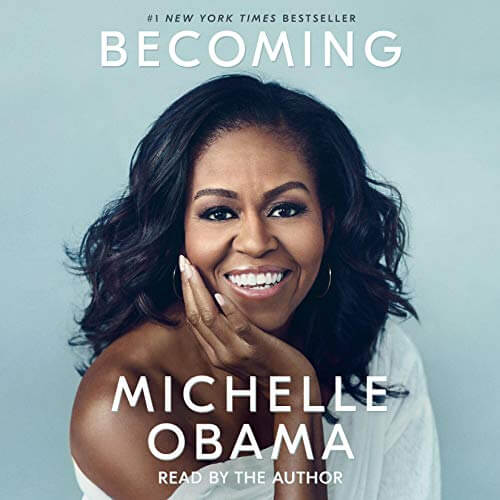
Author: Michelle Obama
Category: Biography
Published: 2018
Key Takeaways
- Personal growth is a continuous, lifelong process of 'becoming' rather than reaching a fixed destination
- Family and community support provide the foundation for resilience and achievement
- Education and hard work can overcome socioeconomic barriers and open doors to opportunity
- Navigating predominantly white institutions requires resilience and strategies to combat imposter syndrome
- Authenticity requires aligning professional choices with personal values and purpose
- The intersection of race and gender creates unique challenges requiring constant navigation
- Marriage and partnership require intentional work, communication, and sometimes professional help
- Public service offers opportunities to use privilege and platform for meaningful impact
- Parenting requires balancing ambition with family needs and providing stability for children
- The power of personal narrative can inspire and empower others to embrace their own stories
- Leadership means defining your own role rather than accepting limitations others impose
- Experiencing racism and discrimination can strengthen determination to succeed and help others
- Balancing career ambitions with family responsibilities requires difficult choices and compromises
- Using your platform responsibly means advocating for causes that matter beyond personal gain
- The journey from working-class roots to the White House demonstrates the power of possibility in America
About This Summary
An Analysis of Michelle Obama's "Becoming": A Journey of Identity, Purpose, and Resilience
Michelle Obama's 2018 memoir, "Becoming," is a deeply personal and inspiring account of her life, tracing her remarkable journey from a close-knit family on the South Side of Chicago to her historic role as the first African American First Lady of the United States. The book is not merely a chronicle of events, but a profound exploration of personal growth, the complexities of identity, and the continuous process of self-discovery. This analysis will delve into the core narrative and essential themes of "Becoming," offering a comprehensive, chapter-by-chapter overview of this bestselling and culturally significant work.
Core Narrative Summary: A Journey in Three Acts
"Becoming" is thoughtfully structured into three distinct sections—"Becoming Me," "Becoming Us," and "Becoming More"—that mirror the pivotal stages of Michelle Obama's life and evolution.
Part 1: "Becoming Me" - Forging an Identity
The first section, "Becoming Me," is a heartfelt and detailed exploration of her formative years growing up in a working-class neighborhood on the South Side of Chicago. She paints a vivid picture of a loving and supportive family, with her father, Fraser Robinson, instilling a powerful work ethic despite his battle with multiple sclerosis, and her mother, Marian Robinson, providing a foundation of love and stability. This section emphasizes the values of education, hard work, and community that were central to her upbringing.
Chapters 1-2: The memoir opens with a glimpse into Michelle's early life in a cramped upstairs apartment in her great-aunt Robbie's bungalow. She describes a childhood filled with the sounds of piano lessons, the love of her family, and the ever-present realities of racial segregation in Chicago. A pivotal early memory is her first piano recital, where the pristine baby grand piano downtown starkly contrasts with her great-aunt's chipped-key instrument, an early lesson in the world's disparities. Her father's quiet dignity in the face of his multiple sclerosis and her mother's staunch advocacy for her children's education are powerful threads. A key event is when her mother, recognizing the chaos of Michelle's second-grade classroom, successfully petitions to have her moved to a more challenging third-grade class, a move Michelle sees as life-altering.
Chapters 3-5: These chapters delve deeper into the Robinson family dynamics and the changing landscape of their South Side neighborhood. Michelle describes her brother Craig's protective nature and their shared experiences, from fire drills he initiated at home to navigating the complexities of their evolving community. She recounts the "white flight" that transformed her neighborhood and school from racially mixed to predominantly Black, and the subtle and overt racism her family faced. A particularly poignant story involves her father's beloved Buick being maliciously scraped in a white suburban neighborhood, a stark reminder of the racial tensions of the era. She also touches on the challenges of adolescence, becoming aware of her changing body, and the slow, watchful steps toward independence. A powerful realization comes when a cousin questions why she "talks like a white girl," introducing her to the complex challenge of reconciling her identity with others' perceptions.
Chapters 6-8: Michelle's educational journey takes center stage as she recounts her high school years at the magnet school Whitney Young and her subsequent admission to Princeton University. She candidly discusses the challenges she faced as a Black woman in predominantly white, male-dominated institutions, grappling with feelings of being an "outsider" and the "imposter syndrome." At Princeton, she navigates the social and academic pressures, finding solace and a broader perspective through her friendship with a Jamaican student named Suzanne. These experiences were instrumental in shaping her understanding of race, class, and gender in America. After graduating from Princeton and then Harvard Law School, she began her career at the prestigious Chicago law firm Sidley & Austin. While she achieved the markers of conventional success, a growing sense of unfulfillment began to set in. This period of her life was marked by a critical self-examination of her purpose and a desire to find a career path that aligned more closely with her personal values and passion for community engagement.
Part 2: "Becoming Us" - The Merging of Paths
"Becoming Us" shifts the narrative to her relationship with Barack Obama, detailing their initial meeting at the law firm where she was his mentor, their courtship, and the evolution of their partnership. She describes a relationship built on mutual respect and a shared commitment to public service, even as their personalities and approaches to life differed.
Chapters 9-11: This section begins with the arrival of a summer associate named Barack Obama at her law firm. Initially skeptical, Michelle is soon won over by his intellect, idealism, and passion for community organizing. Their first kiss marks the end of the "Becoming Me" section and the beginning of their shared journey. As their relationship deepens, Michelle grapples with her growing dissatisfaction with corporate law, a feeling amplified by two profound losses: the death of her college friend Suzanne from cancer and the sudden death of her father from a heart attack. These losses instill in her a sense of urgency to live a life of meaning and purpose, prompting her to leave her high-paying law job for a position at Chicago's City Hall, working for Valerie Jarrett.
Chapters 12-14: Michelle and Barack's marriage in 1992 is a central event, followed by a honeymoon in Northern California. This period is marked by their efforts to build a life together while balancing their demanding careers. She offers a candid look at the challenges they faced as a couple, including their struggles with infertility and a devastating miscarriage. Her honest account of their decision to use in vitro fertilization (IVF) to conceive their daughters, Malia and Sasha, was a groundbreaking moment in public discourse. She frankly discusses the difficulties of balancing a demanding career—first at City Hall, then leading the nonprofit Public Allies Chicago, and later as a dean at the University of Chicago—with the responsibilities of motherhood. The strain that Barack's burgeoning political career placed on their family life is a recurring theme.
Chapters 15-17: These chapters chart Barack's political ascent, from his time in the Illinois State Senate to his decision to run for the U.S. Senate. Michelle shares her initial reluctance to fully embrace the world of politics, a field she viewed with a degree of skepticism and concern for her family's privacy. The memoir reveals their decision to attend marriage counseling, highlighting their commitment to navigating the complexities of their partnership and the unique pressures of public life. Her journey from a private citizen to a political spouse was a gradual one, marked by a conscious effort to support her husband's ambitions while preserving her own identity and sense of self.
Part 3: "Becoming More" - A Platform and a Legacy
The final section, "Becoming More," chronicles her eight years in the White House and her transformation into a global figure. As the first African American First Lady, she was acutely aware of the historical significance of her role and the intense public scrutiny she would face.
Chapters 18-20: This section opens with the whirlwind of the 2008 presidential campaign. Michelle details the challenges of life on the campaign trail, the often-unfair media portrayals, and the delicate balance of supporting her husband while protecting her daughters. The historic election night is a moment of profound joy and reflection. The transition to life in the White House is both surreal and daunting. She describes her initial interactions with the White House staff, her first visit with Queen Elizabeth, and the overwhelming reality of living in a historic landmark under constant Secret Service protection.
Chapters 21-23: Rather than adopting a purely ceremonial role, Michelle actively sought to use her platform to make a meaningful impact. She launched several key initiatives, including the "Let's Move!" campaign to combat childhood obesity, which was inspired by her own concerns as a mother. This initiative included the planting of the White House Kitchen Garden on the South Lawn. She also established "Joining Forces" with Dr. Jill Biden to support military families, "Reach Higher" to encourage post-secondary education, and later, "Let Girls Learn" to promote education for girls around the world. She also made a concerted effort to make the White House a more inclusive and accessible space, hosting numerous events for students and community groups. These chapters provide an inside look at the strategic thinking and hard work that went into creating and implementing these programs.
Chapter 24 and Epilogue: "Becoming More" also provides a glimpse into the personal challenges of raising two daughters in the White House, striving to provide them with a sense of normalcy amidst the extraordinary circumstances of their lives. She recounts moments of both joy and sorrow, from family dinners and school events to navigating national tragedies. The epilogue reflects on the family's last day in the White House and her thoughts on the future. She emphasizes that the process of "becoming" is a lifelong journey, a continuous process of growth and evolution. She concludes by affirming that she is "an ordinary person who found herself on an extraordinary journey," a powerful testament to the themes of the book.
Thematic Analysis: The Ideas Woven Throughout
The Journey of "Becoming": The central theme of the memoir is encapsulated in its title—the idea that personal growth is a continuous and evolving process. Michelle Obama emphasizes that she is not a finished product but is constantly learning, adapting, and discovering new aspects of herself. Her journey from a box-checking, career-focused young woman to a First Lady who defined her own role is a testament to this ongoing evolution.
The Power of Story: "Becoming" is a testament to the power of personal narrative. By sharing her own story with honesty and vulnerability—from her struggles with imposter syndrome to her experiences with IVF—she aims to empower others to embrace their own unique journeys and to find their own voices.
Navigating Race and Gender: Throughout the memoir, she candidly addresses her experiences with racism and sexism, from a guidance counselor telling her she wasn't "Princeton material" to being stereotyped and scrutinized as a public figure. She discusses the weight of stereotypes and the constant pressure to be "twice as good" to achieve the same level of recognition as her white counterparts. Her story is a powerful reflection on the intersectionality of race and gender in America.
Authenticity and Purpose: A recurring theme is the search for a life that is both authentic and purposeful. Her decision to leave a lucrative career in corporate law for public service reflects her commitment to aligning her professional life with her personal values, a journey she describes as "swerving" off the expected path.
The Importance of Family and Community: The memoir underscores the foundational role that family and community played in her life. Her close-knit family provided a source of strength and support, and she consistently emphasizes the importance of building and nurturing strong relationships, from her childhood friends to the team she built in the White House.
In conclusion, "Becoming" is more than just the autobiography of a former First Lady; it is a deeply reflective and inspiring work that resonates with readers from all walks of life. It is a story of resilience, determination, and the enduring power of hope, offering a timeless message about the importance of embracing one's own story and the continuous journey of becoming the person you are meant to be.