Biography summary
Educated Summary: Key Ideas and Takeaways
Read a practical summary of Educated by Tara Westover, including key takeaways, lessons, and useful ideas.
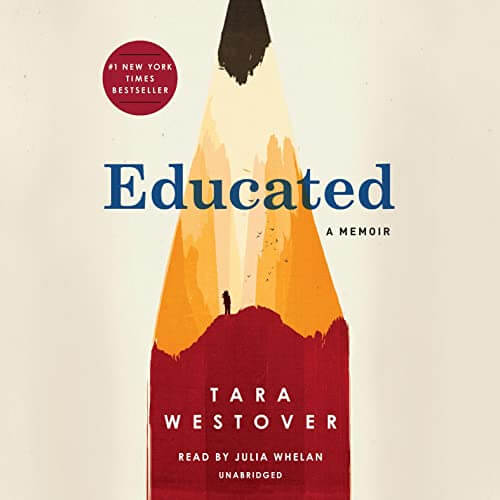
Author: Tara Westover
Category: Biography
Published: 2018
Key Takeaways
- Education can be both liberation and alienation, providing the tools for self-creation while distancing you from your origins
- Growing up in radical isolation and fundamentalist beliefs can create profound barriers to understanding the wider world
- The journey from ignorance to knowledge often requires abandoning the security of familiar but limiting worldviews
- Family loyalty and personal truth can come into painful conflict, sometimes requiring impossible choices
- Physical and psychological abuse can be normalized within isolated family systems through gaslighting and denial
- Resilience can emerge from trauma, providing the strength to rebuild one's identity from the ground up
- Higher education offers not just knowledge but new frameworks for understanding reality and personal experience
- The cost of intellectual freedom may include the loss of home, family, and sense of belonging
- Memory and truth can be manipulated by those in power, making it essential to trust your own perceptions
- Identity transformation is a gradual, painful process that requires courage to question fundamental beliefs
- Self-definition often means choosing your own values over those inherited from family and community
- True loyalty must be to truth rather than to relationships that require denial of reality
- Academic achievement can serve as both escape from trauma and proof of one's worth and capability
- The gap between different worlds (isolated vs. educated) can feel unbridgeable and profoundly isolating
- Personal agency and the right to one's own mind must sometimes be fought for against powerful family systems
About This Summary
Forging a Self: A Comprehensive Summary of Tara Westover's "Educated"
Tara Westover's "Educated" is a searing, courageous, and unforgettable memoir that chronicles a remarkable and improbable journey from a life of radical isolation and deprivation in the mountains of rural Idaho to the hallowed halls of Cambridge University, where she would ultimately earn a PhD in history. It is, at its core, a profound story of triumph over a childhood devoid of the most basic societal structures: formal schooling, conventional medical care, and even an official record of her birth. Westover's narrative is a gripping and unflinching account of her struggle to reconcile the world she was born into—a world of patriarchal dogma, survivalist paranoia, and brutal physical labor—with the expansive world she discovered through the power of knowledge. This collision of worlds forces her to confront the agonizing, soul-splintering choice between unwavering family loyalty and the very essence of her own personal truth and selfhood.
Narrative and Structural Focus: A Triumph Over Profound Isolation
The memoir begins by immersing the reader directly into Westover's unique, precarious, and often dangerous upbringing on Buck's Peak. Raised by strict, fundamentalist Mormon parents with a deeply ingrained survivalist ideology, Tara and her six siblings were taught to be entirely self-sufficient and profoundly suspicious of the outside world. This world, which they called "the world of the gentiles," included the government, which was seen as a tyrannical force of social control; the medical establishment, which was distrusted in favor of her mother's herbal remedies and divine healing; and, most significantly, public schools, which her father believed were nothing more than indoctrination centers designed to lead children away from God.
Her father, a charismatic, intelligent, but deeply troubled man who likely suffered from undiagnosed bipolar disorder, prepared his family for the impending "Days of Abomination." He stockpiled food, fuel, and weapons, convinced that society was on the brink of collapse. His word was law, and his worldview was the only one Tara knew. Her mother, a gifted but submissive woman, became a self-taught herbalist and midwife, creating a home-based business that, while successful, could not protect her children from the consequences of her husband's increasingly erratic and dangerous beliefs. This hermetically sealed existence meant that Tara's reality was shaped entirely by her father's dogmatic interpretations of scripture and the brutal, unforgiving rhythms of life in the family scrapyard. Here, catastrophic accidents involving sheared metal, falling equipment, and explosions were commonplace, and severe injuries—concussions, deep gashes, and even third-degree burns—were treated only with her mother's salves and tinctures. The story centers on Tara's fierce, quiet, and often lonely struggle to break free from this profound physical, intellectual, and emotional confinement. It is a quest that begins not with a grand declaration, but with a secret, almost shameful desire to claim an education against all odds, a desire sparked by the example of an older brother who had managed to escape to college.
Core Themes and Lessons: The Pillars of a Transformed Life
Westover's journey is propelled by a set of powerful and intricately interwoven themes that give the memoir its profound emotional depth and its stunning universal significance. These themes explore the very nature of identity, memory, and the painful process of becoming.
The Liberating Power and Excruciating Cost of Education
For Tara, education is not merely a path to a better career or a higher social standing; it is the very act of self-creation. It is the tool with which she forges a new consciousness. Her journey begins as a tentative, almost accidental rebellion—secretly studying an algebra textbook to pass the ACT, the only gateway to a world she can barely imagine. This initial act of defiance blossoms into a force of profound liberation that systematically dismantles the intellectual prison of her upbringing. Her path takes her first to Brigham Young University, where, at the age of seventeen, she enters a classroom for the first time. It is a jarring and deeply alienating experience. She is a cultural alien, unaware of world events and historical milestones that her peers take for granted. In one poignant and humiliating moment, she asks what the Holocaust is, genuinely having never heard the word before.
This intellectual awakening, however, comes at an excruciatingly steep price. Each new idea she embraces—from the historical realities of the Holocaust and the American Civil Rights Movement to the philosophical concepts of feminism and positive and negative liberty—drives a thicker wedge between her and the family she desperately loves. Education becomes both her salvation and the source of a profound and painful alienation. When she returns home from college, the familiar landscape of her childhood begins to look different. She can no longer unsee the contradictions, the ignorance, and the abuse that she once accepted as normal. Conversations become minefields, as her newfound knowledge clashes directly with her father's rigid and unassailable dogma. Her education gives her a new language, a new framework for understanding the world, but it is a language her family cannot, and will not, understand. The cost of her intellectual freedom is the loss of her home, her past, and the simple, unquestioning sense of belonging she once knew.
The Unbearable Tension Between Family Loyalty and Self-Definition
The memoir's most heart-wrenching and central conflict is the tension between the powerful, instinctual bonds of familial love and the absolute, existential necessity of forging an independent self. This conflict is embodied most violently in her relationship with her older brother, Shawn. Shawn is a volatile and contradictory figure, capable of moments of surprising tenderness and acts of terrifying, sadistic violence. He subjects Tara to a campaign of physical and psychological abuse, dragging her by the hair, choking her, and forcing her head into a toilet, often in front of other family members.
When her pursuit of education gives her the psychological and emotional language to recognize this violence for what it is—abuse, not a strange form of brotherly affection—she is met with a wall of denial, rationalization, and insidious gaslighting from the very family she expects to protect her. Her parents, particularly her father, refuse to believe her account, choosing instead to preserve the family's fragile, patriarchal hierarchy. They demand that she forgive her brother and, in doing so, deny her own reality. Her ultimate decision to distance herself from them, to choose her own sanity and safety over their acceptance, is not a simple act of adolescent rebellion but a painful, vital, and courageous process of self-preservation and empowerment. It illustrates the tragic and heartbreaking reality that sometimes, in order to save oneself, one must leave home behind, not just physically, but emotionally and spiritually as well. The book becomes a profound exploration of the idea that true loyalty cannot exist in an environment of denial and abuse; true loyalty must be to the truth.
Extraordinary Resilience in the Face of Pervasive Trauma
Westover's narrative is an understated but powerful testament to her extraordinary resilience. She vividly and matter-of-factly recounts the constant physical danger of her childhood. Working with sheared metal in her father's scrapyard, she witnesses and experiences injuries that would, in any other context, warrant immediate and extensive medical intervention. She survives multiple severe car accidents, suffers untreated concussions, and endures Shawn's brutal physical violence, all without the aid of a doctor.
This staggering physical trauma is matched, and perhaps even surpassed, by the psychological trauma of manipulation, emotional abuse, and relentless gaslighting. For years, she is taught to distrust her own perceptions, her own memories, and her own feelings. Her family, in their effort to maintain their worldview, consistently rewrites history, convincing her that the abuse she suffered either didn't happen or wasn't as bad as she remembered. Her determination to escape these cycles, to learn to trust her own mind over the distorted reality imposed upon her, underscores the immense strength required to not only survive such an upbringing but to emerge from it with the capacity to build a new, healthy, and self-defined life from the wreckage of the old. Her academic drive becomes a manifestation of this resilience, a way to find an objective truth that could not be manipulated or denied by her family.
The Painful, Metamorphic Journey of Identity and Transformation
"Educated" meticulously and honestly tracks Tara's evolution from a girl shaped by suspicion, ignorance, and fear to a woman defined by knowledge, empathy, and critical thinking. Initially, she is plagued by a deep and abiding guilt, feeling like a heretic and a traitor for questioning her father's teachings and the very foundations of her identity. Her first years at university are marked by a profound sense of impostor syndrome and a desperate attempt to reconcile her two worlds. She tries to be two people at once: the dutiful, obedient daughter when she is at home, and the curious, engaged scholar when she is at school.
Through her studies, particularly in history and political philosophy, she slowly gains the intellectual and emotional tools to re-examine her past with a new, clarifying lens. She learns about the dynamics of abuse, the psychology of fundamentalism, and the nature of mental illness, which allows her to see her family not as monsters, but as complex and flawed human beings. This journey culminates in her embracing a new identity—one forged not on the mountain but in the classroom and the library, an identity defined not by her origins but by her own mind, her own choices, and her hard-won personal agency. The memoir's title, "Educated," comes to mean something far more profound than simply acquiring academic credentials; it signifies the process of learning to see the world, and oneself, with clarity and truth.
Overarching Narrative Arc: From a Mountain to the World
The memoir unfolds chronologically, but it is enriched with profound, reflective insight that weaves Tara's internal struggles with vivid, unflinching depictions of her family's unique and isolated culture. The narrative arc moves powerfully through distinct stages of her life. It begins with the innocence and confusion of a childhood spent under the long, imposing shadow of a powerful and charismatic patriarch. This is her "un-education," a period where she learns the laws of the mountain but remains ignorant of the wider world. The arc then moves into the painful, disorienting awakening of adolescence and early adulthood, as her formal education begins to expose the deep and troubling contradictions of her upbringing. The story climaxes not with a single dramatic event, but with a series of difficult, heart-rending realizations and choices that lead to her powerful assertion of her own autonomy and intellectual freedom, even when she understands that this freedom will come at the devastating cost of her family.
Enduring Impact: A Universal Story of Becoming
Ultimately, "Educated" resonates far beyond its specific circumstances as a universal story of courage, the complex and often painful costs of personal growth, and the transformative, world-altering power of knowledge. Tara Westover's memoir is more than just a story about getting an education; it is a profound and deeply moving testament to the human spirit's astonishing capacity to redefine itself, to heal from deep-seated trauma, and to discover its own, authentic voice. It stands as an inspiring and unforgettable account of what it means to become a person in the fullest sense of the word—to claim the right to one's own mind, one's own history, and one's own future—even when, and especially when, the price of that becoming is so profoundly and heartbreakingly high.