Business summary
The ChatGPT Millionaire Summary: Key Ideas and Takeaways
Read a practical summary of The ChatGPT Millionaire by Neil Dagger, including key takeaways, lessons, and useful ideas.
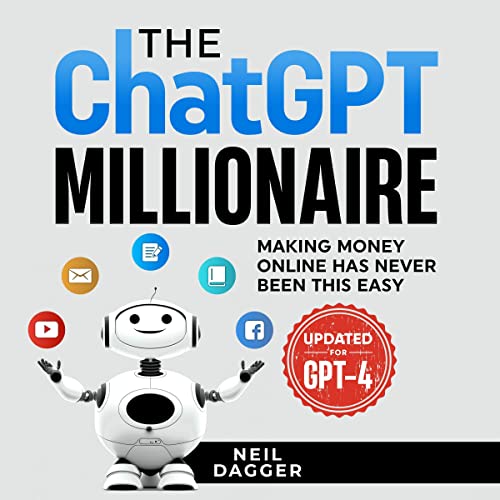
Author: Neil Dagger
Category: Business
Published: 2023
Pages: 120
Key Takeaways
- **AI Wealth Thesis**: AI decouples time from output, allowing one person to scale like a company.
- **Prompt Engineering**: Treat prompts like code using the R.C.T.F.C. framework (Role, Context, Task, Format, Constraint).
- **Operational Velocity**: Speed is the new quality. Iterate at the speed of thought.
- **Manager Mentality**: Don't do the work; direct the AI intelligence that does the work.
- **Salami Slice Method**: Break complex creation tasks into small steps to avoid AI hallucinations.
- **Hyper-Automation**: Connect apps (ChatGPT + Zapier) to automate workflows and 'bank' time.
- **Cyborg Protocol**: Never publish raw AI output. Always Fact Check, Copyright Check, and Brand Align.
- **Sell Outcomes**: Don't sell commodities (writing); sell solved problems (traffic systems).
- **One-Person Unicorn**: Aim for high revenue, high margins, and zero employees.
- **Implementation**: The difference between success and failure is not intelligence, but the speed of implementation.
About This Summary
THE CHATGPT MILLIONAIRE: Building an AI-Powered Business Empire
Based on The ChatGPT Millionaire by Neil Dagger
INTRODUCTION: The Dawn of the AI Wealth Revolution
We are living through the most significant technological shift since the invention of the internet. Artificial Intelligence, specifically Large Language Models like ChatGPT, has fundamentally changed what is possible for individual entrepreneurs and creators.
This is not hype. This is not speculation. This is the birth of the Creator-Operator Economy—a new paradigm where a single person, armed with the right AI tools and strategies, can build businesses that would have required entire teams just a few years ago.
The AI Wealth Thesis
The core thesis is simple but profound: AI is the ultimate leverage, decoupling time from output.
In the old economy, there was a direct relationship between hours worked and value created. A lawyer could only bill so many hours. A writer could only produce so many words. A designer could only create so many mockups. Time was the fundamental constraint on income.
AI shatters this constraint. With AI, a single operator can:
- Write 50 articles in the time it once took to write one
- Generate a year's worth of social media content in a day
- Create customized proposals for 100 prospects in an afternoon
- Build and launch digital products in hours instead of months
The math is staggering. If you can do in one hour what used to take 40 hours, you haven't just increased your productivity by 40x—you've created the possibility of income that was previously impossible for an individual.
The Mindset Shift: From Worker to Manager
The first and most critical shift is mental. You must stop thinking like a worker and start thinking like a manager of AI agents.
Old Mindset (Worker):
- "I need to write this article"
- "I need to research this topic"
- "I need to design this graphic"
- Measured by: Hours worked
New Mindset (Manager):
- "I need to direct the AI to write this article"
- "I need to prompt the AI to research this topic"
- "I need to instruct the AI to design this graphic"
- Measured by: Outcomes delivered
This is not lazy. This is leverage. The most successful business owners have always understood that their job is not to do the work—it's to direct the work and ensure quality. AI gives you this power without employees.
The Three Core Principles
1. Speed is the New Quality
In the AI era, perfectionism is procrastination. The ability to ship quickly, iterate, and improve based on feedback beats the old model of careful, slow production.
When you can produce at 10x speed, you can afford to make mistakes. You can test 10 ideas instead of betting everything on one. Speed becomes your competitive advantage.
2. Good Enough Plus Human Touch
AI gets you to 80% instantly. Your job is to spend time on the crucial 20%—strategy, personalization, quality control, and the human elements that AI cannot replicate.
Don't waste time making AI output perfect. Get it to good enough, add your unique value, and ship.
3. Implementation Over Knowledge
Everyone has access to AI now. The difference between success and failure is not knowing about AI—it's actually using it. Implementation speed is everything.
The person who launches a mediocre AI-assisted product today will beat the perfectionist who launches a polished product next year.
PILLAR I: MASTERY OF PROMPT ENGINEERING
Prompt Engineering is the new code. It is the skill that separates those who dabble with AI from those who wield it with precision and power.
Think of prompt engineering as programming in English. You are writing instructions for an AI agent, and the quality of your instructions determines the quality of your output.
The R.C.T.F.C. Framework
This framework provides structure for crafting effective prompts:
R - Role
Define who the AI should be. This primes the AI with relevant knowledge and perspective.
Examples:
- "Act as a senior copywriter with 20 years of experience in direct response marketing"
- "You are a financial analyst specializing in tech stocks"
- "Assume the role of a patient, experienced teacher explaining to a beginner"
C - Context
Provide background information that shapes the response. The more relevant context you provide, the better the output.
Examples:
- "I'm launching a SaaS product for small business owners who struggle with bookkeeping"
- "The target audience is busy executives who read on their phones during commute"
- "This will be published on LinkedIn where professional, data-backed content performs best"
T - Task
Be explicit about what you want done. Vague instructions produce vague outputs.
Bad: "Write something about productivity" Good: "Write a 1,500-word blog post titled '7 Morning Habits That 10x Your Productivity' with an actionable tip in each section"
F - Format
Specify exactly how the output should be structured.
Examples:
- "Present this as a numbered list with bold headers"
- "Format as a table with columns for Feature, Benefit, and Example"
- "Write in short paragraphs, no more than 3 sentences each"
- "Include a TL;DR section at the beginning"
C - Constraint
Tell the AI what to avoid. Constraints focus the output and prevent common problems.
Examples:
- "Do not use jargon or technical terms without explaining them"
- "Avoid clichés like 'game-changer' or 'revolutionary'"
- "Do not make up statistics—only use claims you can support"
- "Keep the tone conversational, not academic"
Advanced Prompting Techniques
Chain-of-Thought Prompting
Instead of asking for an answer directly, ask the AI to "think step-by-step" or "work through this logically." This dramatically improves output on complex tasks.
Example: "I need to price my online course. Think step-by-step about: 1) What value does it provide? 2) What are competitors charging? 3) What would my target customer be willing to pay? 4) What price would allow me to reach my revenue goals? Then recommend a price with justification."
Few-Shot Prompting
Provide examples of the output you want. The AI learns from patterns and will match your examples.
Example: "Here are examples of the email style I want: [Example 1] [Example 2] Now write a similar email for [new topic]"
Iterative Refinement
Don't expect perfection on the first try. Use follow-up prompts to refine:
- "Make this more conversational"
- "Shorten this by 50%"
- "Add more specific examples"
- "Rewrite the opening to be more compelling"
The Mega-Prompt
For complex outputs, create comprehensive prompts that include all context, constraints, and examples in one message. These can be saved and reused.
PILLAR II: AI-POWERED PRODUCT CREATION
The ability to create digital products quickly is the foundation of the AI millionaire strategy. With AI, you can create products that previously required teams, agencies, or months of work.
Digital Product Categories
1. Niche Knowledge Products (E-books, Guides, Courses)
The internet has created infinite demand for specialized knowledge. People will pay for organized, actionable information that saves them time.
The Salami Slice Method:
Never ask AI to write a complete book. Instead, slice the project into small, manageable pieces:
- Generate a comprehensive outline
- Expand each chapter into sections
- Write each section individually
- Edit and refine each section
- Assemble the final product
This approach prevents AI hallucinations (making things up) and maintains quality throughout.
Voice Calibration:
Feed the AI examples of your writing style before generating content. Say: "Here are examples of my writing style. Analyze them, then use this voice for the following task." This ensures the output sounds like you, not generic AI.
The Human Value-Add:
AI cannot provide your personal experiences, case studies, or original insights. After generating the framework, manually insert:
- Personal stories and anecdotes
- Proprietary frameworks and models
- Specific examples from your experience
- Original research or data
This is what separates commodity content from premium products.
2. Templates and Tools
Templates are infinitely scalable products with high perceived value.
Ideas:
- Business plan templates
- Content calendars
- Email sequences
- Proposal templates
- Spreadsheet systems
- Notion workspaces
Use AI to generate the content, then package it professionally. A template that took you 2 hours to create with AI can sell for years.
3. Micro-SaaS and Automation Tools
With AI coding assistance, even non-programmers can build simple tools that solve specific problems.
Examples:
- Invoice generators
- Content schedulers
- Lead enrichment tools
- Personalized report generators
The key is solving one problem for one audience extremely well.
Content Funnels and SEO
AI enables a content strategy that was previously impossible for individuals: Topical Authority.
The Process:
- Identify your niche topic cluster
- Use AI to generate a comprehensive list of related keywords
- Create 50-100 pieces of content covering every angle
- Interlink them strategically
- Establish yourself as the authority on the topic
This would take a team years to do manually. With AI, one person can execute it in months.
PILLAR III: HYPER-AUTOMATION AND SCALING
The second layer of AI leverage is automation. By connecting AI to other tools, you create systems that work 24/7 without your involvement.
The Automation Stack
Core Tools:
- ChatGPT/Claude: The brain
- Zapier/Make: The connectors
- Your apps: Email, CRM, social media, etc.
High-Impact Automations:
1. Automated Customer Service
Train an AI chatbot on your FAQs, documentation, and common scenarios. It can handle 80% of customer inquiries instantly, 24/7.
Your role: Handle the 20% that require human judgment.
2. Personalized Outreach at Scale
Traditional personalization doesn't scale. You can write a personalized email to one prospect, but not 100.
With AI:
- Scrape prospect information (LinkedIn, website, etc.)
- Feed context to AI
- Generate hyper-personalized messages
- Send at scale
Each email feels personal because it is—AI just made personalization scalable.
3. Content Repurposing
One piece of content becomes many:
- Blog post → Twitter thread → LinkedIn post → YouTube script → Email newsletter → Podcast talking points
AI handles the repurposing. You create once, distribute everywhere.
4. Data Analysis and Reporting
AI can analyze spreadsheets, identify trends, create visualizations, and generate reports. What once required an analyst can now be done in minutes.
Time Banking
Every automated task banks time. Track what you're saving:
- Customer service automation: 10 hours/week saved
- Content repurposing: 5 hours/week saved
- Report generation: 3 hours/week saved
That's 18 hours/week—nearly half a full-time job—that you can now invest in growth, strategy, or new products.
PILLAR IV: STRATEGIC BUSINESS MODEL AND QUALITY CONTROL
The AI-Powered Service Agency Model
The most lucrative application of AI is not selling AI—it's selling outcomes enhanced by AI.
Sell Outcomes, Not Deliverables:
Bad: "I'll write 5 blog posts for $500" Good: "I'll implement a complete content system that generates 50,000 monthly organic visitors"
The first is a commodity. The second is a valuable outcome. AI enables you to deliver premium outcomes at commodity-level costs.
The Expert Pilot Positioning:
You are not competing with AI—you are the expert who wields AI. Your value is:
- Domain expertise
- Strategic thinking
- Quality control
- Client relationships
- Customization
AI is your co-pilot. You are still the pilot.
Quality Control: The Cyborg Protocol
Never publish raw AI output. Always implement HITL (Human-in-the-Loop):
The Three Checks:
- Fact Check: AI makes things up. Verify every statistic, quote, and claim.
- Copyright Check: Ensure originality. Run through plagiarism checkers.
- Brand Alignment: AI doesn't know your brand voice. Edit for consistency, tone, and values.
The 80/20 Edit:
AI gives you 80%. Your 20% is where the magic happens. Focus your editing on:
- Opening hooks
- Personal stories and examples
- Calls to action
- Brand voice consistency
Differentiation in an AI World
When everyone has access to AI, how do you stand out?
- Speed of Implementation: While others are learning, you're launching
- Unique Perspective: Your experiences, opinions, and frameworks
- Niche Expertise: Go deeper than generalists
- Quality Standards: Better prompts, better editing, better outputs
- Systems Thinking: Connect tools others use in isolation
THE MASTER CHECKLIST: Your First 72 Hours
The window of opportunity is open now. Here's how to start immediately:
Day 1: Setup and Ideation
Morning:
- Get ChatGPT Plus ($20/month—no-brainer investment)
- Set up a dedicated workspace for AI projects
- Create a "prompt library" document to save effective prompts
Afternoon:
- Run the "Blue Ocean Prompt": Ask AI to identify underserved niches where you have expertise
- Research market demand for your top 3 ideas
- Select one idea to pursue
Evening:
- Create your product outline
- Set up your Zapier/Make account
- Plan tomorrow's creation sprint
Day 2: Product Creation
Morning:
- Use the Salami Slice method to outline your product
- Generate the first sections with AI
- Begin the Cyborg editing process
Afternoon:
- Complete the first draft
- Add personal stories and examples
- Design and format the product
Evening:
- Set up your sales page
- Create your payment processing
- Write your email sequence
Day 3: Launch and Promotion
Morning:
- Final quality checks
- Test purchase flow
- Prepare launch content
Afternoon:
- Create a content blast across all platforms
- Use AI to generate platform-specific versions
- Reach out to your network
Evening:
- Go live
- Monitor and respond to feedback
- Document lessons for the next product
CONCLUSION: The Window Is Open
We are in a unique moment in history. AI has created an arbitrage opportunity—a gap between what's possible and what most people are doing.
This gap will close. As AI becomes ubiquitous, the advantages of early adoption will diminish. The time to act is now.
The difference between those who become AI millionaires and those who don't is not intelligence or resources. It is speed of implementation.
Stop consuming. Start creating. The window is open. Walk through it.